Choosing between investment casting and CNC machining affects your production costs and part quality. Both methods shape metal, but they use very different processes. These differences affect tooling costs, unit prices, lead times, and dimensional accuracy.
Understanding how each method works can help your team make better decisions. It can also prevent costly design changes and production delays.
Surface Finish and Post-Processing
The two methods also produce different surface finishes.
Investment casting creates a smooth, matte surface. A typical finish measures around 125 Ra microinches. This is much smoother than the finish from sand casting.
CNC machining can produce finishes of 32 Ra microinches or better. However, cutting tools may leave visible marks that require extra polishing.
Many manufacturers combine both methods. They use custom investment casting to create the main shape, then apply CNC machining to critical areas. These may include bearing bores, sealing faces, and threaded holes.
This approach reduces material waste while keeping important surfaces precise.
How Investment Casting Works
Investment casting starts with a wax model of the finished metal part. Workers attach several wax patterns to a central wax sprue. This creates a tree-like structure that is dipped into a ceramic slurry.
Once the ceramic shell hardens, technicians remove the wax inside a steam autoclave. This leaves an empty ceramic mold. Molten metal then fills the space and takes the shape of the original wax patterns.
After the metal cools, workers break away the ceramic shell. They then cut each finished part from the central sprue.
This process can create complex shapes, curved surfaces, and internal passages. It often avoids the need to join several separate parts.
How CNC Machining Works
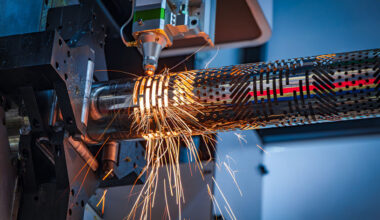
CNC machining uses cutting tools to remove metal from a solid block. These tools follow digital instructions created from a CAD model. They remove excess material until the part reaches its final shape.
Multi-axis mills and lathes can drill holes, cut threads, and create flat surfaces. Computer control helps machines repeat the same cuts across many parts.
Unlike investment casting, CNC machining does not need a custom mold. Shops can begin production soon after they prepare the toolpaths and secure the material.
Upfront Tooling and Setup Costs
Tooling costs create one of the biggest differences between these methods.
Investment casting requires a custom aluminum injection mold to make the wax patterns. Building this mold can cost several thousand dollars. It can also add weeks to the first production run.
CNC machining does not need this type of permanent tooling. Shops use standard cutting tools, drills, and workholding fixtures. Most setup costs come from CAM programming and machine preparation.
This makes CNC machining a strong choice for early prototypes and small production runs. Investment casting requires more money upfront but can offer lower costs at higher volumes.
Production Volume and Per-Part Costs
Order size plays a major role in choosing the right process.
For small batches, the cost of a wax injection mold can make investment casting too expensive. CNC machining often offers better value for orders below 100 parts. Casting may become more cost-effective once production reaches 500 or more units.
The balance changes as order volumes grow. Investment casting can produce many wax patterns in a short time. This spreads the original tooling cost across thousands of parts.
At volumes of 5,000 units or more, casting may reduce unit costs by 50% to 80% compared with CNC machining. These savings depend on the part design, material, and production setup.
Material Waste and Alloy Selection
Material costs can have a major effect on your final budget. This is especially true when parts use expensive aerospace alloys or medical-grade stainless steel.
CNC machining removes metal from a solid billet. Much of the original material becomes chips during production. For complex parts, waste can reach 70% to 80% of the starting block.
Investment casting uses molten metal to create a near-net shape. This means the part starts much closer to its final size. As a result, less material needs to be removed.
Some foundry studies show that changing from machining to casting can reduce material waste from more than 60% to below 15%.
Dimensional Accuracy and Tight Tolerances
CNC machining has a clear advantage when a part needs very tight tolerances.
During investment casting, metal shrinks as it cools. This can cause small changes in the final dimensions. The amount of shrinkage may also vary between production batches.
CNC machines remove metal under precise computer control. This makes it easier to hold tight dimensions on important surfaces.
Standard investment casting often achieves tolerances of around ±0.2 mm to ±0.4 mm. CNC machining can often reach ±0.01 mm to ±0.05 mm.
For parts with precise mating surfaces, threads, or bearing fits, CNC machining is often the better choice.
Part Complexity and Design Freedom
Part geometry is another key factor.
CNC cutting tools need access to the surfaces they must reach. Deep pockets, hidden channels, and undercuts can create problems. Some designs may require several separate parts that workers must later join.
Investment casting offers more freedom for complex shapes. Wax patterns can include thin walls, curved passages, and internal cores. This allows manufacturers to create complex parts as one solid piece.
For parts with complex internal channels, investment casting can also reduce assembly costs. Some industry studies report average production cost savings of 37% for these designs compared with full CNC machining.
Lead Times from Prototype to Production
Production speed can affect your product launch.
CNC machining is usually faster for early prototypes. If you need 15 working samples for field testing, a machine shop may finish them within a few days. A team can send a CAD model on Monday and receive finished parts by Friday.
Investment casting takes longer at the start. Toolmakers must first create and finish the aluminum wax mold. The first cast samples may take four to eight weeks to arrive.
Once the mold is approved, however, repeat production becomes more predictable. Larger orders can also benefit from shorter cycle times and lower unit costs.
Final Thoughts
Choosing between investment casting and CNC machining does not have to be an either-or decision. Many manufacturers use both methods at different stages of production.
Reviewing both options early can help your team avoid unnecessary costs. Work with experienced manufacturing engineers to compare tooling, material use, quality, and lead times. The right process will depend on the needs of your part and your long-term production goals. Check out the rest of our articles for more tips.