In contemporary metal fabrication, the demand for precision, efficiency, and versatility has never been higher. To meet these challenges, industries are increasingly turning to advanced technologies such as the fiber laser machine. These machines represent a significant evolution in cutting methods, providing superior performance over traditional laser and mechanical cutting systems.
Macro Weld Pty Ltd, through its platform MacroSupply, supplies state-of-the-art fiber laser machines that are transforming sheet metal cutting processes. By integrating these machines into production lines, manufacturers can achieve enhanced productivity and quality.
Understanding Fiber Laser Technology
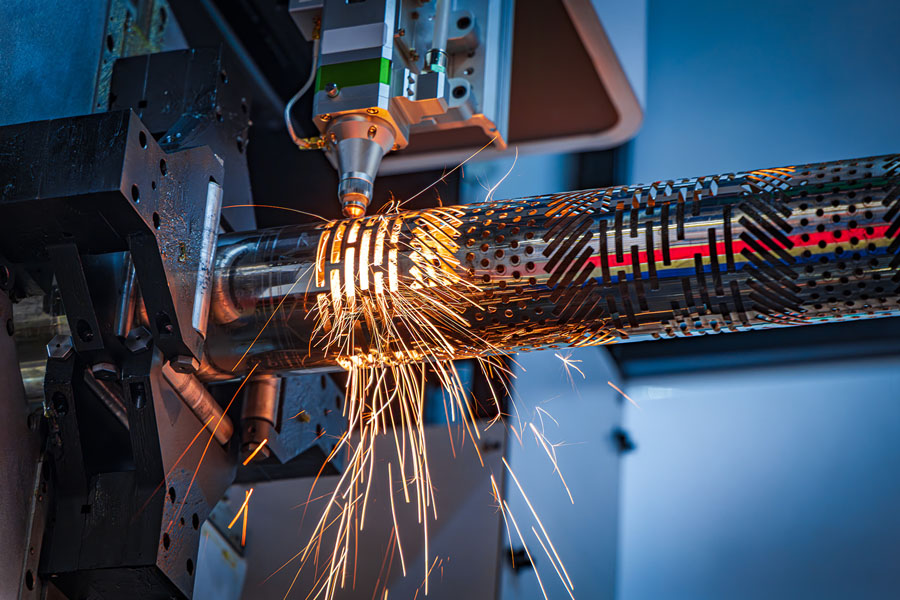
Fiber laser machines employ a solid-state laser source using an optical fibre doped with rare-earth elements as the gain medium. This technology allows the generation of highly focused laser beams with excellent beam quality. The key advantage lies in the ability to cut a wide range of metals precisely, including stainless steel, aluminium, copper, brass, and mild steel.
The compact and flexible design of fiber lasers enhances their adaptability to different fabrication requirements. Unlike traditional CO2 lasers, fiber laser machines offer higher power efficiency and reduced maintenance, contributing to lower operational costs.
Advantages of Fiber Laser Machines in Metal Fabrication
One of the foremost benefits of using fiber laser machines is their exceptional cutting speed combined with precision. The high beam quality promotes fine, clean cuts with minimal thermal distortion, leading to superior edge quality. This precision is critical in industries where tolerances are stringent, such as aerospace, automotive, and electronics manufacturing.
Additionally, the rapid beam modulation capabilities allow for cutting complex shapes and intricate patterns with remarkable accuracy. This flexibility reduces the need for secondary finishing processes, saving time and resources.
Furthermore, fiber laser machines provide excellent energy efficiency. They convert electrical input to laser output at a rate significantly higher than older laser types. This efficiency translates into lower energy consumption and environmentally friendly operations.
Applications in Various Metal Fabrication Sectors
Fiber laser cutting technology is widely applied in numerous metal fabrication sectors. In the automotive industry, it enables precise cutting of body panels and components essential to vehicle assembly. Similarly, in the construction sector, it facilitates the fabrication of structural elements with high accuracy.
Electronics manufacturers benefit from the fine cutting capabilities for producing delicate parts without heat damage. Custom fabrication workshops also leverage the versatility of fiber laser machines to offer bespoke metal cutting solutions.
Macro Weld Pty Ltd supports these applications by providing machines that cater to diverse industry requirements through its MacroSupply service, ensuring clients have access to reliable and innovative equipment.
Key Features of Macro Weld Fiber Laser Machines
Macro Weld’s fiber laser machines offer a range of features designed to enhance user experience and output quality. Among these are CNC control systems that provide ease of programming and operation, allowing precise control over cutting parameters.
The machines incorporate robust cooling systems to maintain optimal operating temperatures, thereby extending component life and ensuring consistent performance.
Moreover, the machines feature an advanced optical system that delivers stable laser output for uniform cuts. Safety systems are integrated as well, protecting operators and maintaining compliance with industrial safety standards.
Economic Benefits of Adopting Fiber Laser Technology
Investing in fiber laser machines yields substantial economic advantages. The reduction in material wastage due to accurate cuts translates into cost savings on raw materials. Higher throughput and automation capabilities reduce labour costs and production time.
Lower energy consumption compared to traditional cutting methods diminishes utility expenses, while the minimal maintenance requirements cut down on downtime and service costs.
Overall, adopting fiber laser technology supports a favourable return on investment and strengthens competitive positioning in the metal fabrication sector.
Environmental Impact and Sustainability
As environmental concerns gain prominence, fibre laser machines contribute positively to sustainability goals. Their superior energy efficiency reduces carbon footprint associated with manufacturing processes.
The precise nature of fiber laser cutting decreases scrap generation, thus promoting responsible material usage. Additionally, the closed systems within these machines limit the emission of particulates and pollutants.
Organizations leveraging these machines demonstrate commitment to ecological responsibility while benefiting from operational improvements.
Conclusion
Fiber laser machines are indispensable tools in modern metal fabrication, offering unmatched precision, efficiency, and adaptability. Macro Weld Pty Ltd, through MacroSupply, provides advanced fiber laser technology that empowers manufacturers to meet evolving industry standards and production demands.
The integration of such machines leads to superior product quality, reduced costs, and sustainable manufacturing practices, thereby positioning businesses for ongoing success in dynamic markets.