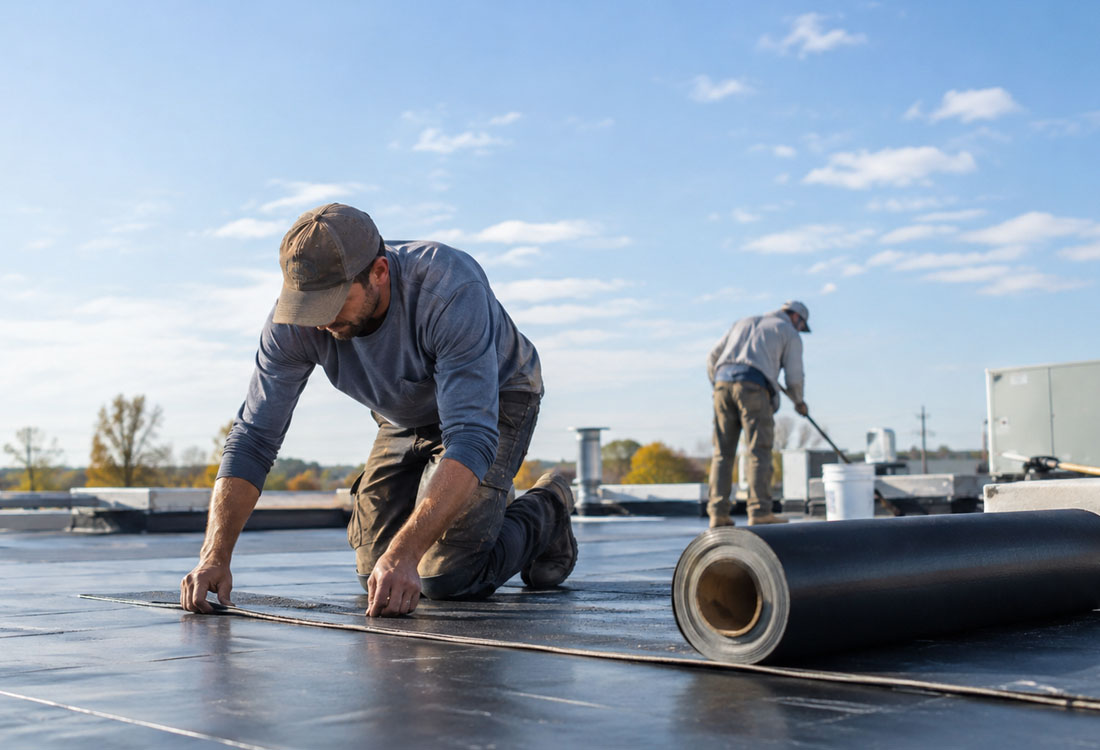
A roof plays a critical role in protecting a property from rain, wind, sunlight, moisture, temperature changes, and other environmental conditions, highlight The Property Society specialists. While many buildings use steeply sloped roofing systems, flat roofing provides a practical alternative for properties designed with low-slope structures. Flat roofs are commonly used on commercial buildings, garages, additions, modern residential properties, and other structures where a low-profile roofing system is appropriate. Their design can provide useful space, a clean appearance, and practical installation options, but they also require careful planning because water drainage, membrane protection, flashing, seams, and maintenance are especially important.
A successful flat roof is not simply a horizontal surface covered with roofing material. It is a complete system designed to manage water, protect the building structure, and withstand regular environmental exposure. Proper slope, drainage, underlayment or membrane selection, insulation, flashing, edge details, and installation quality all influence how well the roof performs. When these components are correctly designed and maintained, flat roofing can provide dependable protection for many years. Property owners should therefore consider both the material and the overall roofing system when planning installation, repairs, or replacement.
Understanding Flat Roofing Systems
Flat roofing is generally characterized by a very low slope rather than being completely level. This slight slope is important because it allows water to move toward drains, scuppers, gutters, or other drainage points. A properly designed flat roof should prevent unnecessary standing water and direct rainfall away from vulnerable areas.Several roofing materials can be used for low-slope applications, including single-ply membranes, modified bitumen, built-up roofing, and certain coated roofing systems. Each material has its own installation requirements, maintenance considerations, advantages, and limitations. The appropriate system depends on the building structure, climate exposure, roof design, expected traffic, drainage arrangement, budget, and long-term performance goals.Professional evaluation is important before selecting a material because a roofing system that performs well on one building may not be suitable for another. Factors such as existing decking, insulation, drainage capacity, roof penetrations, and structural conditions should all be reviewed before installation begins.
Why Proper Flat Roof Design Matters
Water management is one of the most important considerations for a flat roof. Because these roofs have limited slope, water cannot always move away as quickly as it can on a steeply pitched roof. If drainage is inadequate, water may remain on the surface and place additional stress on roofing materials.A properly designed system should include suitable drains, scuppers, gutters, downspouts, or other drainage components. The roof should also have enough slope to direct water toward these outlets. During installation or replacement, existing drainage should be inspected to determine whether it is adequate for the roof area and expected rainfall.Good design also considers penetrations such as vents, HVAC equipment, skylights, pipes, and other structures. These areas must be properly sealed and flashed to prevent water from entering the building.
Benefits of Flat Roofing
One advantage of flat roofing is its efficient use of space. Low-slope roofs can provide areas for mechanical equipment, ventilation systems, solar installations, maintenance access, or other building functions when the structure and roofing system are designed to accommodate them.Flat roofs can also provide a clean, modern appearance. Their low profile can complement contemporary architectural designs and create a streamlined exterior. For commercial properties, flat roofing is often practical because rooftop equipment can be organized on a relatively accessible surface.Another benefit is the availability of different roofing materials. Property owners can select from membrane systems, modified bitumen, built-up roofing, and other products based on the building’s requirements. This flexibility allows contractors to develop solutions suited to different structural and performance needs.
Choosing the Right Roofing Material
Selecting the correct material is one of the most important decisions in a flat roofing project. Single-ply membranes are commonly used because they can provide a continuous waterproofing layer when properly installed. Modified bitumen systems offer multi-layer protection and are designed for low-slope applications. Built-up roofing consists of multiple layers that create a durable roofing assembly.Roof coatings may also be considered for certain existing roofing systems when the underlying structure remains suitable for restoration. Coatings can provide an additional protective layer, but they are not appropriate for every roof condition.Property owners should avoid selecting a material based solely on its initial cost. Expected service life, maintenance requirements, installation method, compatibility with the existing roof, drainage, insulation, and future repair needs should all be considered when evaluating long-term value.
Professional Installation Is Essential
Flat roofing requires careful installation because seams, edges, penetrations, and drainage points must be properly detailed. A small installation error can create an opportunity for water to enter the roofing assembly.Membrane seams should be joined according to the manufacturer’s specifications, while flashing must be installed around penetrations and transitions. Roof edges should also receive appropriate protection because wind and water can place additional stress on these areas.Professional installation helps ensure that the roofing materials are correctly prepared, positioned, attached, and sealed. It also allows the contractor to identify underlying problems before they become concealed beneath the new roofing system.
Preparing the Roof for Installation
Proper preparation is essential before installing a new flat roof. The existing roofing assembly should be inspected for damaged decking, moisture, deteriorated insulation, structural weakness, and other problems. Installing a new membrane over compromised materials can allow existing defects to continue affecting the roofing system.In some cases, the old roofing material may need to be removed completely. A roof tear off allows contractors to inspect the deck directly and identify hidden damage. Any deteriorated areas can then be repaired before the new roofing system is installed.Preparation should also include an evaluation of drains, scuppers, gutters, flashing, penetrations, and roof edges. Correcting these components during installation can help create a more reliable system and reduce the likelihood of recurring problems.
The Importance of Drainage
Drainage is one of the most critical components of a flat roof. Water must have a clear path toward drains and outlets to reduce the possibility of prolonged ponding. Leaves, dirt, branches, and other debris can block drainage points and prevent water from leaving the roof.Regular maintenance should include checking drains, scuppers, gutters, and downspouts. These areas should be kept clear so rainfall can move away from the roofing surface. Property owners should also watch for areas where water repeatedly remains after rainfall.Persistent ponding may indicate inadequate slope, blocked drainage, structural deflection, or another underlying problem. Simply removing the water does not address the cause. A professional inspection can determine why the water is accumulating and what correction may be appropriate.
Ponding Water and Flat Roof Problems
Standing water is one of the most common concerns associated with poorly maintained flat roofs. Although some roofing systems are designed to tolerate limited temporary moisture, persistent ponding can increase the risk of deterioration.Continuous exposure to water can place stress on seams, flashing, membranes, and other components. In addition, water may find small weaknesses and eventually enter the roofing assembly. If moisture reaches insulation or decking, the resulting damage can become more extensive.Property owners should have recurring ponding evaluated instead of assuming that it is a normal characteristic of every flat roof. Correcting drainage problems early can help protect the roof and reduce the possibility of costly structural damage.
Flashing and Roof Penetrations
Flat roofs often contain several penetrations for vents, pipes, HVAC equipment, skylights, and other building components. Each penetration creates a potential point of water entry and therefore requires appropriate flashing and sealing.Flashing should be integrated with the roofing membrane so water is directed away from the penetration rather than beneath the roofing layers. Damaged or deteriorated flashing can create leaks even when the main roof surface remains in good condition.Regular inspections should include these areas because sealants and flashing materials can deteriorate over time. Repairing vulnerable penetrations early can help prevent moisture from reaching the interior structure.
Roof Membrane Maintenance
The membrane is one of the most important components of many flat roofing systems. It creates a continuous protective layer that helps prevent water from entering the building. However, membranes can be damaged by foot traffic, falling debris, equipment installation, weather exposure, or improper maintenance.Property owners should limit unnecessary foot traffic on the roof. When access is required for maintenance or equipment, appropriate walkways or protective measures may be necessary depending on the roofing system.Any punctures, cuts, open seams, or damaged sections should be professionally evaluated. Small membrane problems can sometimes be repaired before they develop into larger failures, making routine inspection an important part of roof maintenance.
Flat Roof Repairs
Flat roofing systems can develop problems for many reasons, including aging, severe weather, drainage issues, membrane damage, deteriorated flashing, and installation defects. Repair methods depend on the type of roofing material and the nature of the damage.A professional repair may involve patching a damaged membrane, repairing seams, replacing flashing, restoring drainage components, or addressing damaged insulation or decking. The goal should be to correct the source of the problem rather than simply covering the visible symptom.Recurring leaks should receive particular attention. If a repair fails repeatedly in the same area, there may be an underlying drainage, flashing, structural, or membrane issue that requires a more comprehensive solution.
Signs That a Flat Roof Needs Repair
Property owners should monitor both the exterior and interior of the building for signs of roofing problems. Visible membrane damage, open seams, cracked coatings, deteriorated flashing, ponding water, and damaged roof edges can indicate that professional attention is needed.Interior warning signs may include ceiling stains, damp insulation, musty odors, peeling paint, or moisture around walls and penetrations. Because water can travel beneath roofing layers, the location of an interior stain may not directly correspond with the entry point.Prompt inspection can help identify the source before moisture affects additional materials. Waiting until water damage becomes extensive can increase repair costs and create more disruption.
Flat Roof Replacement
When a flat roof has extensive deterioration, repeated leaks, damaged insulation, structural problems, or widespread membrane failure, replacement may provide better long-term value than continued repairs. A complete replacement provides an opportunity to remove deteriorated materials and inspect the underlying deck.During replacement, contractors can also evaluate drainage, insulation, flashing, roof edges, and penetrations. Addressing these components as part of the project can help prevent old problems from being carried into the new roofing system.A properly planned replacement should include more than installing a new membrane. The entire roofing assembly should be evaluated so the finished system provides effective water management and long-term protection.
Roof Insulation and Energy Performance
Insulation can play an important role in flat roof performance and building energy efficiency. Proper insulation helps regulate indoor temperatures and can reduce the amount of heat transferred through the roof assembly.During replacement, existing insulation should be evaluated for moisture damage, compression, deterioration, or inadequate performance. Wet insulation may lose effectiveness and can contribute to additional problems if it remains trapped beneath a new membrane.Property owners should discuss insulation options with a professional contractor when planning a new flat roof. The appropriate insulation type and placement depend on the building design, existing structure, climate considerations, and roofing system.
Roof Coatings and Restoration
Some flat roofing systems may be candidates for restoration rather than complete replacement. Roof coatings can provide an additional protective layer and may help extend the service life of certain existing roofs when the underlying assembly remains structurally sound.However, coatings are not a universal solution. They should not be used to hide extensive structural deterioration, severe moisture damage, or widespread membrane failure. A professional inspection should determine whether restoration is appropriate.When a coating is suitable, proper surface preparation is essential. The roof may need to be cleaned, repaired, dried, and prepared before the coating is applied. Correct application helps ensure that the coating bonds properly and provides the intended protection.
Seasonal and Routine Maintenance
Regular maintenance can significantly influence the service life of a flat roofing system. Drains and gutters should be kept clear of debris, while the roof surface should be checked for punctures, cracks, open seams, and damaged flashing.After severe weather, property owners should consider scheduling an inspection, particularly if the roof has been exposed to strong winds, hail, falling debris, or heavy rainfall. Damage may not always be immediately visible from the ground.Mechanical equipment on the roof should also be monitored. HVAC technicians and other service professionals should take care not to damage the roofing membrane when accessing rooftop equipment. Protective walkways and appropriate maintenance procedures can reduce accidental damage.
Selecting a Qualified Roofing Contractor
The contractor chosen for a flat roofing project can have a major effect on the performance and longevity of the finished system. Property owners should select professionals with experience working with the specific membrane or roofing material being considered.A qualified contractor should inspect the existing roof, explain the cause of current problems, provide a detailed estimate, and recommend appropriate solutions. The proposal should clearly identify materials, preparation, repairs, removal requirements, installation procedures, and warranties where applicable.Property owners should also consider the contractor’s experience with drainage, flashing, insulation, roof penetrations, and other components that are particularly important for low-slope roofs. Choosing experienced professionals can reduce the risk of installation problems and help ensure that the complete system is properly assembled.
Cost Considerations for Flat Roofing
The cost of a flat roofing project depends on several factors, including roof size, material type, accessibility, existing roof condition, insulation requirements, drainage modifications, flashing, labor, and removal of old materials. A simple roof may have different requirements from a complex structure with numerous penetrations and rooftop equipment.Property owners should consider long-term value rather than focusing only on the initial price. A durable roofing system with proper drainage and quality installation may require fewer repairs and provide better performance over time.A detailed estimate can help property owners understand what is included in the project and identify potential additional costs before work begins. Comparing complete proposals can make it easier to evaluate material quality, workmanship, warranties, and overall value.
Protecting a Flat Roofing Investment
Once a flat roof has been installed or repaired, ongoing maintenance remains important. Property owners should monitor drainage, keep the roof free of unnecessary debris, limit unauthorized foot traffic, and arrange professional inspections at appropriate intervals.Small problems should be addressed before they become larger failures. A damaged seam, blocked drain, or deteriorated flashing component may be relatively manageable when discovered early but could contribute to extensive moisture damage if ignored.Keeping records of inspections, repairs, coatings, maintenance, and replacement work can also help property owners track the roof’s condition. These records may assist with future maintenance planning and help determine when restoration or replacement should be considered.
Conclusion
Flat roofing can provide a practical and durable solution for properties that require a low-slope roofing system. Its clean appearance, efficient use of space, variety of material options, and suitability for many building designs make it a valuable choice when properly planned and installed. However, flat roofs require careful attention to drainage, membranes, flashing, penetrations, insulation, roof edges, and maintenance because water management is especially important on low-slope surfaces.Professional installation and regular inspections can help protect the roofing system from leaks, ponding water, membrane damage, deteriorated flashing, and other common problems. When repairs are needed, addressing the underlying cause is more effective than relying on temporary fixes. When replacement becomes necessary, removing old materials and inspecting the underlying structure provides an opportunity to correct drainage, insulation, flashing, and other concerns before installing the new system.For professional roofing installation, repairs, replacement, and maintenance, property owners can work with an experienced flat roofing that understands the specific requirements of flat roofing systems. With proper preparation, quality materials, skilled installation, effective drainage, and consistent maintenance, a flat roof can provide dependable protection and long-term value for the property.




Using protective surfacing is a common way to prevent membrane damage on flat roofs that get regular use. Many property owners choose to install heavy-duty tiles or slabs to create a walkable surface. For example, laying down white concrete roof pavers helps protect the underlying roof membrane from physical wear and tear. These durable blocks also reflect solar heat, which keeps the roof surface cooler during hot summer days. This setup turns an otherwise unused flat roof into a functional deck while extending the life of the waterproofing layer.