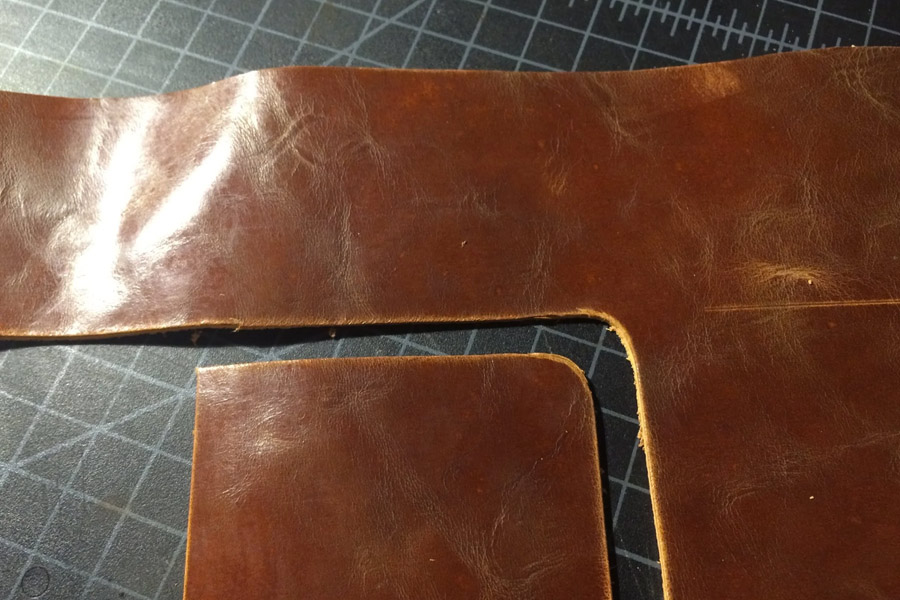
A footwear operation can run excellent stitching, excellent lasting, and excellent finishing, and still lose money in the cutting room. Leather is usually the single largest material cost in the build, and every square inch that leaves the cutting table as waste is cost already paid for and never recovered.
Sewing errors get repaired. Cutting errors get thrown away, along with the hide they came from.
That is why cutting has historically been the most experienced role on the floor rather than the entry-level one, and why the equipment used for it deserves more scrutiny than it usually gets.
Yield Is The Number That Matters
Hides are irregular. They vary in size, in thickness across their area, and in quality, with scars, brands, insect damage, and thin belly regions that cannot be used for load-bearing parts.
Cutting a set of parts from that surface is a nesting problem with constraints. The parts have to avoid defects, they have to respect the fiber direction of the leather, and they have to sit close enough together that the remaining waste is minimal.
A few percentage points of yield difference across a production run is a material line-item, not a rounding error. On high-value leathers it is the difference between a profitable style and a marginal one.
This is the argument for skilled operators and for equipment that gives them control. A press that cuts cleanly and predictably lets the operator place parts tightly, because there is no allowance needed for a cut that might wander.
Fiber Direction Is Not Optional In Footwear
Leather stretches more in one direction than the other, and the difference is substantial.
In footwear that matters structurally. A vamp cut with the stretch running the wrong way will distort during lasting and continue to distort in wear. A quarter cut without regard to direction will relax unevenly. Parts that need to hold their shape have to be cut from tight areas of the hide, oriented correctly.
Boot clickers working on taller uppers face this more acutely than anyone cutting low shoes, because the parts are larger, the leg sections need consistent behavior over a greater area, and the fit depends on the upper holding its geometry through repeated flexing.
The consequence for equipment: the press has to allow the operator to position and orient a die freely on the hide, rather than forcing a fixed layout. That freedom is what makes skilled placement possible, and it is what distinguishes a cutting operation that manages defects from one that simply cuts around them badly.
Press Types And What They Suit
Swing-arm presses position a cutting head on a pivoting arm that the operator swings over the die. The operator lays the die on the leather, swings the arm across, and actuates the cut.
The advantage is visibility and flexibility. The operator can see the hide, place the die precisely against a defect or a grain area, and move it freely between cuts. That suits work where every hide is different and placement is a judgment call, which describes most footwear and most leather goods.
Beam and travelling-head presses apply pressure across a wider area and suit larger dies or multiple dies cut at once. They favor throughput over placement flexibility, and they suit operations running consistent material where nesting is planned rather than improvised.
Tonnage requirements follow from die size and leather thickness. An undersized press will not cut cleanly through thick or firm leather, producing partial cuts that have to be finished by hand, which defeats the purpose. An oversized press is capital sitting idle.
The sizing question is practical: what is the largest die that will run regularly, and what is the thickest material it will cut through.
Dies Are The Consumable Nobody Budgets For
Steel rule cutting dies are made per part, per size. A footwear style in a full size range multiplies quickly, and a company running several styles carries a significant die inventory.
Dies dull with use. A dull die crushes rather than cuts, producing ragged edges and requiring more pressure, which accelerates wear on both the die and the press. Sharpening extends life; eventually dies need replacing.
Storage and organization matter more than they sound. A die that cannot be found is a die that gets remade, and an unlabeled die that gets used for the wrong size produces a batch of unusable parts.
Die condition also affects yield indirectly. Operators compensate for unreliable dies by leaving more margin around each cut, and that margin is waste.
The Cutting Board Is Part Of The System
Presses cut against a board, typically a polymer or nylon sheet, and the board’s condition affects cut quality directly.
A fresh board gives clean support and a clean cut. As it gets used, the surface develops cut lines and eventually loses the flatness needed for consistent results. Rotating and resurfacing boards is routine maintenance that gets neglected until cut quality drops visibly.
Board hardness is matched to the work. Too soft and the die sinks in, cutting inconsistently. Too hard and the die edge suffers.
Safety Is A Design Feature, Not A Procedure
A clicking press applies several tons of force and the operator’s hands are in the work area between cycles.
Two-hand controls, which require both hands on separate actuators to trigger a cut, are the standard mechanism for keeping hands clear at the moment of actuation. They are effective and they are occasionally defeated by operators looking for speed, which is a training and supervision matter rather than an equipment one.
Guarding, emergency stops, and clear procedures for changing dies and clearing jams are the rest of it. The injury risk in a cutting room is concentrated at the press, and the equipment specification should reflect that.
Where Digital Cutting Fits
CNC and digital cutting systems remove the die from the process, cutting from a nested file directly.
They excel at variable work, prototyping, small runs, and styles that change frequently, since there is no die to make. Nesting software can optimize layout mathematically, which is a genuine yield advantage on uniform material.
They are less strong where hide-by-hide judgment is the requirement, though vision systems that map defects narrow that gap. And the throughput on long runs of a stable style often still favors dies.
Many operations run both, using dies for volume styles and digital for development and short runs.
Four Questions Before Buying
What is the largest die the press needs to cut, and what is the thickest material.
Is placement flexibility or throughput the priority, since those point at different press types.
What does the die inventory cost over the styles and size range being run.
Is the operator skilled enough to gain from a flexible press, or would a more prescriptive setup produce better yield with the staff available.
The cutting room decides material cost before anyone downstream touches the work, and material cost is usually the largest number on the sheet.