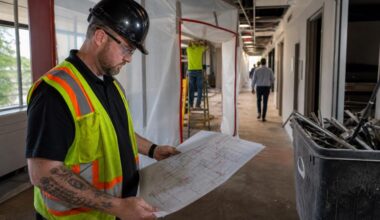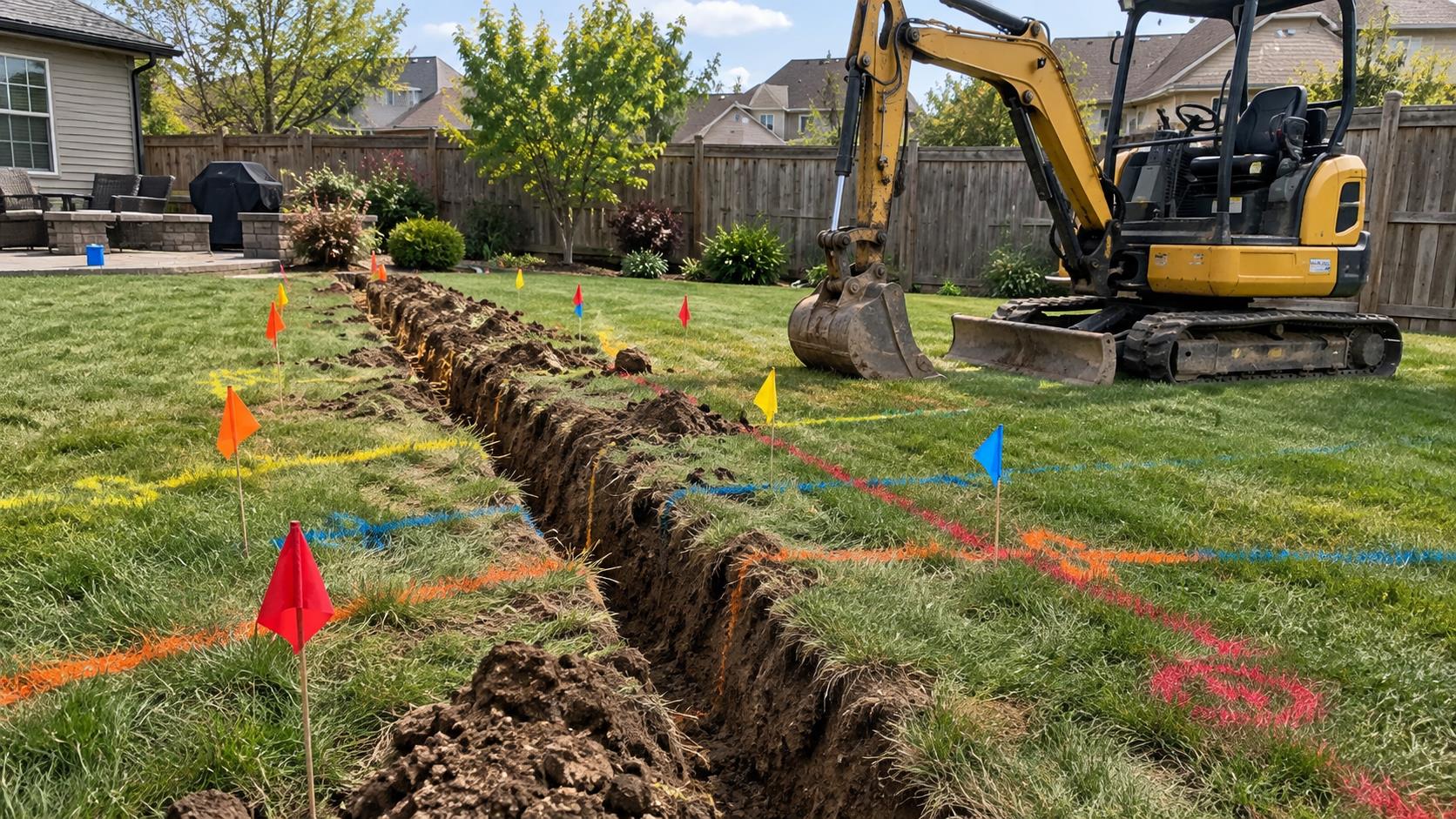
Utility markings help contractors identify underground infrastructure before excavation begins, reducing the risk of costly strikes, project delays, and safety hazards.
A contractor calls 811, gets the all-clear, and breaks ground. Twenty minutes later, the excavator hits a private irrigation line running through the backyard, and the day turns into a scramble of shutoffs, phone calls, and a client who wants to know how this happened after “everything was checked.” It happens more often than most crews expect, and it usually traces back to one misconception: that an 811 locate means the whole site has been cleared to dig.
It hasn’t. Public utility locating and private utility locating are two different services, and confusing them is one of the more expensive mistakes a contractor can make before a project even starts.
Why Calling 811 Isn’t the Whole Story
 Standard 811 utility markings identify public lines but stop at the property boundary.
The 811 system exists to mark publicly owned utilities, gas, water, electric, and telecom lines that run up to the meter or the property line. Past that point, anything buried on the property, such as irrigation systems, private electrical feeds, on-site fiber runs, or lines left behind by a previous owner, is not the utility company’s responsibility to mark. It’s the contractor’s or property owner’s.
That gap is showing up in the damage numbers. The Common Ground Alliance’s 2025 DIRT Report recorded over 220,000 unique underground utility damage incidents across North America, up from under 200,000 the year before, and the CGA’s Damage Index climbed from 94.0 to 96.7 between 2023 and 2024. The trend is getting worse, not better, despite years of awareness campaigns. PG&E’s own 2025-2026 data tells a similar story: 55% of its 2025 incidents and 57% of its 2026 incidents so far happened even when 811 had been called first, a number that jumps to 89% specifically among homeowners. Calling 811 isn’t the failure point; assuming it covers everything is.
That’s the gap a private locating firm is built to close. Say a contractor is prepping a residential lot for a pool addition. The 811 locate comes back clean for the public side, but the property still has a decade-old sprinkler system and an electrical line the previous owner ran out to a detached workshop, neither of which shows up on any public map. Bringing in a crew for private utility locating before the first trench gets cut catches exactly that kind of undocumented infrastructure, the stuff no 811 request was ever going to find.
What Private Utility Locating Actually Finds
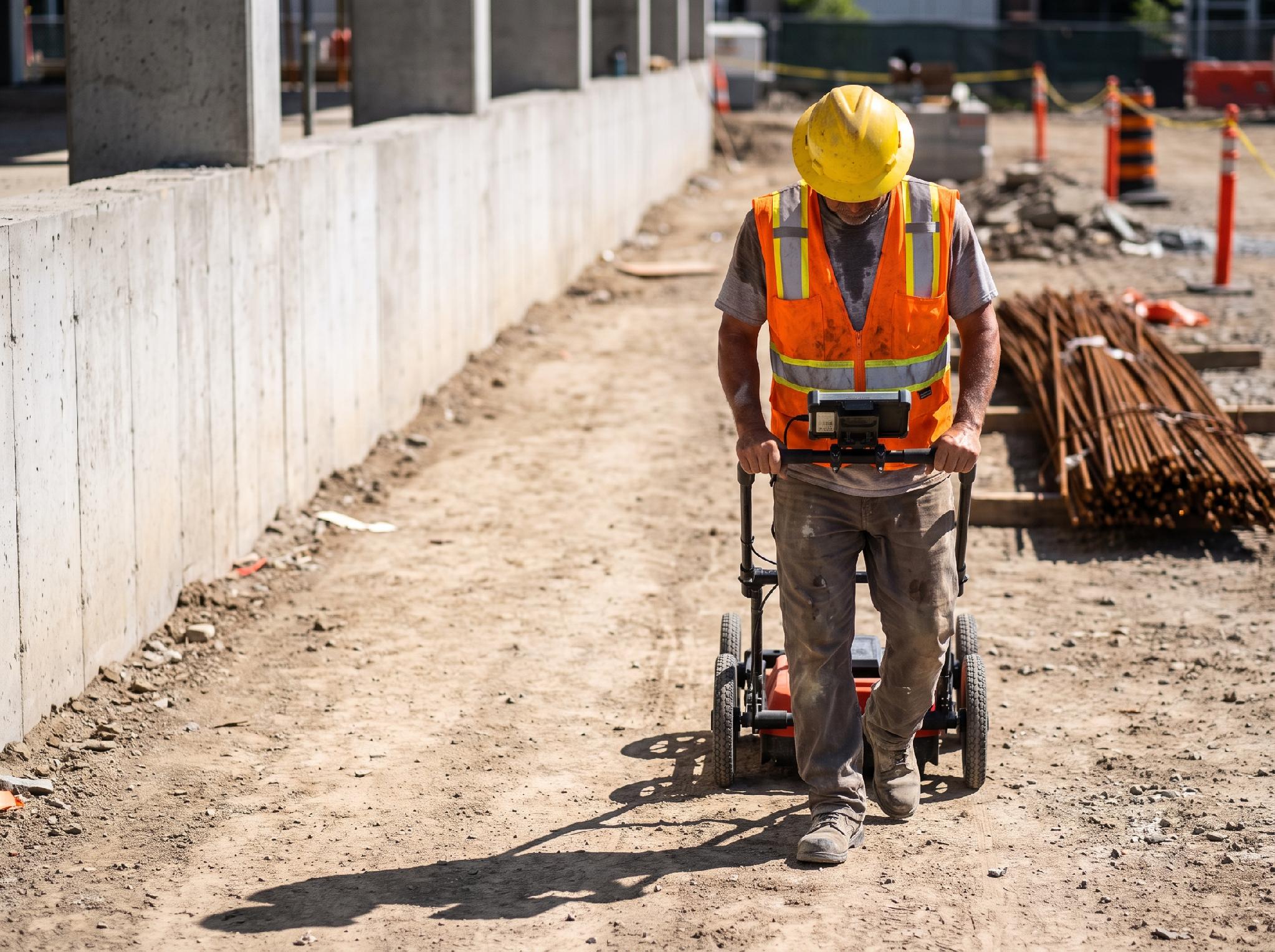 Ground-penetrating radar equipment helps locate privately owned utility lines that public 811 systems do not cover.
Private locating uses a different toolkit than the standard 811 process. Ground-penetrating radar (GPR) maps buried objects by depth and material, electromagnetic locating traces conductive lines even without surface access points, and vacuum excavation, often called potholing, physically exposes a short section of a suspected line to confirm its exact position before heavy equipment gets anywhere near it. A thorough locator also pulls as-built records and old permits when they exist, since those documents sometimes reveal lines that were installed correctly but never resurveyed.
What this process catches is specifically what 811 misses: private sewer laterals, abandoned fuel tanks, unmapped conduit runs, and irrigation zones that were added or altered without a permit. On a commercial or industrial site, this matters even more, since the density of underground infrastructure tends to grow with every renovation the property goes through. OSHA’s excavation standard, 29 CFR 1926 Subpart P, puts the duty of care for identifying underground hazards squarely on the employer before digging starts, not after a line gets struck.
The Real Cost of Skipping This Step
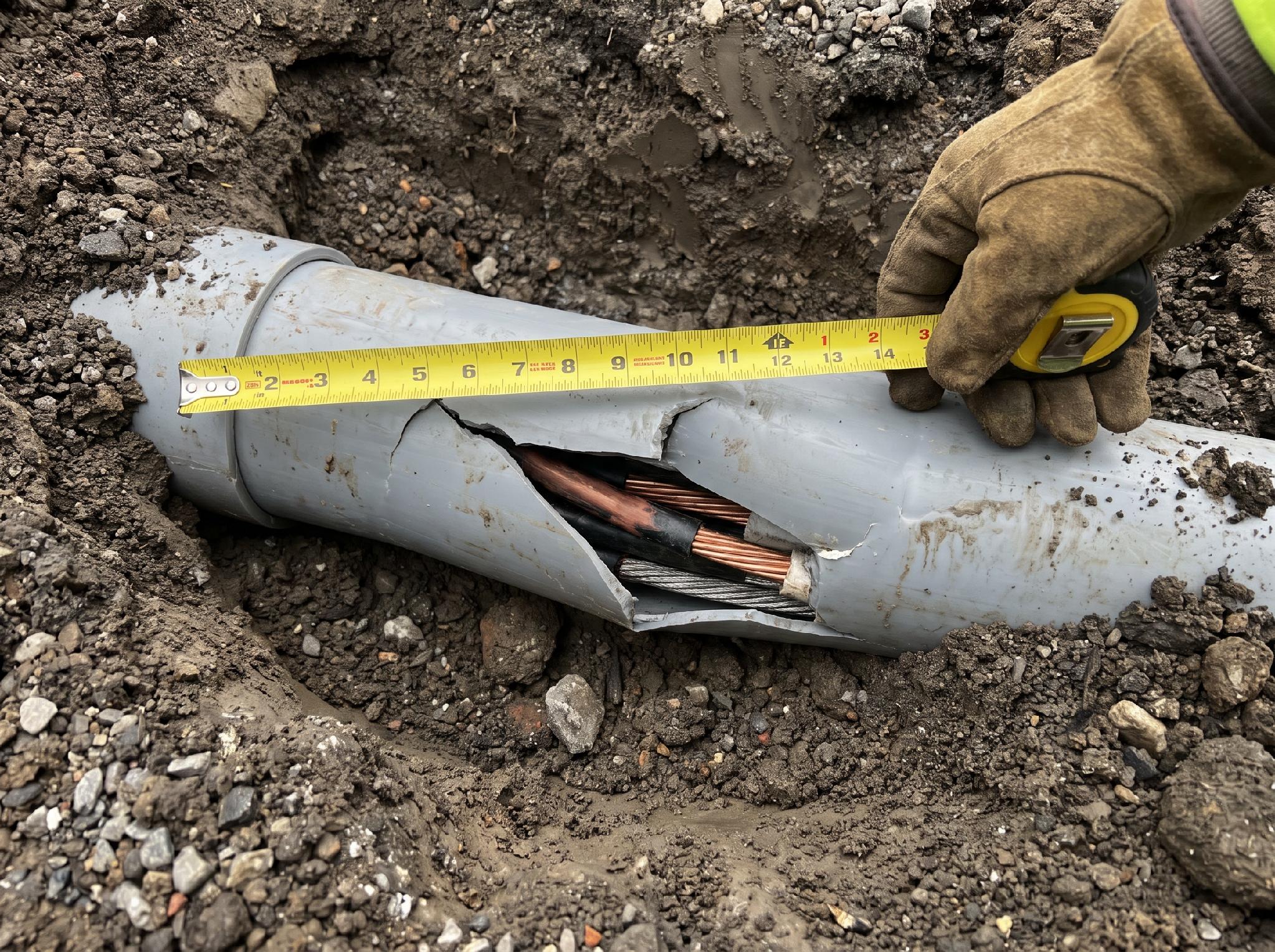
An unmarked utility strike can halt a project and trigger repair costs, fines, and safety hazards.
The financial case for private locating is not subtle. PG&E puts the average repair cost for a struck underground line at around $3,500, and that figure doesn’t include the project delays, idle equipment, or emergency response costs that follow a gas or electrical strike.
Massachusetts offers a sharper regulatory picture: the state’s Department of Public Utilities investigated 2,645 excavation-related incidents in 2025 alone, leading to more than $15.4 million in civil penalties and 296 contractors ordered into enforcement-driven safety seminars. Those aren’t abstract industry statistics; they’re contractors who are now paying fines and losing bidding eligibility because a line nobody located turned out to be there.
The CGA’s 2026 survey estimates that roughly 10 million U.S. households are at risk of damaging underground infrastructure this year simply by skipping the 811 call, and among all DIRT-reported incidents with a known cause, insufficient excavation practice and failure to notify remain the top two causes, year after year. Add a private line into that mix and the liability exposure only grows, since insurers and courts don’t treat “we weren’t required to locate it” as much of a defense once a contractor has broken ground on someone else’s property.
Building Utility Locating Into Your Pre-Construction Checklist
Private locating works best when it’s scheduled alongside the 811 request, not after it. A practical sequence looks like this: submit the 811 request as usual, book a private locator for the same window so both public and private findings land before the crew mobilizes, and document every marked line with photos and GPS coordinates before the first cut. That documentation matters later if a dispute comes up over who marked what. This applies to projects of all sizes, including swimming pool installations, home additions, detached garages, retaining walls, fencing, driveway work, and major landscaping projects where excavation may cross private utility lines.
Vetting matters here too. A private locator should carry liability insurance specific to utility damage, use more than one detection method rather than relying on GPR alone, and provide a written report, not just spray paint on the ground.
Conclusion
The 811 system does its job well within its scope; the problem is that its scope stops at the property line, and too many contractors treat that boundary as if it doesn’t exist. As damage rates keep climbing nationally, private utility locating is turning into standard due diligence rather than an optional add-on. Skip it once, and the $3,500 repair bill starts to look cheap compared to what a delayed project or a regulatory investigation actually costs.