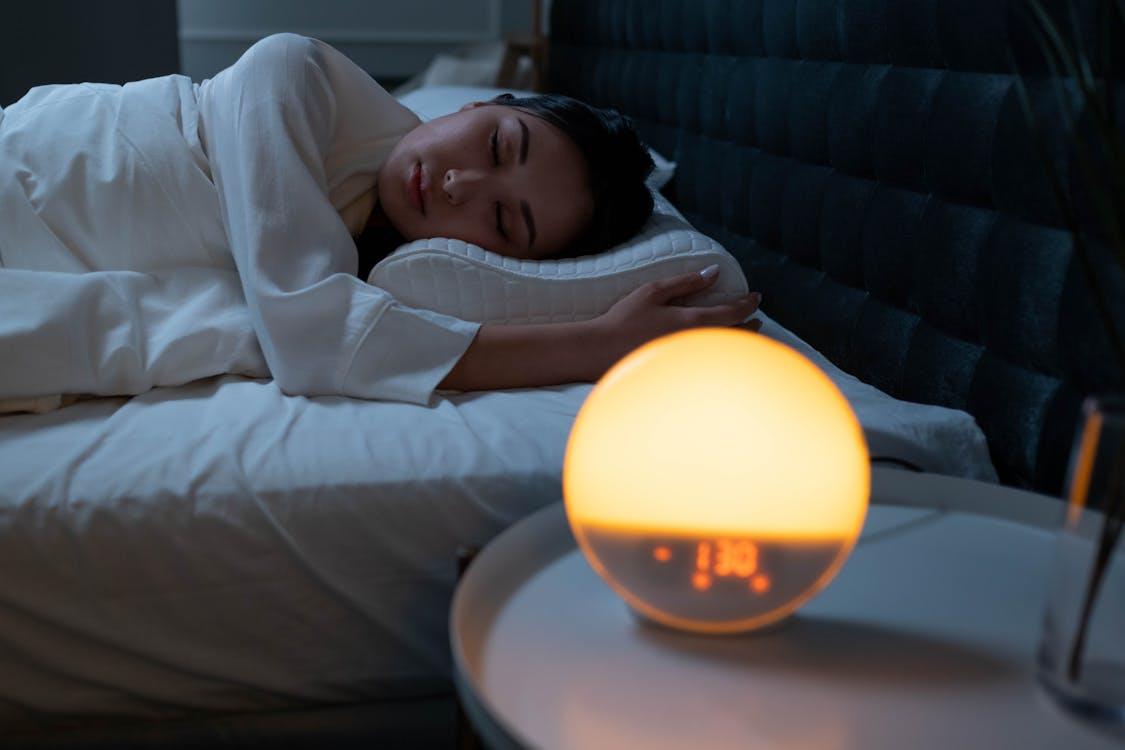
Want to actually fall asleep when your head hits the pillow?
Bedtime routines for most people entail….going to bed. However, your bedroom (and any room you spend time relaxing in before bed) can significantly impact how fast you fall asleep and how well you stay asleep.
And here’s the kicker:
Most of it comes down to lighting.
This guide shows you how to construct a relaxing bedroom oasis from scratch. From fixtures to colors to bedtime routines.
Let’s dive in!
Here’s what’s inside:
- Why Bedroom Lighting Matters More Than You Think
- Layered Lighting: The Foundation
- Get The Light Colour Right
- Why Dimmers Change Everything
- Block Out The Outside World
- Don’t Forget The Rest Of Your Home
Why Bedroom Lighting Matters More Than You Think
Lighting is more than just aesthetics. Lighting actually regulates your body’s internal chemical clock that knows when you should be awake and when you should be asleep.
Here’s the scary part:
Over 36% of adults in the U.S. aren’t sleeping enough. That means that more than a third of the country is dragging themselves through each day tired.
And one of the biggest hidden reasons? Bad evening lighting at home.
Researchers used wearable light sensors to discover that almost half of residences had light intense enough to reduce melatonin production in your body by half. Melatonin is what your body produces to make you sleepy — so when your home lights wipe out melatonin production, you’re fighting your own hormones.
The good news? You can reverse this in just a few clicks. Shop these modern light fixtures and design your space with bulbs for every job (warm-tone bulbs, dimmable kitchen island pendants, soft bedroom lamps). With the proper equipment in proper rooms, you’re setting yourself up for sleep success.
Now let’s talk about how to actually build the setup…
Layered Lighting: The Foundation
Forget that single overhead bulb.
A single overhead bulb is the single worst way to light a bedroom. It blasts the space with light, creates horrible shadows, and leaves your eyes with nowhere to land.
Here’s what the pros do instead: they use layered lighting. Layered lighting just means having a few different lights at different heights and brightness levels – rather than one big “blast” from above.
A good bedroom layout includes:
- Ambient lighting: Soft overall light (think a ceiling fan light or wall sconces)
- Task lighting: Bedside reading lamps or wall-mounted lights
- Accent lighting: Small LED strips behind the headboard or under a dresser
This allows you to turn on only one or two soft lights at night instead of blasting the room with light. It’s less chaotic, cozier and much easier on the eyes.
(There’s that “less is more” rule in action.)
Get The Light Colour Right
Here’s something most people get completely wrong…
Consider the colour temperature of your bedroom light as well as its brightness.
Light also has a “temperature”, measured in Kelvin (K). The lower the number, the warmer/yellow it is. The higher the number, the cooler/blue it gets.
For sleep, you want warm light — somewhere between 2,000K and 2,700K. That warm orange glow resembles sunset and signals your brain that it’s time to start winding down.
What you want to avoid:
- Cool white bulbs (4,000K+)
- Daylight bulbs in the bedroom (5,000K+)
- Any blue-tinted light source
Blue light, especially, is harsh on sleep. It fools your brain into thinking it is daytime. Trade your trendy white bulbs for warm ones and you’ll notice the difference in a week.
Why Dimmers Change Everything
Want the single best upgrade you can make to your bedroom? Install dimmers.
Dimmers allow you to gradually lower the light level as bedtime approaches. Rather than switching from “full blast” to “dark as night” with the flip of a switch, gradually dim the lights.
That gradual dimming is MASSIVE for your circadian rhythm. Your body needs time to wind down – and lowering the light level gradually is the simplest way to signal to it “hey, bedtime is approaching.”
Best part?
Dimmers are inexpensive. A basic dimmer switch can be had for about $20 and installed in an hour. What a small price to pay for improved sleep every night.
Block Out The Outside World
This is where so many people slip up…
You can set yourself up with ideal bedroom lighting. But if porch light filters in from the street or your neighbor’s apartment, it’s all for naught.
To block out unwanted light:
- Install blackout curtains or roller blinds
- Add a draft excluder under the door to block hallway light
- Cover any glowing electronics (TVs, chargers, smoke alarms)
- Use a sleep mask for an extra layer of darkness
Pitch black rooms aren’t just cozy — they’re effective. Little pockets of light on your eyelids can disrupt periods of deep sleep. Don’t sleep on this step and undo all your progress.
Don’t Forget The Rest Of Your Home
The rooms you spend time in BEFORE bed matter too.
Consider this….. When you spend an hour sitting in a bright kitchen before bedtime, your brain is wide awake when you finally make it up stairs. So your whole house lighting scheme is important.
Kitchen island pendants are a perfect example of this. Most people hang them over where they eat dinner, chop vegetables or enjoy a cup of tea before bedtime. Bright cool white kitchen island pendants shining down on you while doing those things = bad night’s sleep.
Solution? Install warm-toned kitchen island pendants that are dimmable. You can then lower the lights in your kitchen after dinner — and keep your entire home in sync with your bedtime routine.
Other rooms to think about:
- Living room: Use lamps instead of overhead lights at night
- Bathroom: Add a low-wattage night light instead of using the main one
- Hallways: Motion-sensor warm LEDs are perfect
When your whole home shifts into “wind-down mode,” falling asleep gets so much easier.
Pulling It All Together
Building a soothing bedtime environment isn’t complicated — it just takes a little planning.
To quickly recap:
- Use layered lighting instead of one harsh overhead bulb
- Switch to warm-coloured bulbs under 2,700K
- Install dimmers in your bedroom and kitchen
- Block out outside light with blackout curtains
- Choose warm kitchen island pendants to keep the whole home wind-down friendly
Fact: Most sleep issues are NOT caused by your mattress or pillow. They’re caused by your environment.
If you get lighting perfect everything else aligns. Your sleep deprived future self will thank you.