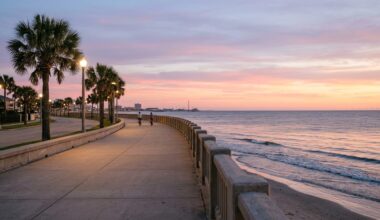
Clearwater Beach sits on a long barrier island on the central Gulf Coast of Florida, connected to the mainland by a short causeway. The sand is the thing visitors notice first: fine, almost white, and cool underfoot even in the summer.
Travelers who have not visited before often confuse Clearwater, the mainland city, with Clearwater Beach itself. The two are a 15 minute drive apart, and almost everything most visitors come for sits on the island.
How the Island Lays Out
North Beach runs the length of the pedestrian promenade along Mandalay Avenue, with hotels, casual restaurants, and the main public beach access points. It is the busiest stretch and the easiest for walking without a car.
South Beach, below the Pier 60 roundabout, feels quieter. The sand is wider, the crowds thinner on weekdays, and the shoreline south of Sand Key Park turns into a long open stretch that locals use for sunrise walks.
Across the causeway on Island Estates, the neighborhood is residential, with calmer water on the Intracoastal side. Travelers who want a short walk to the beach but a quiet evening often look at vacation rentals in Clearwater on this side of the inlet.
Weather Through the Year
The high season runs from January through April. The air stays comfortable, usually 70 to 78 during the day, and the water temperature holds in the upper 60s, which is cool but swimmable.
May and October are shoulder months with warm days, lighter crowds, and the lowest afternoon rain odds of the warm season. Travelers looking for a long beach day often target these weeks.
June through September is the humid season. Afternoon thunderstorms are common and short, usually clearing within an hour, and the Gulf water temperature climbs into the mid 80s, which is unusually warm for an ocean swim.
Hurricane Season
Peak storm activity runs from mid August through late September. The island itself rarely takes a direct hit, but tropical systems in the Gulf can affect weather, flights, and ferry schedules for a few days at a time.
Travelers planning a trip in those weeks typically carry flexible booking terms on both the flight and the stay.
What to Do Beyond the Sand
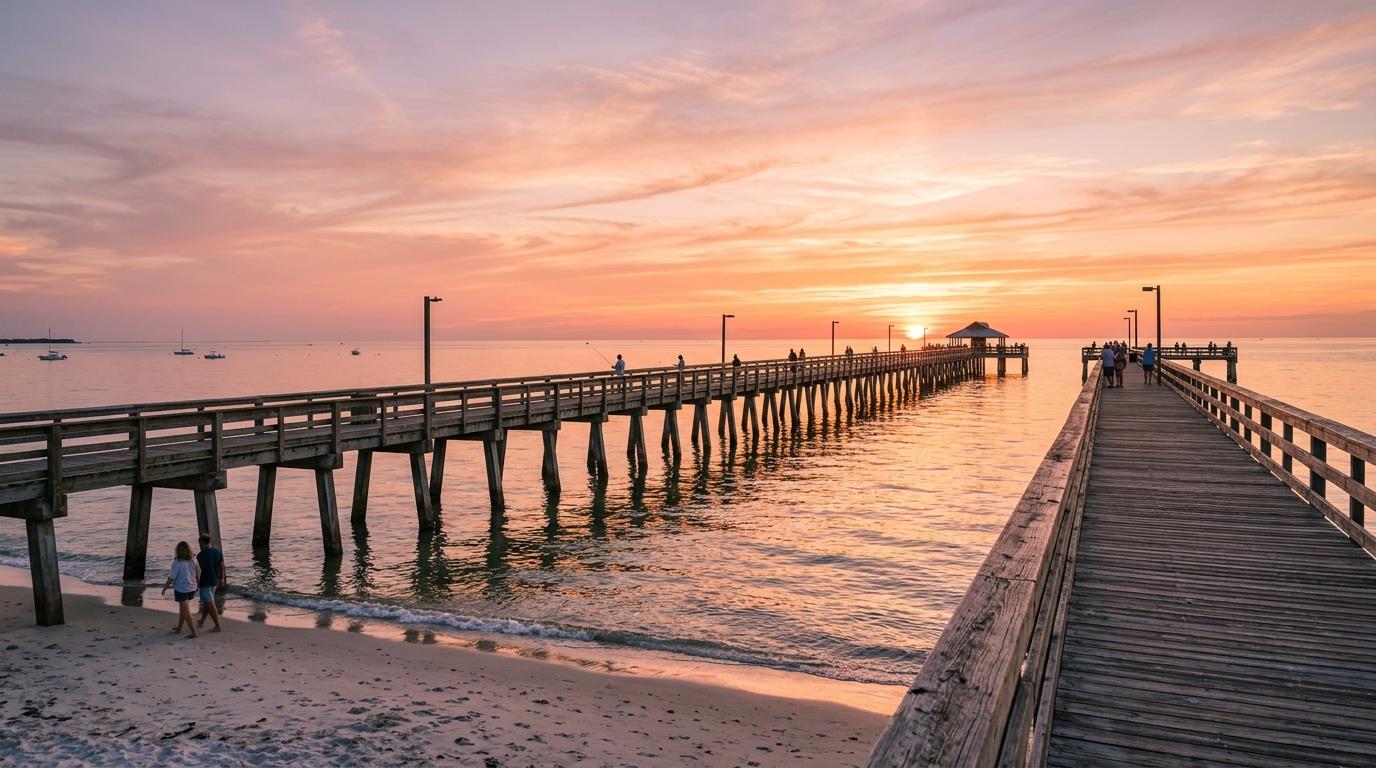
Pier 60 anchors the daily rhythm. The sunset gathering has been a nightly fixture for decades, with musicians, craft stands, and a steady line of travelers walking out onto the pier.
Clearwater Marine Aquarium focuses on rescue and rehabilitation and tends to interest families with younger kids. The exhibit scale is smaller than a larger city aquarium, which is part of its appeal.
Dolphin and sunset cruises leave from the marina at the base of the roundabout. The three mile loop into the bay sits in a reliable pod habitat, and sightings on afternoon runs are consistent year round.
Food, Drinks, and the Rhythm of a Day
Breakfast on the beach side tends to run late and casual. Patio seating at the smaller cafes along Mandalay stays comfortable in the morning, and the hotel options are easier to reserve than to wait for.
Lunch is usually a grouper sandwich. The sandwich turns up in a half dozen variants across the island, and travelers who make a point of trying two or three different places tend to arrive at a favorite by the end of the trip.
Dinner is where the island slows down. Clearwater Beach eats early compared to larger coastal cities, and most patio restaurants are busiest from six to eight. A simple short walk from the beach to a sunset-side table is often the trip’s quiet highlight.
A Few Practical Notes
Parking on the island is limited and metered. The two public garages behind the beach fill by late morning on weekends, and most travelers find that staying on the island rather than driving in is the simpler approach.
Sunscreen matters more than visitors often expect. The sand reflects strongly, and even cloudy afternoons return a surprising burn. Covering up by mid afternoon is a reasonable habit.