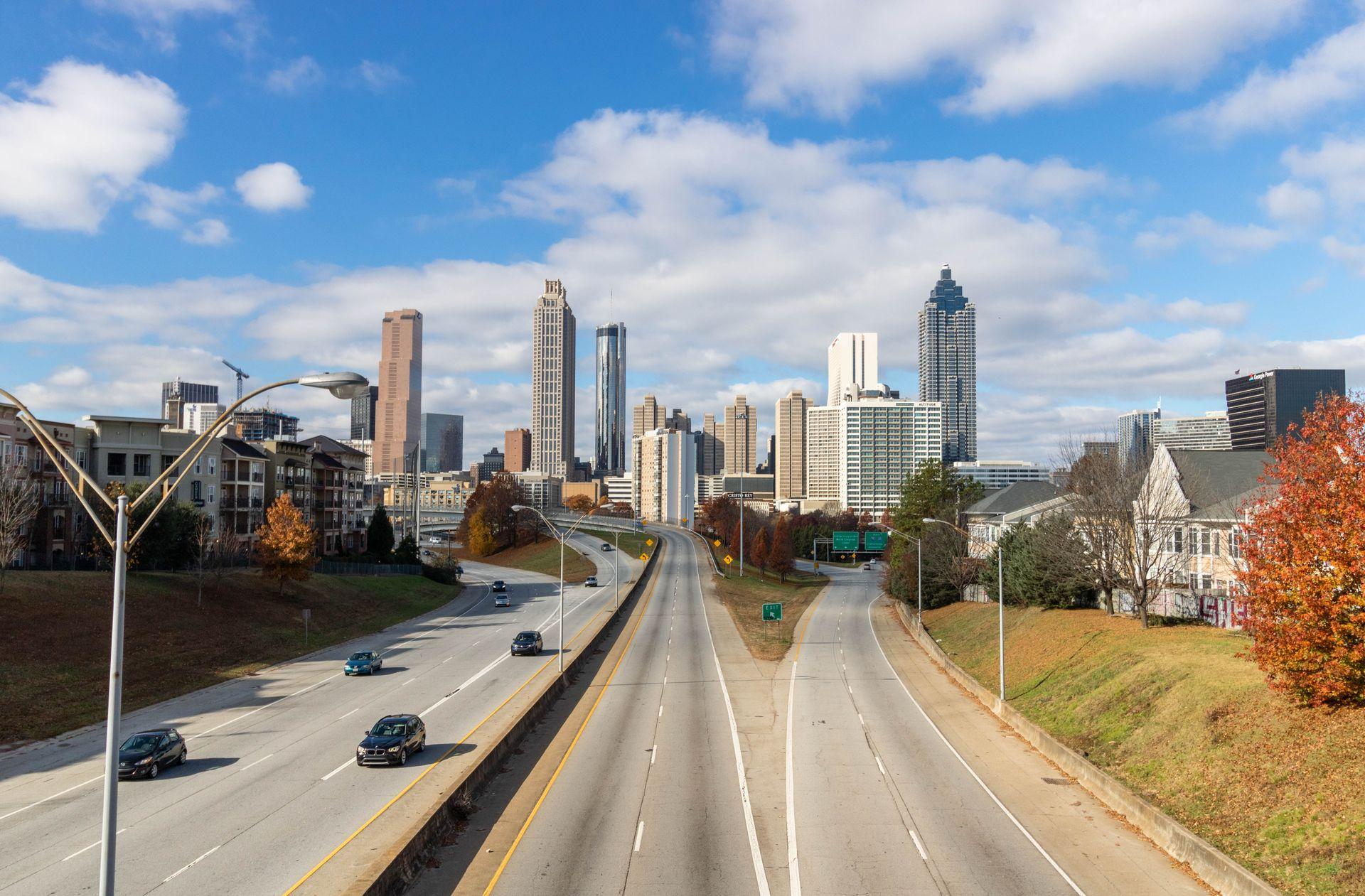
Georgia is an underrated road trip state. Most people think of Atlanta and move on, but there is a lot happening outside the city – mountains in the north, salt marshes on the coast, small towns that somehow never made it onto anyone’s list but absolutely should have. The distances are manageable too. You can get from Atlanta to the Blue Ridge in under two hours, or to the Georgia coast in under four. That makes the state genuinely well-suited for a Friday-to-Sunday escape without spending half the trip just getting somewhere.
Before you head out, it is worth having your paperwork in order. Georgia requires all drivers to carry minimum liability coverage, and the state tracks insurance status electronically. A quick check that your vehicle insurance Georgia coverage is active and current takes two minutes and means one less thing to think about once you are on the road.
Here are some of the best weekend drives the state has to offer.
North Georgia Mountains: Blue Ridge and Beyond
The stretch of North Georgia from Dahlonega up through Blue Ridge and Blairsville is one of the better mountain drives in the Southeast. It does not get the attention of the Smokies or Asheville, but it is genuinely beautiful and far less crowded.
What to do there: Blue Ridge sits on the Toccoa River and has become known for its cabin rentals and the Blue Ridge Scenic Railway, a heritage train that runs through the mountains. Dahlonega is Georgia’s original gold rush town and still has a working gold mine you can tour. Amicalola Falls State Park, just outside Dahlonega, is the approach trail to the Appalachian Trail’s southern terminus at Springer Mountain. The falls themselves drop 729 feet, making them the tallest cascading waterfall east of the Mississippi.
The drive: Coming from Atlanta, take GA-400 north through Cumming and into the mountains. The road opens up past Dawsonville and the views improve steadily. From Blue Ridge, the loop through Suches on GA-60 back toward Dahlonega is a particularly good stretch of road.
Distance from Atlanta: About 90 miles, roughly 90 minutes without stops.
Savannah and Tybee Island
Savannah is one of those cities that earns its reputation. The historic district is genuinely worth the drive – 22 squares, moss-draped oaks, buildings that go back to the 1700s. It is a walkable city in a way that most of Georgia is not, and the food scene has gotten significantly better over the past decade.
Tybee Island sits 18 miles east of downtown Savannah and adds a beach component to the trip without requiring another major drive. The island is small and low-key. The lighthouse dates to 1773 and is the oldest and tallest in Georgia. Fort Pulaski National Monument, on Cockspur Island between Savannah and Tybee, is worth a stop if Civil War history is your thing.
What to know: Savannah’s downtown parking can be frustrating on weekends, especially during festivals. The city runs a free parking garage on Bryan Street that many visitors do not know about. Tybee has paid lots near the beach and things fill up fast in summer.
Distance from Atlanta: About 250 miles, roughly four hours.
The Golden Isles: Jekyll Island, St. Simons, Cumberland
The Georgia coast below Brunswick operates at a different pace than Savannah. Jekyll Island was originally a private retreat for some of the wealthiest families in American history – the Vanderbilts, Rockefellers, Goulds – and the historic district still has that feel. The beaches are wide and uncrowded by Florida standards.
St. Simons Island is more developed but still relatively quiet. The lighthouse on the south end of the island is one of the most photographed spots on the Georgia coast. Cumberland Island, accessible only by ferry from St. Marys, is a national seashore with wild horses and almost no development. The ferry has limited capacity, so bookings need to be made well in advance through the National Park Service.
The drive along the coast: If you go to Tybee first and work your way south through Brunswick to Jekyll, you get a natural coastal route that covers most of what Georgia’s shoreline has to offer in a single weekend.
Distance from Atlanta to Jekyll Island: About 310 miles, roughly five hours.
Amicalola Falls to Helen
This is a short loop that packs in a lot. Start at Amicalola Falls, walk the approach trail, and then continue north and east toward Helen – a small town in the Chattahoochee National Forest that was redesigned in the 1960s to look like a Bavarian village. It sounds bizarre and it sort of is, but it works. The surrounding area has tubing on the Chattahoochee River, Anna Ruby Falls nearby, and access to some of the better hiking in the state.
The drive through Unicoi Gap on GA-75 north of Helen is particularly scenic, especially in October when the leaves are turning.
Madison and the Antebellum Trail
Madison sits about an hour east of Atlanta on US-441. It is known for being one of the few Southern towns that survived Sherman’s March largely intact, which left it with an unusually well-preserved collection of antebellum architecture. The downtown is compact and walkable, with good restaurants and one of the better small-town main streets in the state.
The Antebellum Trail runs from Athens south through Madison, Eatonton, Milledgeville, and on toward Macon. Milledgeville was Georgia’s capital before Atlanta and has its own historic district worth a half-day. The full trail is better suited to a long weekend than a single day, but the Madison-to-Athens stretch is an easy and enjoyable Saturday drive.
Okefenokee Swamp
This one is for drivers who want something completely different. The Okefenokee is one of the largest intact freshwater ecosystems in the United States – about 438,000 acres of blackwater swamp along the Georgia-Florida border near Waycross. Boat tours through the cypress stands are the main draw, and alligator sightings are common.
It is a long drive from Atlanta – about four hours – but there is nothing quite like it in the state. The Okefenokee National Wildlife Refuge manages access and has information on guided tours, which are the most reliable way to see the interior.
Planning Practical Stuff Before You Go
Check road conditions. GDOT’s real-time travel system covers all major interstates and state routes in Georgia, including lane closures, incidents, and construction alerts. It also has a free mobile app that runs route comparisons before you leave. Worth bookmarking if you are doing any significant driving in the state.
Think about your coverage. Georgia is an at-fault state, which means if something happens on the road, the financial responsibility falls on whoever caused the incident. If your current policy has gaps or you are wondering whether your coverage levels make sense for longer driving, it is a good time to review before the trip rather than after. Drivers who have had credit challenges in the past and are looking for more affordable options can explore car insurance for bad credit. Credit is a legal pricing factor in Georgia and some carriers weigh it differently than others, which can mean meaningful rate differences when shopping.
Mountain roads in winter. The North Georgia mountain routes – GA-60 through Suches, GA-75 through Unicoi Gap, the road up to Brasstown Bald – can ice over quickly in winter. GDOT’s 511 system is the most reliable source for current conditions on those routes before heading out.
Georgia ranks 8th nationally for vehicle theft according to MoneyGeek, with the majority concentrated in the Atlanta metro and surrounding counties. If your road trip starts with overnight parking in the city, comprehensive coverage on your vehicle becomes more relevant than it might be in a rural setting. For drivers comparing vehicle insurance Georgia options before a big trip or just looking at whether current coverage makes sense, it is straightforward to review what different coverage levels look like for your specific situation.