Arizona’s climate is unlike almost anywhere else in the country. Extreme heat, monsoon moisture, and intense UV exposure put unique demands on buildings that standard renovation advice does not account for. Whether you’re updating a Scottsdale home or refreshing a Phoenix office space, the smartest remodels start with understanding what the desert environment actually requires.
Design and Materials That Hold Up in the Desert Heat
The single biggest mistake Arizona property owners make is importing renovation ideas from cooler climates. Materials that perform beautifully in the Pacific Northwest or the Midwest can warp, fade, or crack after a single Arizona summer. One season is all it takes.
Flooring Choices That Survive the Temperature Swings
Tile remains the gold standard for Arizona interiors, and for good reason. It stays cool underfoot, handles humidity spikes during monsoon season, and does not expand and contract the way wood does when temperatures shift between day and night. Porcelain, in particular, offers durability and a wide range of styles that suit both residential and commercial spaces.
Luxury vinyl plank has become a popular alternative, especially in offices where comfort underfoot matters. Look for products rated for high-temperature environments. Standard vinyl can soften or separate at the adhesive layer when interior temperatures climb during a power outage or an HVAC failure, and that repair bill adds up fast.
Exterior Finishes and Paint
UV degradation is relentless here. Standard exterior paints fade and chalk within a few years, sometimes sooner. Elastomeric coatings and paints formulated for desert climates last significantly longer and provide a flexible barrier that handles the expansion and contraction of stucco walls. For wood accents and trim, a quality oil-based primer followed by a UV-resistant topcoat is worth the extra investment.
Stucco itself is a natural fit for the region, but older homes often have hairline cracks that allow moisture intrusion during monsoon storms. Addressing those cracks before repainting is a step that frequently gets skipped, and it causes bigger problems down the road.
Energy Efficiency Upgrades That Make a Real Difference
Cooling costs dominate utility bills for Arizona property owners. A renovation that ignores energy performance is a missed opportunity, because the desert climate rewards efficiency upgrades with fast, measurable payback.
Focus on these high-impact areas first:
- Attic insulation: Heat radiates through the roof all day long. Bringing attic insulation up to the recommended depth for desert climates is one of the most cost-effective upgrades available.
- Window film or replacement: Single-pane windows are still common in older Arizona homes and offices. Low-E window film blocks a significant portion of solar heat gain without darkening the space. Full window replacement with double-pane, low-E glass takes performance further.
- Cool roofing materials: Reflective roof coatings and light-colored tiles reduce the heat absorbed into the building structure, which directly lowers cooling loads.
- Air sealing: Gaps around recessed lights, plumbing penetrations, and HVAC ducts allow conditioned air to escape into unconditioned spaces. Sealing these before adding insulation maximizes the benefit of both.
- Smart thermostats and zoning: In larger homes and open-plan offices, zoned HVAC with programmable controls prevents the system from working harder than necessary in unoccupied areas.
Office Remodels: Balancing Function and Desert Comfort
Commercial remodels in Arizona face a specific challenge: creating a comfortable, productive workspace when the outdoor environment is hostile for a large portion of the year. Design decisions that work for an office in Chicago or Seattle need meaningful adjustments here.
Lighting and Glare Control
Arizona gets abundant natural light, which sounds like a benefit until the afternoon sun turns a west-facing conference room into a greenhouse. Window treatments that diffuse rather than block light keep spaces bright without the heat and glare. Solar shades are a practical choice for offices because they preserve outward views while filtering direct sunlight.
Supplementing natural light with LED fixtures that mimic daylight color temperatures helps maintain a consistent, comfortable environment throughout the day, even as outdoor light intensity shifts. The goal is a workspace that feels steady, not one that bakes by 3 p.m.
Break Rooms and Outdoor-Adjacent Spaces
Many Arizona offices include patios or covered outdoor areas that serve as break spaces. Renovating these zones with shade structures, misting systems, and heat-resistant furniture extends their usability well into the warmer months. A covered ramada with ceiling fans and proper orientation away from the west sun can function as a genuine amenity rather than a space that sits empty from May through September.
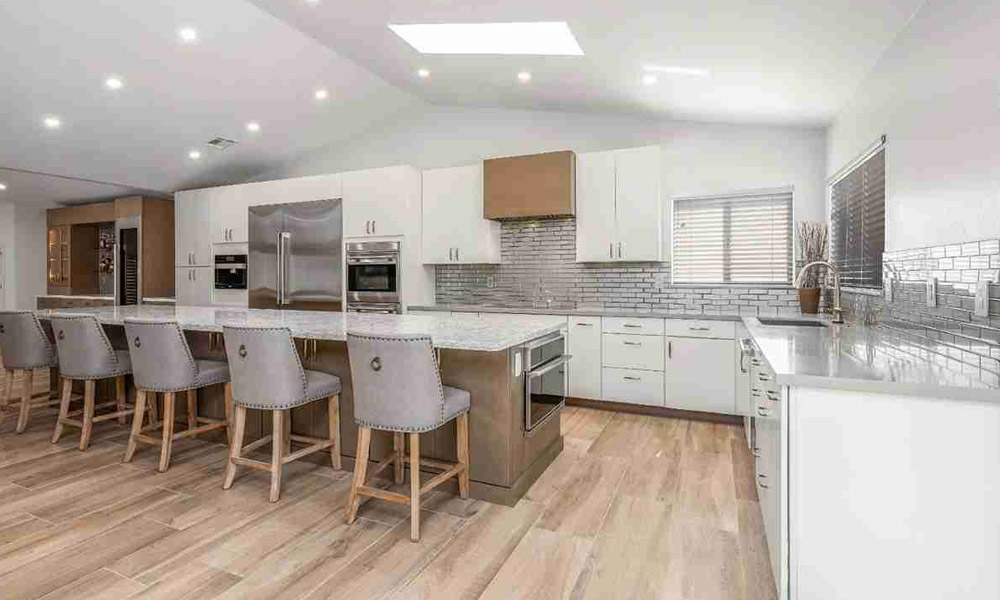
Interior break rooms benefit from good ventilation and durable surfaces, which is why commercial kitchen remodeling projects often prioritize materials that can withstand constant heat, moisture, and heavy daily use. Materials that resist moisture, heat, and heavy use save money on maintenance over the long run.
Working With Arizona’s Building Codes and Permits
Renovation projects in Arizona, particularly in Maricopa and Pima counties, involve permit requirements that catch out-of-state contractors and first-time renovators off guard. Understanding the local regulatory environment before breaking ground prevents delays and costly rework.
Structural changes, electrical upgrades, plumbing modifications, and HVAC replacements all typically require permits. The specific requirements vary by municipality, so checking with the local building department early in the planning process is essential. Cities like Tempe, Mesa, and Chandler each have their own processes, and approval timelines can vary considerably.
Hiring contractors who are licensed in Arizona and familiar with local code requirements makes a real difference. Arizona requires specific licensing for contractors, and verifying that a contractor holds a current Registrar of Contractors license protects property owners from liability and ensures the work meets local standards. Don’t skip that verification step.
Homeowners associations add another layer of approval in many Arizona communities. Exterior changes, including paint colors, roofing materials, and landscaping, often require HOA review before work begins. Submitting plans to the HOA before pulling permits avoids situations where approved construction conflicts with community guidelines.
Landscaping and Exterior Renovations That Reduce Maintenance
The outdoor environment around an Arizona property is part of the renovation picture. Water-wise landscaping and durable hardscaping cut long-term maintenance costs and improve curb appeal in ways that hold up year after year.
Desert-adapted plants like agave, palo verde, and brittlebush require minimal irrigation once established and provide genuine visual interest across seasons. Replacing high-water-use grass lawns with decomposed granite, flagstone, or native plantings pays dividends in reduced water bills and lower maintenance time. The savings show up every single month.
Shade trees planted on the west and south sides of a building provide passive cooling that reduces interior temperatures during the hottest months. The investment takes years to mature, but trees planted during a renovation project become a long-term asset. Future owners will thank you.
Final Thoughts
Renovating in Arizona rewards preparation and local knowledge. The materials, systems, and design choices that perform best here are specific to the climate, and cutting corners on any of them tends to show up quickly. Starting with energy performance and durable materials sets a foundation that every other improvement builds on. Whether the project is a full home remodel or a targeted office refresh, the desert environment deserves a seat at the planning table from day one.