A house fire can leave you feeling shocked, tired, and unsure where to start. The best first step is simple: protect people before property. Once emergency crews have handled the fire, take recovery one task at a time. If cleanup or repairs are needed, professional fire damage restoration in South Shore and Cape Cod can help address smoke, soot, water, and building damage.
Do not rush to throw things away, clean walls, or enter damaged rooms. Fires can leave behind hidden dangers, including weak floors, damaged wiring, wet drywall, sharp glass, and smoke particles in the air. A clear plan can make the first days less stressful.
Secure the Property
Broken windows, open doors, and roof damage can let in rain, animals, and unwanted visitors. Board-up work or temporary roof covering may be needed. Homeowners who need local support can look into fire damage restoration in Newton to help protect a damaged property and begin recovery.
- Cover exposed openings when it is safe to do so.
- Keep receipts for emergency work and temporary supplies.
- Do not remove major debris before taking photos.
Put Safety First
Stay outside until the fire department or local officials say it is safe to return. A home may have unstable ceilings, hot spots, gas leaks, broken glass, or exposed electrical wires. Keep children and pets away from the property. The American Red Cross home fire recovery guide also advises residents to wait for clearance before re-entering a fire-damaged home.
Handle the First 24 Hours
First, confirm that everyone and every pet is safe. Seek medical or veterinary care for burns, breathing problems, or injuries. Notify close family members, follow directions from emergency crews, and write down important names, phone numbers, and instructions.
- Call 911 if there is still an emergency.
- Ask the fire department how to get incident details.
- Find out whether gas, water, and power should remain off.
- Wait to begin cleanup until the property is inspected.
Document the Damage
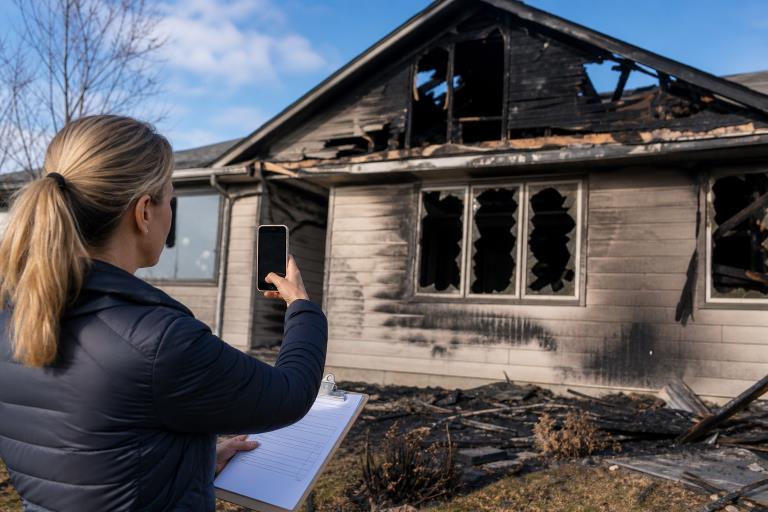
Create a record before cleaning or moving damaged items. Take wide shots of every room, then close-up shots of walls, floors, ceilings, appliances, and belongings. Record smoke, soot, water, and structural damage separately. Save videos, fire reports, receipts, inspection notes, and a room-by-room list of damaged items.
Start the Insurance Process
Contact your insurance provider as soon as possible and request a claim number. Ask what emergency work is approved, whether temporary housing is covered, and if damaged belongings should be kept for review. Keep copies of every email, estimate, report, and receipt. Do not sign repair contracts or assign insurance benefits until you understand the agreement.
Check for Smoke, Soot, and Water Damage
Damage often reaches beyond the room where the fire started. Smoke can move through vents, closets, fabrics, and ceiling spaces. Soot may stain surfaces and cause odors, while firefighting water can soak flooring, drywall, insulation, and cabinets. Wet materials can also lead to mold if drying is delayed. Avoid dry sweeping soot, since it can spread particles and make stains worse.
Sort and Protect Personal Belongings
Sort items only after the home is cleared for entry. Use simple groups to avoid confusion:
- Keep:Dry, clean, and safe to handle items.
- Review:Items with smoke odor, soot, moisture, or uncertain damage.
- Discard:Food, medicine, cosmetics, and products exposed to heat, smoke, or soot.
- Protect:Identification, financial papers, photos, electronics, and sentimental items.
Know What Can Be Cleaned
Some hard surfaces can be cleaned, but porous materials can trap smoke particles and odors deep within. Mattresses, upholstered furniture, insulation, carpeting, and unfinished wood may need a professional assessment. Do not use appliances or electronics until they have been checked. Never mix cleaning chemicals, especially bleach and ammonia products.
Arrange a Safe Place to Stay
A home may be unsafe due to structural damage, poor air quality, water exposure, or utility issues. Ask your insurance provider about hotel or rental assistance. Renters should contact the landlord and their renters’ insurance carrier right away. Pack medications, IDs, chargers, work supplies, important documents, clothing, and pet essentials. Reach out for support if stress or sleep problems continue.
Plan the Restoration Work
Restoration is usually completed in stages, not as one quick cleanup. The process may include assessment, emergency stabilization, water removal, drying, soot cleanup, odor treatment, repairs, and a final safety review. The U.S. Fire Administration’s after-fire guidance is also useful for early recovery tasks, document replacement, and insurance questions.
Common Questions After a House Fire
Can residents enter after the fire department leaves?
Not always. Wait for official permission, as the building may still have hidden safety issues.
Should smoke-damaged items be thrown away?
Document them first. Ask your insurer or a qualified restoration professional before discarding valuable items.
How long does recovery take?
It depends on the damage. A small fire may need cleaning and minor repairs, while a major fire may require demolition, rebuilding, and inspections.
Can the smoke odor return after cleaning?
Yes. Odor may return when soot remains in insulation, ductwork, fabrics, or other hidden areas.
Final Recovery Checklist
- Confirm everyone is safe and get medical care if needed.
- Wait for official approval before entering.
- Secure the building and document all damage.
- Open an insurance claim and save every record.
- Address smoke, soot, water, and structural concerns.
- Arrange safe temporary housing when needed.
- Use qualified help for complex cleanup and repairs.
Recovery after a house fire can feel overwhelming, but safety, careful records, and steady communication can make the process easier to manage. Focus on the next safe step, not every task at once.