The New Realities of eBike Weight and Vehicle Limits
Electric motorcycles pack a lot of power into a small chassis, straining transport gear. Start with your vehicle’s hitch class and tongue weight rating before buying a rack. The receiver’s maximum vertical load is the tongue weight rating. The weight of the rack, bikes, and accessories like lights and license plate brackets must be included.
Many popular eBikes weigh 50 to 70 lb each with batteries installed. Some racks weigh 35 to 70 lb on their own. Two loaded bikes can easily approach 150 to 180 lb before accessories. If your receiver is Class I, you are likely out of range. Class II typically supports 300 to 350 lb of tongue weight, and Class III or IV can handle even more, but you must always check your specific vehicle and hitch label.
Avoid hasty fixes that subtly diminish capacity. Due to leverage, hitch extenders and high-rise adapters can lower tongue weight ratings by half. That extra leverage can stress steel on a smooth highway. Instead of stacking adapters, choose a rack with built-in shank rise or change your loading plan.
Platform vs Vertical Hitch Racks
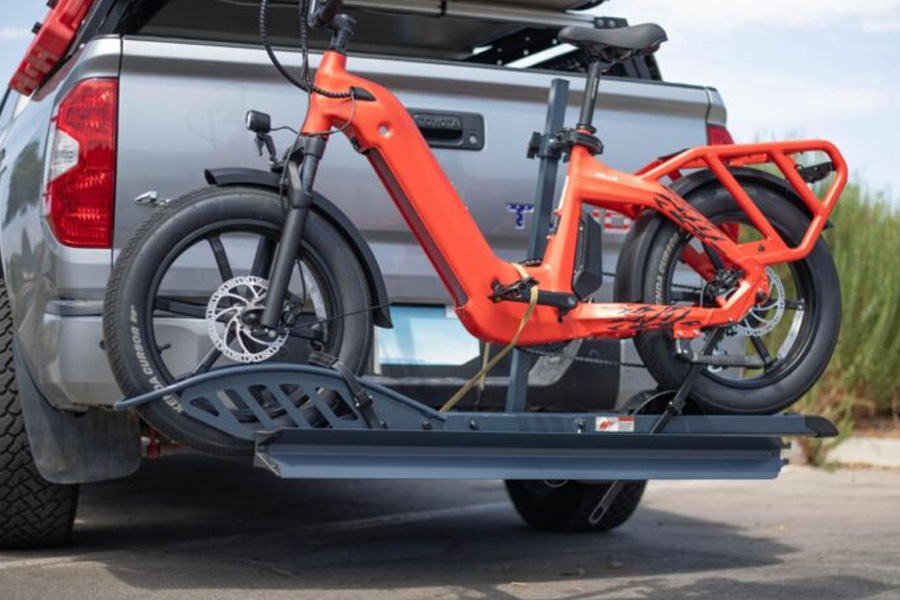
Most eBike-friendly designs are platform. To secure bikes, they place wheels in trays and press down on the tires or fork crown with one arm. This method protects frames and supports several geometries. Maximum tire width, wheelbase range, and wheel diameter are compatibility factors. For big tires, use trays with broad straps or fat-tire kits.
Vertical racks hang bikes by the fork or wheel and are popular with mountain bike fleets. Some of these racks now offer higher per-bike capacity and are lighter than large platforms. They shine for multiple bikes and garage storage, though they often require compatible fork crowns and may not play nicely with swept fenders or heavy commuter builds.
Platform racks with frame-clamps are less gentle on delicate finishes and step-through frames. A typical wheel hook may collapse whole fenders instead of pressing on the tire. Fender-friendly adapters or racks secure the rear wheel to a frame or seat-tube point with a cushioned arm. Step-through frames may need a top-tube adapter bar for stability.
Loading Heavy Bikes Without Strain
A good rack reduces the height of the lift. A great rack eliminates it. If you or your riding partner struggle to deadlift a 65 lb bike, look for integrated or accessory ramps. They turn loading into a controlled roll rather than a hoist.
Avoid contributing extra weight. Before loading, remove batteries, kid seats, baskets, panniers, and hefty locks. Batteries save 5–10 lb each bike, and accessories add extra. Back to a curb to raise the rack a few inches or park on a modest driveway slope to use gravity. Cargo-style eBikes require a neutral spine, leg lifts, and pairs.
If your rack does not include a ramp, you can sometimes angle the bike onto the first tray with the rear wheel planted and then pivot the front in. Practice in your driveway first. A smooth, practiced motion beats improvisation at a highway gas stop.
Stability Tech That Matters
Wobble is the enemy of confidence. Seek a receiver connection that eliminates play with a threaded pin, cam system, or expanding wedge that braces the shank against the hitch walls. A snug connection feels like a firm handshake rather than a loose grip.
Wheel trays should position each bike so the load sits close to the vehicle. The closer the mass, the less leverage. Trays with adjustable fore-aft range handle long wheelbases common on eCargo and long-tail bikes. Fat tire straps and deeper cradles prevent side-to-side walking on rough pavement.
Convenience counts. Tilt mechanisms lower the rack for hatch opening. For van doors or tailgates, swing-away arms swivel the rack. Swing-away systems are heavier and costlier, but they save you when your hands are full and you need the trunk cooler.
Safety on the Road and at Stops
Bikes that block lights or the license plate can earn you a citation in some regions and reduce safety in all of them. If your setup obscures tail lights, consider a four-pin auxiliary light bar mounted to the rack. Some racks offer plate relocation brackets that clip to the rear tray.
Set a simple ritual for every trip’s first leg. Stop after 10 miles to retorque the receiver pin, check tire straps, and make sure no arm has raised. Rubber road grit and temperature changes alter tension. Use soft padding or straps to prevent pedals from touching frames.
Integrate cable locks and a locking hitch pin for security, but use many deterrents. During meals, a small U-lock through the bike frame and rack spine increases security. If staying indoors, remove batteries. Budget coverings can hide bikes, but they flap at highway speed and chafe paint. One should be tightened and checked for rubbing.
Vehicle Compatibility and Special Cases
A swing-away may be needed for tall tailgates and barn-door vans, but tilt racks work well with hatchbacks and SUVs. Test in your driveway to confirm. Ground clearance matters on steep driveways. Long shanks and low receivers can scratch, therefore use a rack with raise if there are severe angles.
The calculation changes for off-pavement designs. Graded dirt and washboards bounce more. Off-road racks are tested and tagged. Some limit capacity behind RVs or travel trailers due to the greater back overhang amplifying pressures. If attaching to an RV, choose racks suited for that purpose and limit bike quantity and weight.
Backup sensors and cameras see the world differently. Expect parking sensors to beep with any rear rack installed. Some vehicles allow sensor sensitivity to be reduced or temporarily disabled through the infotainment settings. If yours does not, move slowly and rely on mirrors for tight maneuvers.
Care and Maintenance
Racks live in the splash zone behind your car. After winter or beach trips, rinse road salt and sand from trays, pivots, and lock cores. Dry and apply a light lubricant to moving parts, especially tilt or swing pivots and cam interfaces. Inspect straps for cuts, fraying, and UV damage. Replace worn parts before the next road trip.
Over time, hardware loosens. Bolts should be checked before each season and after long drives. Torque values from manufacturers are no joke. Reliable clamping makes a little torque wrench worthwhile. Store the rack indoors or covered and close arms to reduce gas strut and spring stress.
Cost vs Value: What to Look For When Buying
Price tags can be sobering, but the right features save headaches down the road. Look for:
- Per-bike capacity that matches your heaviest eBike with a margin to spare
- Trays and straps compatible with your tire width and wheelbase
- Easy loading via ramps or low tray height
- A secure, tool-free wobble control at the receiver
- Integrated locks with replaceable cores
- Replaceable wear parts and proven parts availability
- A tilt or swing mechanism that fits your vehicle’s rear access
- Coatings that resist corrosion in your climate
- Reasonable rack weight, since you will lift it on and off the vehicle
If you share the rack between vehicles, confirm the shank fits both receivers. If you plan to add a third bike later, consider modular platforms that can expand without replacing the whole system.
Trip Planning With a Rack
Carrying two eBikes adds frontal area and turbulence behind the vehicle. Fuel economy or EV range will drop. Plan accordingly for charging or fuel stops on long routes. In tight city parking, remember you have added length. Parallel parking and short garages suddenly feel smaller.
Low obstacles are the quiet hazard. Watch for steep ferry ramps, curbs, and angled driveways that can drag trays. When in doubt, approach at an angle and go slow. If your rack folds up when empty, secure it in the stowed position to protect shins and bumpers at the grocery lot.
FAQ
How do I calculate whether my hitch can handle my eBikes?
Add up the weight of the rack, every bike, and any accessories mounted to the rack. Compare that total to the hitch’s tongue weight rating and stay below it. Do not forget that adapters and extenders can reduce the allowable load because they increase leverage.
Are step-through or full-fender eBikes compatible with wheel-hook racks?
They can be, but you need the right interface. Step-through frames may require a top-tube adapter bar. Full fenders often need a fender-friendly arm or a frame contact point with proper padding, since a standard tire hook can crush a fender.
What is the difference between tilt and swing-away, and which is better?
Tilt allows the rack to lean back for hatch access with bikes loaded. Swing-away pivots the entire rack to the side and offers wider access, useful for tailgates and van doors. Tilt is lighter and simpler, swing-away offers more clearance and convenience at a higher cost and weight.
Can I use a hitch extender or rise adapter with an eBike rack?
Though possible, it usually lowers your hitch’s tongue weight rating and adds flex. Choose a rack with a built-in rise or a shorter shank to keep the load near to the car for height or clearance. Recalculate your safe load and use extenders only when necessary.
How fast is safe to drive with eBikes on a rack?
Follow the rack manufacturer’s stated speed guidance and local laws. Even without a posted limit, treat the setup like a roof box or trailer situation and avoid very high speeds. Crosswinds and turbulence increase with speed, and periodic strap checks become more important.
Do I need to remove eBike batteries before transport?
You do not have to, but it is smart. Removing batteries cuts weight, reduces stress on the rack, and lowers theft risk at stops. Store batteries inside the vehicle, away from direct sunlight, and secured so they cannot move.
What makes a rack RV approved?
RV-approved racks are developed and tested for motorhome and trailer forces from larger rear overhangs and firmer springs. These racks have stronger spines and stricter bike capacity limits. Select an RV or towing rack with express approval.
How do I stop backup sensors from constant alerts?
Some automobiles allow you to disable rear sensors or adjust sensor sensitivity in settings. In the absence of that, the rack will beep. Slow down, use mirrors and cameras, and consider a swing-away or tilt rack for tricky parking scenarios.