Key Takeaways
- Small leaks, blocked skimmers, weak pumps, and loose rocks can become more disruptive when left unaddressed.
- Concord, NC ponds contend with changing seasons, summer heat, falling leaves, rain runoff, and periods of dry weather.
- A careful inspection of the water level, liner, equipment, pond edge, and surrounding soil helps narrow down the problem.
- Some ponds need a targeted repair, while older or poorly functioning ponds may benefit from renovation or redesign.
- Early maintenance can help protect fish, plants, equipment, and the backyard’s appearance.
A backyard pond can be a peaceful focal point, but it depends on steady water movement, reliable filtration, stable edges, and routine cleanup. When one part of that system starts to fail, the visible symptom is often only the beginning. A falling water level, a noisy pump, or murky water warrants attention before it becomes a more involved project.
For homeowners considering pond repair in Concord, Charlotte Backyard Ponds offers repair and renovation services for water features throughout the Charlotte area. Its service focuses on evaluating the complete pond system, including liners, pumps, skimmers, filters, waterfalls, rockwork, and circulation, so that owners can address the cause of a problem rather than only its most obvious symptom.
Why Backyard Ponds in Concord, NC Need Local Attention
Backyard ponds in Concord, NC, are exposed to a changing mix of heat, rainfall, wind, and seasonal debris. Summer sun can warm shallow water and encourage algae growth when circulation or filtration is not keeping up. Heavy rain can wash mulch, soil, lawn clippings, and other material toward the pond. During dry stretches, evaporation becomes more noticeable, making it harder to tell whether water loss is normal or due to a leak.
Mature trees add welcome shade and character to many Cabarrus County landscapes, but leaves, seed pods, and twigs can collect in skimmers and settle on the pond bottom. Roots and shifting ground near the pond perimeter can also affect exposed liner edges or decorative rock. Grading matters as well. Water should not routinely carry sediment into the pond or flow behind a waterfall where it can escape the system.
Five Signs a Pond May Need Repair
- Water levels keep falling. Some evaporation is expected, especially in warm weather. A rapid or persistent drop may indicate a low liner edge, a plumbing leak, a damaged liner, or a waterfall sending water outside the basin.
- The water looks cloudy or green. Poor circulation, weak filtration, organic buildup, excess sunlight, and nutrient-rich debris can all affect water clarity.
- The pump is noisy or stops running. A clogged intake, worn pump component, or electrical issue can interrupt circulation. Grinding, rattling, or repeated shutoffs should not be ignored.
- Leaves and debris collect quickly. A full skimmer basket reduces flow and makes the pump work harder. Debris that reaches the bottom eventually breaks down into sediment.
- The pond edges look unstable. Settled stone, exposed underlayment, eroded soil, or a liner pulled below the water line can affect both appearance and water retention.
Start With a Safe Pond Inspection
Before deciding on a repair, take time to observe the pond as a complete system. Turn off the pump briefly and note the water level. If the water stops dropping when the pump is off, the issue may be associated with the waterfall, plumbing, or stream area rather than the main basin.
- Look for unusually wet soil or consistently muddy areas around the pond.
- Inspect the liner edge for folds, gaps, tears, or sections that have been pulled downward.
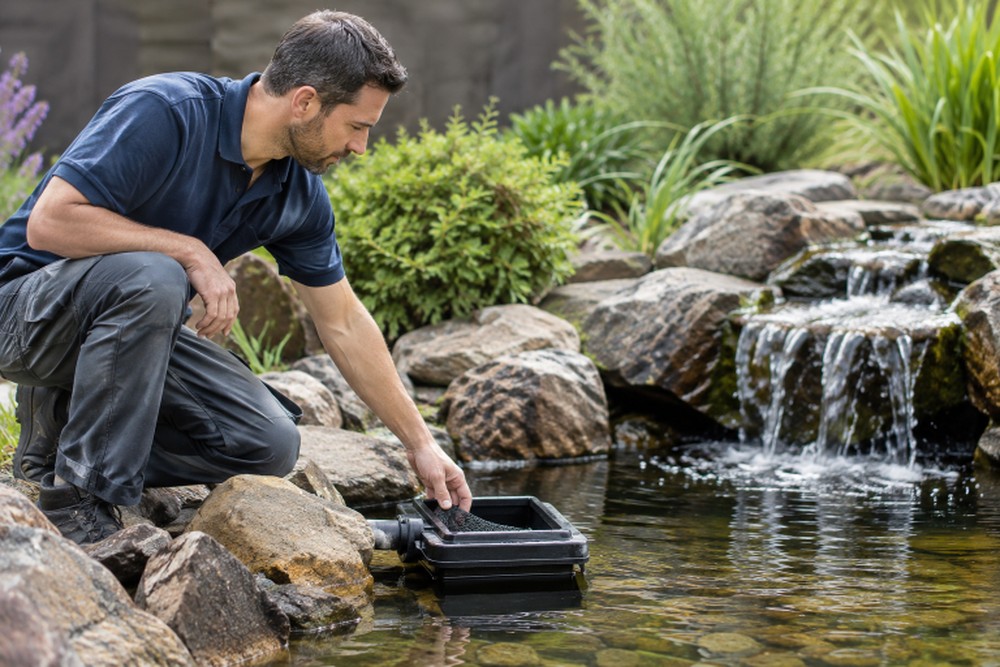
- Remove leaves from the skimmer and inspect the filter for heavy buildup.
- Listen for unusual sounds from the pump and confirm that water is moving evenly.
- Watch fish behavior, especially repeated gasping at the surface, which can signal a water-quality or oxygen concern.
- Take photos and write down when the issue first appeared, whether it changed after rain, and how often water has been added.
Do not enter a deep pond, handle damaged wiring, or add harsh chemicals around fish without appropriate guidance. If the pond has a large embankment, drainage structure, or dam-like feature, the state’s pond repair guidance shows why inspection, stabilization, and maintenance should be approached as connected steps.
Repair, Renovation, or Full Redesign?
Basic repair is often appropriate for a clogged skimmer, a loose rock, a minor liner issue, a failing pump, or a restricted plumbing line. The goal is to restore normal function without changing the pond’s overall design.
Renovation makes sense when the layout still works, but the system needs improvement. Updated filtration, better circulation, refreshed rockwork, lighting, or a rebuilt waterfall can make an aging pond easier to enjoy and maintain.
A full redesign may be the better route if the pond is too shallow, difficult to clean, poorly positioned for drainage, or no longer meets the household’s needs. Some homeowners choose a smaller water feature, stream, fountain, or pondless waterfall when they want moving water with less ongoing upkeep.
Common Pond Repairs Homeowners May Need
Fixing Water Loss
Leak diagnosis usually starts with isolating parts of the system. A professional may examine the liner, plumbing, waterfall path, stream, skimmer, and perimeter to find where water is escaping. Continually topping off a pond can hide the source of the loss and may allow the underlying problem to worsen.
Updating Pumps and Filters
A pump and filter should be sized to the pond’s size, depth, fish load, plant growth, and waterfall design. When equipment is undersized, clogged, or near the end of its useful life, the pond may have weak movement, poor clarity, and inconsistent waterfall flow.
Removing Sediment and Organic Buildup
Decaying leaves, fish waste, dying plant material, and windblown debris can build up at the bottom over time. A thorough cleaning can remove this material and reveal issues that were hidden beneath it, including damaged liner sections or displaced stones.
Repairing Waterfalls and Rockwork
Shifted stones and worn transitions can direct water behind the feature instead of back into the pond. Restoring the waterfall path improves the look and sound of the feature while helping keep water where it belongs.
How Seasonal Changes Affect Concord, NC Ponds
- Spring: Remove winter debris, inspect edges, restart equipment, and look for erosion after wet weather.
- Summer: Monitor water levels, algae, pump performance, and fish behavior during hotter periods.
- Fall: Empty the skimmer regularly, use netting if needed, and trim dying aquatic growth before it decomposes.
- Winter: Protect exposed plumbing and equipment in accordance with the pond’s design, while maintaining appropriate water movement for fish and water quality.
A Practical Pond Repair Process
Start by describing the symptoms clearly. Then arrange an on-site evaluation that examines the pond as a connected system rather than treating one component in isolation. Once the source is identified, choose a repair scope that addresses the liner, basin, plumbing, filtration, pump, rocks, or water flow involved. At the end of the work, confirm that the water level is stable, the edges are secure, and the equipment is operating as intended.
Frequently Asked Questions
How can a homeowner tell if a pond is leaking?
Track the water level with the pump running and again with it off. Also, inspect wet areas around the pond, the liner edge, plumbing connections, and the waterfall route.
Can a damaged pond liner be repaired?
Some small, accessible liner issues can be repaired. Widespread deterioration, major shifting, or extensive damage may make replacement the more dependable option.
How often should a backyard pond be cleaned?
Cleaning needs vary with pond size, fish, tree cover, plant growth, and debris. Regular skimmer and filter checks help prevent severe buildup.
Is green water always a sign of a broken pond?
No. Green water often relates to algae, sunlight, nutrient buildup, or insufficient circulation. It does not automatically mean the liner has failed.
Conclusion
A neglected pond rarely improves through guesswork. By noticing changes early, inspecting the entire system, and choosing the right level of repair, homeowners in Concord, NC, can protect their water feature and keep it enjoyable for years to come.