Keeping healthcare spaces professionally maintained in Marietta means following clear standards for cleaning urgent care sites. Applicable training and credential requirements can help demonstrate that cleaning teams are prepared to follow established procedures each day.
Inspection-ready providers should understand what sets environmental healthcare cleaning apart from regular janitorial work. If a site does not follow applicable federal, state, local, or facility-specific requirements, health and safety risks can increase and inspection findings may affect operations.
Federal requirements such as those administered by OSHA can establish workplace safety and training obligations, while CDC guidance can inform infection-prevention practices in clinical environments. Local oversight and facility policies may add further requirements, while appropriate disinfectant selection and documented training support consistent compliance practices.
Cleaning teams should have current training and documentation appropriate to their responsibilities. Understanding the applicable requirements is an important first step in establishing consistent cleaning procedures for urgent care environments.
Essential Certifications for Healthcare Cleaning Services
Training and certification can be important components of a healthcare cleaning program. Proper documentation helps demonstrate that staff understand how healthcare cleaning differs from general office work. Is your partner’s team familiar with the infection-prevention procedures relevant to clinics and urgent care?
In Marietta, some healthcare cleaning providers may use industry-specific programs such as the Certification Training for Surgical Cleaning Technicians (CSCT) from the Association for the Health Care Environment. Whether a particular certification is required depends on the facility, role, contract, and applicable requirements.
The CSCT program addresses areas such as cleaning procedures and infection-control considerations. Other training programs may address bloodborne pathogen safety, personal protective equipment, chemical handling, and appropriate disposal practices.
Structured training can help reduce missed steps that could create safety or operational concerns. Additional education may cover microbiology fundamentals, product labels, cleaning chemistry, and procedures for high-touch surfaces.
Does Cleanstar National Inc. meet these standards for critical environment cleaning for healthcare?
State and Local Compliance Standards in Marietta
Marietta facilities should review both statewide and local requirements when establishing urgent care cleaning plans, since healthcare safety requirements extend beyond basic cleaning. Understanding which rules apply to the specific facility helps support risk-conscious operations and inspection readiness.
- Facility Licensing Rules: Urgent care centers should review the state licensing and facility requirements that apply to their clinical operations, including any provisions affecting environmental cleaning and maintenance.
- Local Health Guidelines: Facilities should identify applicable local health requirements related to infection prevention, hygiene, and facility operations. The specific oversight process can vary by facility and jurisdiction.
- Medical Waste Disposal Laws: Healthcare sites should follow the requirements applicable to the storage, handling, transportation, and disposal of medical and biohazard waste.
- Cleaning Agent Approvals: Cleaning and disinfecting products should be selected according to applicable federal requirements, product labeling, facility procedures, and the intended use of the product.
OSHA Regulations for Urgent Care Cleaning
OSHA requirements can be relevant to urgent care cleaning because employees may encounter workplace hazards involving blood, bodily fluids, sharps, chemicals, and other exposures. The specific requirements depend on the work performed and the circumstances of the facility.
- Applicability of OSHA Regulations: OSHA standards may apply to urgent care employees and cleaning personnel based on their workplace activities and exposures. Facilities should identify the federal or state OSHA requirements applicable to their operations.
- Cleaning Definitions and Methods: Cleaning involves removing dirt, debris, and contaminants from surfaces through appropriate methods. Cleaning is often an important step before disinfection when required by the product label or facility procedure.
- Infection and Exposure Controls: Urgent care facilities should maintain procedures appropriate to the infectious and workplace hazards employees may encounter. Applicable controls should be based on the facility’s activities, exposure risks, and current requirements.
- Special Medical Procedures and Airborne Risks: Certain clinical procedures may create additional exposure considerations. Facilities should establish appropriate controls for airborne or other occupational hazards based on the procedure, room, equipment, and applicable workplace-safety requirements.
CDC Guidelines for Infection Control in Clinical Settings
The CDC provides infection-prevention guidance relevant to clinical spaces. These recommendations can inform practices in urgent care, clinics, and outpatient environments, including hand hygiene, environmental cleaning, and appropriate disinfectant use.
Facility leaders should provide appropriate resources, procedures, and training to support infection prevention. Training should be appropriate to each employee’s responsibilities and aligned with applicable requirements and facility policies.
These practices are intended to support infection prevention across healthcare environments. Facilities can incorporate appropriate disinfectant selection, cleaning schedules, personal protective equipment, and environmental controls into their established procedures.
Monitoring and regular feedback can help evaluate whether workers are following established infection-control practices. Facilities may also provide educational resources to patients, families, and caregivers about infection-prevention measures.
Personal protective equipment should be selected based on the anticipated exposure risk and the facility’s established procedures.
CDC guidance can therefore serve as an important reference when developing cleaning and infection-prevention practices for urgent care environments in Marietta.
Choosing Certified Cleaning Providers for Urgent Care
Choosing a provider with appropriate training and credentials can help an urgent care site address the safety and operational requirements associated with healthcare cleaning. Providers should be able to explain how their teams are trained for the risks present at the facility.
- Industry Credentials Matter: Relevant certifications and training can demonstrate education in areas such as infection control, biohazard awareness, chemical safety, and healthcare cleaning procedures. Facilities should review which credentials are relevant to the assigned work rather than assuming one certification applies to every role.
- Proven Local Knowledge: Providers serving Marietta should understand the facility’s applicable procedures and any relevant state or local requirements. Local knowledge can support more consistent implementation of site-specific cleaning protocols.
- Transparency and Documentation: Professional cleaning providers should maintain appropriate records of staff training, credentials, and completed work. Accessible documentation supports internal reviews, inspection readiness, and visibility into daily cleaning activities.
Understanding Bloodborne Pathogen Training Requirements
Bloodborne pathogen training is an important consideration for cleaning personnel who may have occupational exposure to blood or other potentially infectious materials. The applicable training requirements depend on employee responsibilities and workplace exposure.
- Course Content Requirements: Training should address bloodborne pathogen risks, exposure routes, appropriate personal protective equipment, exposure-control procedures, and safe handling and cleaning practices relevant to the employee’s work.
- Annual Training and Accessibility: Where OSHA’s Bloodborne Pathogens Standard applies, training must follow the applicable requirements for timing, content, and employee access to information. Facilities should maintain documentation showing that required training has been completed.
- Qualified Instructor Standards: Where OSHA training requirements apply, instruction should be provided by a person who meets the applicable requirements and can explain the hazards and procedures relevant to the employees being trained.
Importance of EPA-Approved Disinfectants in Urgent Care
Using EPA-registered disinfectants appropriately is an important consideration for urgent care cleaning in Marietta facilities. Products should be selected according to their registered uses, product labels, applicable facility procedures, and the contamination risks being addressed.
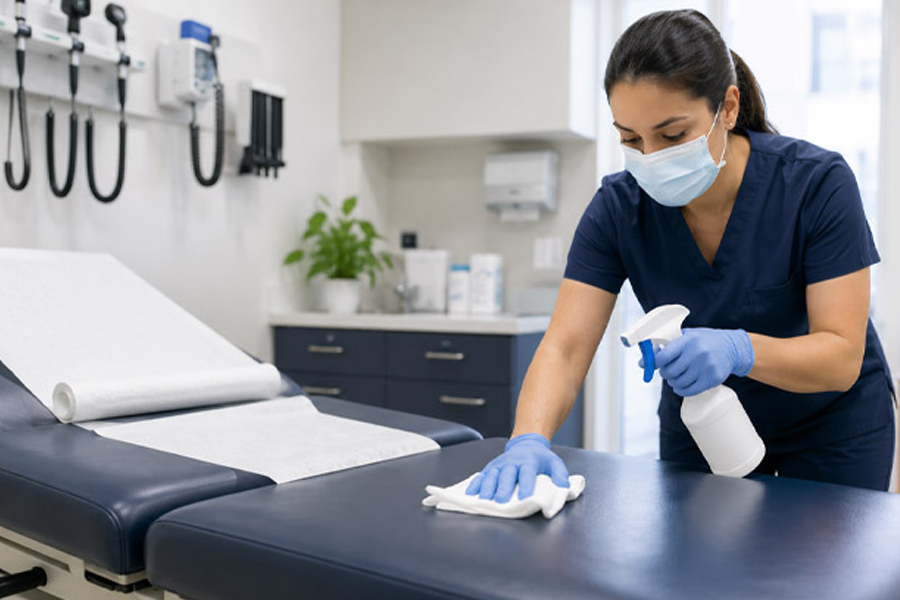
The appropriate disinfectant can support contamination control on frequently touched surfaces such as exam beds, handles, switches, and other clinical surfaces. Product selection should be based on the organisms, surface types, and uses identified by the applicable label and facility procedures.
Applicable requirements govern the selection and use of cleaning and disinfecting products in clinical environments. Urgent care centers should establish procedures that account for patient volume, room use, contamination risks, and the manufacturer’s instructions.
Routine use of appropriately selected disinfectants supports a professionally maintained care environment and can contribute to consistent inspection-readiness practices.
A sound approach is to pair staff training with clear cleaning logs so facility leaders can track and review products used and procedures completed. For facility leaders, appropriate disinfectant selection is both a cleaning consideration and part of broader risk-conscious facility operations.
Verifying Staff Background and Health Screenings
Urgent care facilities may establish screening requirements for cleaning staff based on their policies, access responsibilities, patient environment, and applicable obligations. Providers should understand and document the requirements established by each site.
- Confirm Complete Background Checks: Where required by the facility or applicable policy, cleaning providers should maintain appropriate background-check documentation for assigned personnel. This can support controlled access to clinical areas and facility security procedures.
- Verify Health and Immunization Records: Facilities may establish health screening or immunization requirements for personnel based on occupational exposure, facility policy, or applicable healthcare requirements. Providers should be able to explain how they handle any required documentation.
- Require Roster Documentation and Site Assignment Proof: Maintain an appropriate roster showing which personnel are assigned to the urgent care site. Clear assignment records can help facility leaders match personnel with required training and access permissions.
Ongoing Training and Re-certification Protocols
Ongoing training is an important part of maintaining consistent cleaning practices in healthcare settings. Certification and training requirements can vary according to the employee’s responsibilities, facility procedures, contract terms, and applicable standards.
Your team should maintain appropriate documentation showing participation in required training and refresher sessions. These sessions can reinforce initial onboarding and address changes in cleaning procedures, products, infection-control practices, or site requirements.
Where applicable, training programs may include practical refreshers for tasks such as terminal cleaning, disinfectant use, chemical safety, and biohazard handling.
Some certification programs or facility contracts may include assessments or skills checks to evaluate performance. Where specific credentials are required, facilities and providers should monitor expiration dates and renewal requirements.
Marietta site protocols may require documentation of completed training and active credentials for facility reviews. If you partner with a cleaning provider, ask how they monitor training and documentation for personnel assigned to your site.
Re-certification is not necessarily a one-time task. Where applicable, maintaining credentials requires attention to renewal dates, training updates, and changes that affect clinical cleaning procedures.
By supporting ongoing staff development, facilities can reinforce consistent cleaning practices and maintain operational readiness.
Certification requirements for urgent care cleaning in Marietta call for a clear, structured approach based on the requirements that apply to each facility. Routine documentation of staff credentials can support compliance with applicable standards. Providers should be able to supply appropriate records for required background checks, training, and bloodborne pathogen education.
Using appropriately registered disinfectants according to their labels supports consistent protection of staff and patients during day-to-day urgent care cleaning. Training is also an ongoing process, with education and skills refreshers helping reinforce established cleaning methods.
Local Marietta requirements covering areas such as medical waste, facility operations, and hygiene may add another layer to site-specific compliance needs. Audits and facility reviews may require accessible documentation showing that assigned personnel have completed required training and screening.
For facilities in Marietta, this oversight supports operational continuity and inspection readiness. Cleanstar National Inc. helps your site make readiness part of its daily routine, supporting documented cleaning processes and risk-conscious facility operations.
Consistent attention to training, safety, and applicable requirements supports professionally maintained urgent care environments. Cleanstar National Inc. remains focused on supporting facility performance, operational continuity, and inspection readiness through appropriate critical environment cleaning practices.