Minneapolis winters do not just end the swim season. They set the rules for how a remodeled pool will survive over the next decade. Freeze-thaw cycles expand water in tiny cracks, frost pushes on decks and coping, and spring meltwater tests every drain and joint. That is why successful remodels in this climate focus on movement-friendly details, frost-rated materials, and equipment that can protect itself when temperatures plunge. This article explains how cold-weather realities should guide choices about coping and joints, deck drainage, interior finishes, plumbing depth, and scheduling. This ensures the work cures correctly and closes reliably before the first freeze.
1. Freeze-thaw sets the specs for shell, coping, and joints.
Concrete shells, tile bands, and rigid mortar joints all react to Minneapolis freeze-thaw cycles. Where the deck meets the pool beam, include a true expansion joint with backer rod and elastomeric mastic rather than a hard mortar fill; that flexible joint absorbs movement instead of transferring stress to the waterline tile. When planning pool remodeling in Minneapolis, choose frost-rated porcelain or glass waterline tile and a thinset and grout system approved for freeze-thaw exposure, and keep weep gaps and capillary breaks clear so trapped moisture does not cause tiles to pop when it freezes.
A common mistake is pairing porous natural stone coping with a saltwater chlorine generator and nearby winter de-icing salts. Soft limestone or sandstone can spall and flake after a few winters. Dense precast concrete, fired brick, or granite coping tolerates freeze-thaw better, especially when the underside is properly bedded, and joints are sealed with UV-stable mastic. The trade-off is aesthetics versus longevity: if you love natural stone, use the densest varieties, seal them on a schedule, and keep chlorinated splash-out and salt pellets off the deck edge.
2. Decking and drainage that resist heaving
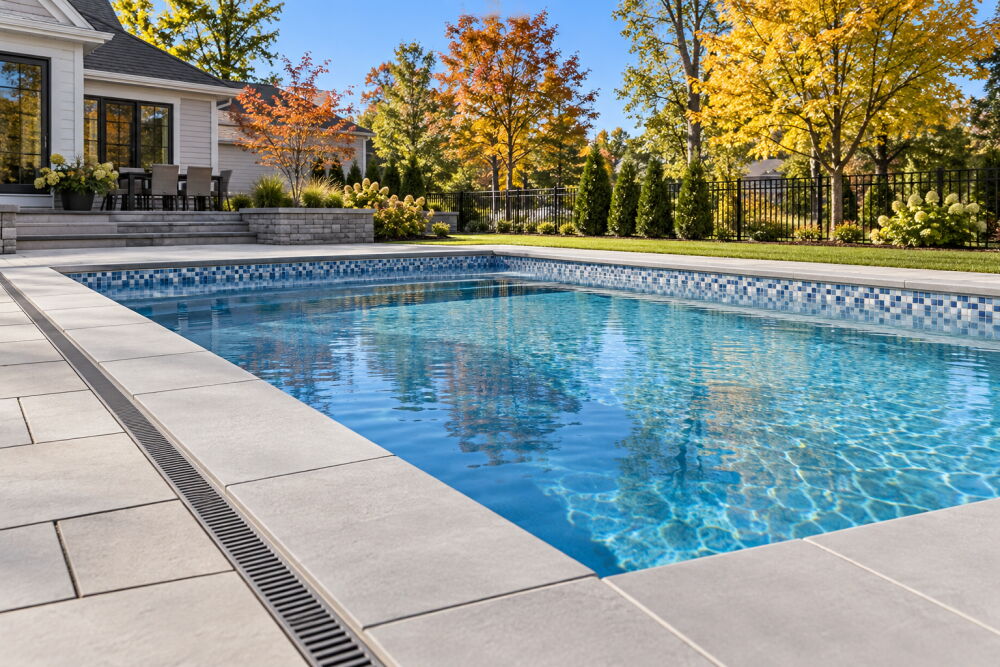
Deck slope and drainage are not cosmetic details in a cold climate. Aim for roughly 1/8 to 1/4 inch of fall per foot away from the pool, and consider a channel drain parallel to the water’s edge to intercept splash-out and snowmelt. A simple French drain along the deck perimeter can move groundwater away from the beam and reduce frost pressure. Equally important, place isolation and control joints where slab sections meet the pool and align them to minimize random cracking under freeze-thaw stress.
Consider a realistic scenario: a 1990s concrete pool in Edina shows a settled slab that tips runoff toward the coping, and spring puddles linger at the beam. The remodel plan removes the failed concrete, recompacts base soils, adds geotextile to bridge weak spots, then installs freeze-thaw-rated pavers on an open-graded base with polymeric joint sand that remains slightly flexible. A discreet channel drain behind the coping and fresh mastic in the beam joint keep meltwater moving away instead of soaking into the tile and shell.
3. Surface and tile choices built for cold water
Interior finish selection affects both durability and spring startup. Standard plaster looks clean but is more prone to etching if water balance drifts during fall close or spring thaw. Quartz aggregate and pebble finishes add hardness and reduce visible wear, though they require vigorous brushing during the initial cure. Plan plastering for when daytime temperatures reliably exceed the manufacturer’s minimum, then fill the pool without interruption and begin a true startup: brush multiple times daily during the first week, control pH drift, and keep calcium hardness high enough to prevent leaching from the fresh surface.
At the waterline, choose frost-proof tile rated for exterior submersion and a grout that resists freeze damage. Epoxy grout offers superior water resistance and bond in these conditions but demands a skilled crew and careful cleanup. If your pool is vinyl-lined, a 27–30 mil liner handles cold contraction better than thin stock, and replacing brittle bead receivers during the remodel helps prevent liner pullout after winter. Where metal steps or panels show rust, add foam wall protection or swap components before installing the new liner.
4. Plumbing and equipment upgrades that protect against freeze
Remodeling is the best time to correct shallow or compromised lines. In Minneapolis, bury returns and skimmers below the local frost depth, and use sweeping 45-degree fittings instead of tight 90-degree fittings that trap water. Many renovators install a looped return manifold for balanced flow and simpler winterizing, upgrade the skimmer body and throat, and verify the main drain sump includes a functioning hydrostatic relief valve to release groundwater pressure during spring thaws.
Equipment choices also change in cold regions. A variable-speed pump with a freeze-protection mode can automatically circulate water when air temperatures drop, reducing the risk of ice during a shoulder-season cold snap. For heating, air-source heat pumps lose effectiveness in chilly spring air, so gas heaters remain the practical way to extend the Minneapolis season. An automatic safety cover insulates water and reduces debris, but you must manage snow load and keep it off when ice is forming to avoid damage. If you add a saltwater chlorine generator, protect dissimilar metals with a sacrificial anode and avoid salt-sensitive stone anywhere near splash zones.
5. Scheduling a Minneapolis remodel without losing a season.
Short construction windows make timing critical. Permits and specialty materials, such as frost-proof tile and specific coping profiles, may take weeks. Coordinate demolition, beam repair, tile and coping installation, and interior finish so cure temperatures and moisture conditions meet product requirements. Plaster needs to be continuously filled immediately after application, so line up water delivery or verify that your municipal source can run uninterrupted. Do not schedule a plaster start right before a forecasted cold snap. Build in time for a proper startup and a clean winterization with line blowouts, antifreeze in vulnerable runs, gizmos in skimmers, and a tight safety cover.
Here is a second scenario: a Maple Grove homeowner upgrades a vinyl-lined pool and adds a salt system. They plan to work in early spring, replace brittle bead receivers, add a deeper-buried return loop, choose dense precast coping instead of limestone, and wait for steady warm days before installing the liner and filling. The trade-off is a few lost weeks in May versus a finish and equipment setup that are cured and calibrated correctly before the first heat wave, with a smooth close in fall rather than a race against freezing nights.
Minneapolis winters reward remodels that respect movement, moisture, and temperature. Flexible beam joints, sloped decks with proper drainage, frost-rated tile, and cold-savvy equipment prevent the failures that show up each spring. If you are updating a surface or reworking a deck, verify that materials and mortars have exterior freeze-thaw ratings, that plumbing is set deep and drainable, and that your schedule allows time for proper curing and a careful close. A pool that is planned for winter performs better every summer and asks far less of you when the leaves turn.