Thunderstorms and tropical systems can knock out power for hours or days in Florida, so many homeowners consider a standby generator. A dependable installation is not just about buying a unit with a certain kilowatt rating. The outcome depends on how you define your critical loads, choose a fuel source that can support them, position the generator on your property, and match the right transfer equipment to your electrical service. This article walks through the decisions that most affect real-world performance, so the system you plan today will start, run, and keep the right circuits powered during the next outage.
1. Define Your Backup Goal and Critical Loads
Start with a clear target: are you trying to ride through short outages with lights, refrigeration, and internet, or maintain near-normal living with air conditioning and laundry for several days? List actual circuits, not just rooms: refrigerator, air handler, well pump, garage door opener, router, and any medical equipment. Motors such as well pumps and condensers have starting surges several times higher than running amps, so note nameplates and breaker sizes. This is also a good time to consult a local electrician or generator specialist familiar with permitting and utility requirements, such as Genstar Generator Service of Ocala, to verify load calculations and interconnection details.
Two realistic scenarios show how loads shape the plan. In a smaller home with gas appliances and one 2- or 3-ton AC, an essential load subpanel feeding the refrigerator, air handler, select lighting circuits, and charging outlets may keep life moving during brief outages. In a larger home with two condensers, an electric water heater, and a well pump, startup currents can stack. Adding soft start kits to condensers and using load shedding modules to pause a water heater or second AC can let a moderately sized generator handle peak demand without tripping breakers.
2. Fuel Source Realities: Natural Gas vs. Propane in Florida Homes
Natural gas offers long run time without refueling, but your generator’s output depends on the meter’s BTU capacity, regulator sizing, and the length and diameter of the new gas line. During regional demand spikes, line pressure can dip, which may limit a unit at high loads. Propane is independent of utility pressure and can be sited where service is not available, but it requires an appropriately sized tank and safe setbacks. Tank placement, regulator venting, and delivery truck access all matter. The tradeoff is simple: natural gas reduces refueling logistics, while propane delivers predictable supply on your lot. Choose the fuel that best aligns with outage duration, appliance mix, and neighborhood infrastructure.
3. Generator Placement: Clearances, Noise, Flooding, and Cable Runs
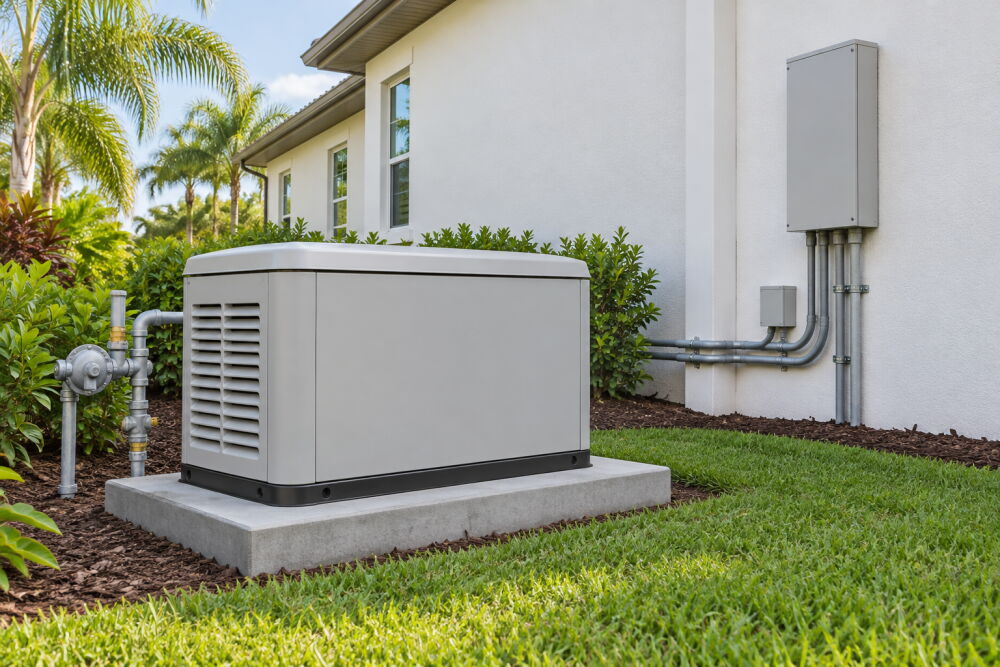
Manufacturers specify clearances from doors, windows, soffits, and combustible materials to keep exhaust away from openings and to maintain airflow around the enclosure. In a side yard, leave service space for the lid to open, and think about sound. Enclosures are quieter than they used to be, but placement near bedrooms or a neighbor’s patio can still be intrusive on weekly exercise cycles. A properly sized concrete or composite pad should sit on a compacted base above surrounding grade to avoid pooling water. In low-lying or poorly drained areas, raising the pad reduces flood risk and protects wiring terminations in the base.
Distance to the electrical service and gas meter drives more than convenience. Longer conduit runs mean more trenching and higher copper costs to prevent voltage drop on feeder conductors, and more bends complicate pulling cable. Keep the path clear of roots, downspouts, and irrigation lines, and coordinate any fence, gate, or landscaping adjustments ahead of time. Maintain carbon monoxide safety by staying well away from openings and install CO alarms inside the home. If you plan a privacy wall to reduce noise, preserve the manufacturer’s ventilation requirements on all sides.
4. Transfer Equipment: ATS, Load Shedding, and Panel Configuration
The automatic transfer switch, or ATS, determines what powers when. A service-entrance-rated ATS can replace the main disconnect and transfer the entire service, which is common on 200-amp homes when the generator is sized for whole-house operation. If the generator is smaller than the service, routing only essential circuits to a subpanel is often smarter. Load shedding modules can temporarily drop noncritical loads such as an electric water heater or a second AC to keep compressors starting reliably without oversizing the unit.
A common mistake is assuming a manual interlock is enough for storm readiness. Interlocks require someone on site, in daylight, and following a specific sequence under stress. An ATS senses outages, switches promptly, and isolates the utility to prevent dangerous backfeed. Verify your model’s neutral-switching requirements, and ensure grounding and bonding match the chosen configuration. Many installers also add a whole-home surge protective device at the main panel to help protect electronics from transients during transfer events.
Testing Under Load and Seasonal Maintenance
Factory exercise cycles keep the engine lubricated, but they rarely place real load on the generator. At least once before storm season, conduct a supervised test: move the home onto generator power, run the air conditioning, start the well pump if present, and watch for nuisance trips or dimming during compressor starts. Professionals can supplement this with a load bank test to verify output without stressing household equipment. Routine care includes changing oil and filters on schedule, inspecting spark plugs, confirming the battery charger maintains voltage, and ensuring the enclosure’s intake and exhaust screens stay clear of leaves. For propane, check tank level and regulator orientation; for natural gas, verify meter capacity labeling matches your load plan.
Thoughtful planning puts reliability ahead of raw wattage. Start with a realistic list of circuits, then choose a fuel source that can run those loads as long as you expect. Place the generator where airflow, drainage, noise, and cable paths all work in your favor, and pair it with an ATS and controls that match your service and HVAC behavior. Finally, test under load and keep up with maintenance before hurricane season, not after the first warning. Local permitting, HOA rules, and utility interconnection standards vary, so coordinate early with a licensed electrician and qualified gas contractor to align the design with code and your property’s constraints.