Manufacturing success depends on countless decisions, but few matter as much as choosing the right machine tools. The equipment you choose directly impacts product quality, production efficiency, and your bottom line for years to come.
The Real Cost of Machine Tool Decisions
When manufacturing businesses evaluate machine tools, the sticker price often dominates the conversation. However, the initial purchase cost represents just a fraction of the total investment you’ll make over a machine’s lifespan.
Operating costs, maintenance requirements, and energy consumption add up quickly. A cheaper machine that requires frequent repairs or produces inconsistent results can cost significantly more than a higher-quality option over five or ten years. Factor in downtime, which can halt entire production lines and delay customer orders, and the true cost of a poor choice becomes painfully clear.
Don’t overlook training requirements. Some machines demand extensive operator training and specialized knowledge, while others offer intuitive controls that reduce the learning curve. Your team’s ability to operate equipment effectively impacts both productivity and safety.
Precision and Quality Control
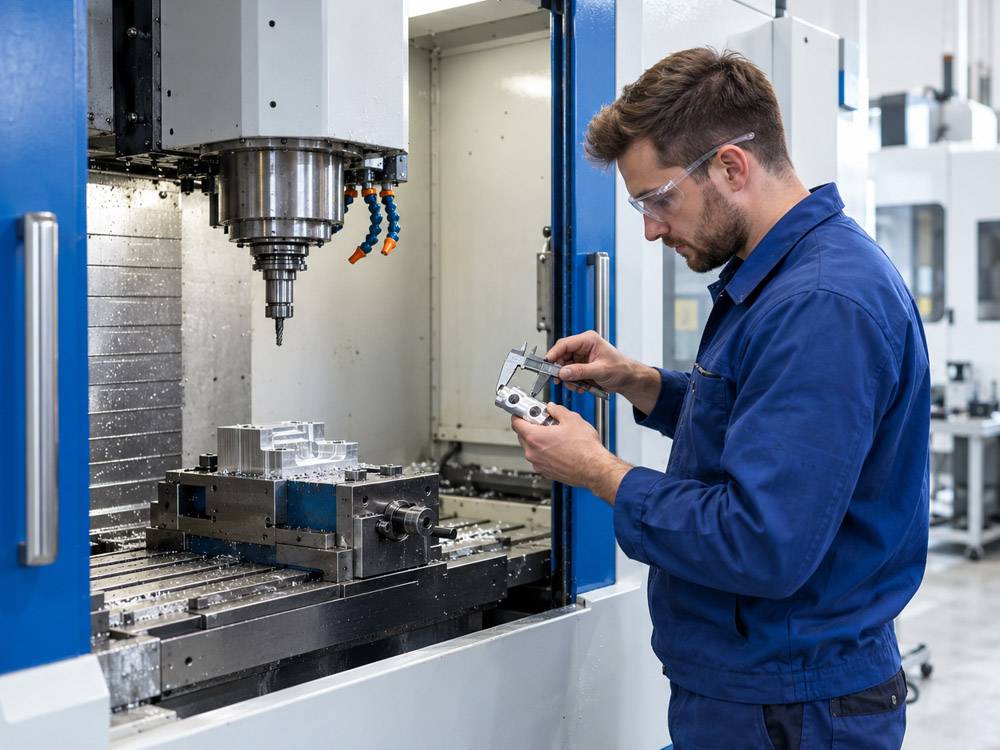
Manufacturing tolerances have become increasingly tight across industries. Whether you’re producing aerospace components, medical devices, or automotive parts, customers expect consistent precision measured in microns.
The right machine tools deliver repeatable accuracy batch after batch. This consistency reduces scrap rates, minimizes rework, and protects your reputation. Modern CNC machines equipped with advanced feedback systems can maintain tolerances that would have been impossible just a decade ago.
Quality control also extends to surface finish and material properties. Poor-quality tooling can introduce stress concentrations, rough surfaces, or dimensional variations that compromise part performance.
When you’re competing for contracts that demand certification and rigorous inspection, your equipment capabilities can determine whether you even qualify to bid.
Production Capacity and Scalability
Your current production needs matter, but so does your ability to grow. Machine tools represent long-term investments, and choosing equipment that can scale with your business prevents costly replacements down the road.
Think about spindle speeds, tool capacity, and work envelope size. A machine that handles your current parts easily might struggle when you land that larger contract next year, like moving from 50-piece batches to 500-piece runs. Multi-axis capabilities, automatic tool changers, and pallet systems can dramatically increase throughput without requiring additional floor space.
Flexibility matters too. Manufacturing runs are getting shorter as customers demand more customization. Equipment that allows quick changeovers and easy programming adjustments keeps you competitive in markets where responsiveness wins business.
Technology Integration and Industry 4.0
Manufacturing is becoming increasingly connected. Modern machine tools generate valuable data about cycle times, tool wear, and process variations. This information feeds into broader production management systems that optimize scheduling, predict maintenance needs, and identify bottlenecks.
Machines that can’t integrate with your existing software ecosystem become isolated islands in your operation. Look for equipment that supports standard communication protocols and offers monitoring capabilities. Real-time data collection enables predictive maintenance strategies that prevent unexpected failures and extend equipment life.
Think about whether machines support advanced features like in-process inspection, adaptive control, or lights-out manufacturing. These capabilities might not be essential today, but they represent competitive advantages you may need tomorrow.
Supplier Relationships and Support
A machine tool purchase initiates a relationship that lasts for the equipment’s entire service life. The supplier’s commitment to support, training, and parts availability can make or break your experience.
Questions to ask include: How quickly can they respond to service calls? Do they stock common replacement parts locally? What training programs do they offer for operators and maintenance staff? Companies like Summit Machine Tool understand that ongoing support differentiates a good purchase from a great one.
Technical expertise matters particularly when problems arise. Suppliers who understand your specific applications can troubleshoot issues faster and suggest process improvements. Some offer applications engineering support to help optimize cutting parameters, tooling selections, and fixture designs.
Environmental and Energy Considerations
Manufacturing facilities face increasing pressure to reduce energy consumption and minimize environmental impact. Machine tools vary considerably in their efficiency and resource requirements.
Newer machines often incorporate energy-saving features like regenerative drives, efficient cooling systems, and standby modes that reduce power consumption during idle periods. Over thousands of operating hours, these differences add up to substantial cost savings and reduced carbon footprints.
Coolant systems, chip management, and air filtration also impact your facility’s environmental performance. Equipment designed with sustainability in mind reduces waste disposal costs and helps meet environmental regulations that continue to tighten across jurisdictions.
Workforce Capabilities and Safety
Your team’s skills and experience should influence equipment selection. Highly automated machines can compensate for operator inexperience, while manual or semi-automatic equipment demands skilled machinists.
Safety features protect your most valuable asset: your people. Look for machines with proper guarding, emergency stops that are easy to reach, and ergonomic designs that reduce operator fatigue. Modern equipment often includes safety interlocks and monitoring systems that prevent dangerous conditions before they cause injuries.
Training resources and documentation quality matter too. Well-designed operator interfaces with clear instructions reduce errors and speed up the learning process for new employees.
Making the Decision
Choosing machine tools requires balancing multiple factors simultaneously. You’ve probably already realized this isn’t a decision to rush. Start by defining your requirements clearly: what parts do you make, what volumes do you need, and what quality standards must you meet?
Involve your team in the evaluation process. Operators, maintenance technicians, and quality personnel all bring perspectives that procurement staff might miss. Visit potential suppliers’ facilities to see equipment running and talk with existing customers about their experiences.
Create a total cost of ownership model that includes purchase price, installation, training, maintenance, energy costs, and expected tooling expenses. Compare machines on this basis rather than initial cost alone.
Finally, think long term. Manufacturing equipment purchases often last 15 to 20 years or more. Consider where your industry is heading, what capabilities you might need, and how technology trends could impact your competitiveness.
The right machine tools become the foundation for manufacturing excellence. They enable you to meet customer requirements, control costs, and adapt to changing market conditions. Take the time to choose wisely, and your equipment will deliver value for decades to come.