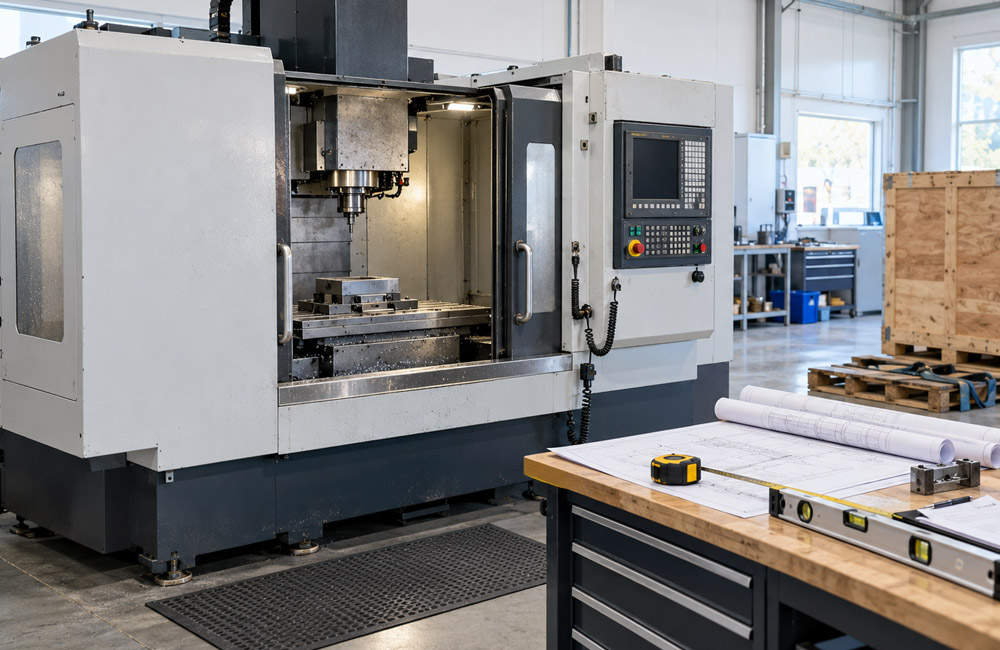
Buying a used CNC machine can help a shop add capacity, but finding an available machine is only the beginning. Inspection, transport, site preparation and commissioning all sit between the purchase and the first accepted production part.
The right time to buy is when you have work for the machine and a realistic route to getting it running. A low asking price alone does not settle either question.
Start with the production need
Look for a recurring capacity problem rather than a single busy week. Are delivery dates slipping because the same machining operation is always waiting? Is overtime becoming routine? Would another machine relieve that bottleneck, or would the queue simply move to inspection, finishing or assembly?
Identify the parts the new machine would run, their expected volumes and the required tolerances. Check that the proposed equipment has the necessary travel, spindle capability, tooling capacity and workholding space. Extra capacity only helps if it can perform the work you need.
Consider alternatives before committing. Different scheduling, subcontracting or improved setups may address a temporary spike without adding a permanent machine. A purchase becomes easier to justify when the workload is sustained and the shop can support another asset.
Work backward from the first accepted part
Set a target date for producing an accepted part, not merely receiving the machine. Then build a schedule backward through trial machining, operator preparation, commissioning, delivery and inspection.
There is no single installation timeline that suits every used CNC purchase. A machine still operating at the seller’s premises has a different starting point from one already in storage. Transport availability, utility work and service technician schedules can also affect the date.
Before committing, ask who controls each step:
- When can the machine be inspected under power?
- When will it be available for removal?
- Who prepares it for transport according to the manufacturer’s requirements?
- When can riggers collect and deliver it?
- Who will level, connect and commission it?
- When will operators and inspection staff be available for trial work?
Use those answers to set milestones. Leave room for corrective work rather than promising customer deliveries on the assumption that everything will go smoothly.
Inspect before you lock in the purchase
Photographs and operating hours provide context, not proof of condition. Arrange an inspection by someone familiar with that machine type and control. Where possible, inspect it under power before removal.
The inspection should consider spindle condition, axis movement, lubrication, tool changing or turret indexing, and the condition of covers and accessible components. Ask the inspector which measurements are appropriate and how they compare with the manufacturer’s specifications.
Request maintenance records where available and discuss significant repairs. A representative test cut can add useful evidence about how the machine performs on work similar to yours. Records, measurements and cutting results should be considered together; no single check guarantees future performance.
When comparing available equipment, Premier Equipment offers a place to browse used CNC options. Build a shortlist around the work you intend to run, then establish the condition and purchase terms of each candidate before arranging removal.
Clarify what comes with the sale. Toolholders, workholding, conveyors, documentation and accessories can affect both the budget and the time needed to start production. Record agreed inclusions rather than relying on photographs.
Prepare the site while the purchase progresses
Once you have the exact machine details, check the proposed location against the manufacturer’s installation documentation. Confirm floor requirements, operating clearances, service access and any anchoring provisions. Leave room for operators, material handling and maintenance, not just the machine footprint.
Have qualified electrical personnel check the supply against the machine’s requirements. Confirm compressed-air needs and any other utilities specified for the equipment. Do not assume the seller’s electrical arrangement will suit your premises.
Give the rigging contractor the machine’s documented weight, dimensions and handling requirements. Review the route from unloading point to final position, including doors, overhead obstructions and access restrictions. The contractor should plan suitable equipment and handling methods.
Coordinate this work with existing production. Keep access routes clear and schedule any necessary utility interruptions so they do not unexpectedly stop other machines.
Allow time for commissioning and operator readiness
Delivery is a milestone, not the finish line. Arrange the appropriate personnel for positioning, leveling, connection and startup, following the manufacturer’s procedures. Include checks of lubrication, coolant, air supply and chip handling as applicable.
Have suitable tooling, workholding and programs ready. Operators may need time to learn a different control or unfamiliar machine functions, even when they already have machining experience. Plan safe program prove-out and first-article inspection before releasing normal production.
Agree on acceptance criteria for the initial job: dimensions, finish, repeatability and a workable cycle time. Keep records of the checks and resolve problems before relying on the machine for customer commitments.
Budget for the whole move into production
Compare the purchase price with the complete cost of getting the machine working. Obtain estimates for inspection, transport, rigging, electrical work, commissioning and any required tooling or repairs. Allow for staff time and production disruption as well.
The best purchase date is the one that aligns available equipment with prepared space, available people and a genuine workload. Buy with that sequence in mind, and the machine’s arrival becomes a planned production change rather than the start of an improvised installation.