A 1958 rambler off Harrison Boulevard and a house finished last spring can have the same square footage and a completely different appetite for electricity. That gap is where most panel problems start, and it has almost nothing to do with how well the house is built.
An electrician in Ogden walks into this exact conversation several times a week. The homeowner is not asking for a rewiring lecture. They want to know why the lights dim when the dryer kicks on, and whether the fix is a new breaker or a new panel. Most of the time, the honest answer starts with how the house uses power today, not how it used it in 1974.
What a breaker panel actually does, without the jargon
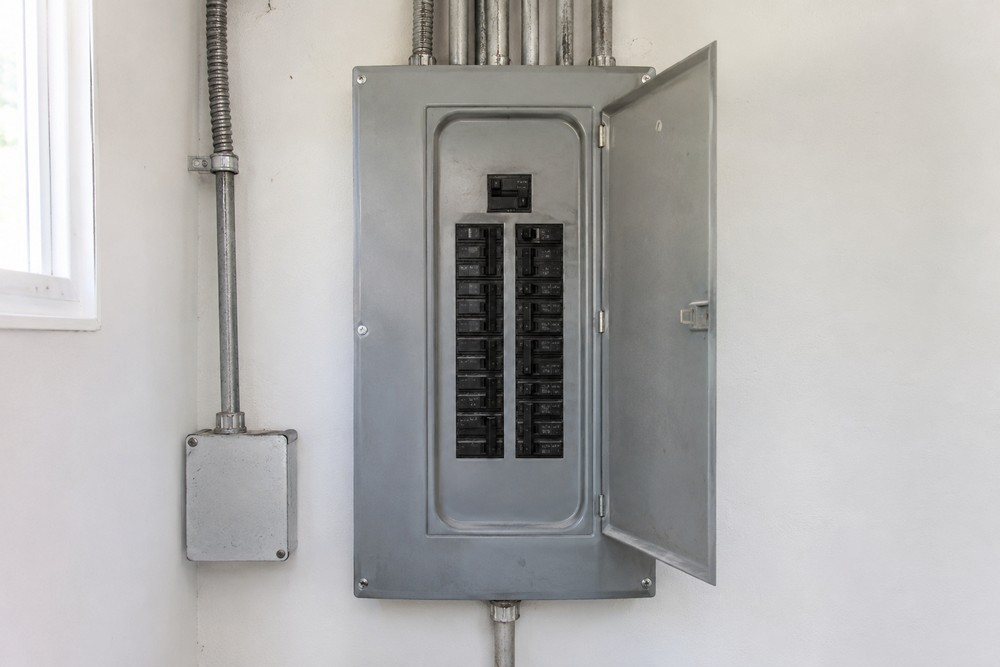
Think of your panel as a bouncer with a headcount limit. Every circuit in the house gets a slot, and each slot has a ceiling on how many amps it can carry before it trips. The panel itself has a total ceiling too, usually 100 or 200 amps in a typical Utah home.
Everything you have added over the years is a new guest at the door. An EV charger. A heat pump. A tankless water heater. A finished basement with a mini-split and a home office full of monitors. None of those were on the guest list when the house was wired, and the bouncer does not care that you meant to tell them in advance. This is why a panel that passed inspection in 1995 with zero complaints can feel overloaded today. Nothing broke. The house just grew up.
Does your panel need an upgrade, or just a better plan?
Not every flickering light is a panel problem. Sometimes a loose neutral or a tired breaker is the whole story, and replacing a $12 breaker solves it in twenty minutes. I would rather see a homeowner spend small money first than tear into a panel replacement they did not need.
Three symptoms tend to point at the panel itself rather than a single circuit:
- The main breaker trips when two large appliances run at once, not just one.
- You are out of open slots and somebody has started doubling up breakers to make room.
- Warm or discolored spots on the panel cover, or a faint burning smell near the box.
That last one is not a wait and see item. Discoloration and smell around a service panel are the kind of warning that safety codes exist to prevent, and the National Fire Protection Association publishes the electrical code that inspectors across Utah work from. If your cover is warm to the touch, stop running heavy appliances and get someone out to look at it this week. I would also flag the fuse box crowd. If your home still runs screw in fuses, you are living with a system that predates modern circuit protection by decades, and insurance carriers have gotten pickier about it every year.
The service upgrade math, in plain numbers
| Panel size | What it comfortably handles | Where it starts to strain |
|---|---|---|
| 60 amp | Lights, a few outlets, one small appliance | Almost any modern addition |
| 100 amp | Gas furnace, gas range, standard appliances | EV charging, heat pumps, electric ranges |
| 200 amp | Whole home electric loads, EV, finished basement | Rarely, unless you add a second charger |
Here is the part people miss. The number on the panel is not the only limit. The service drop from the utility and the meter base matter too, and a 200 amp panel bolted to a 100 amp service entry gets you nowhere. That is why the first visit is a look at the whole system, not just the box on the wall.
Cost swings hard based on how much of the service line has to change, whether the panel can stay in its current spot, and whether your utility needs to pull the meter. I have seen straightforward swaps and I have seen jobs where the mast, the grounding, and the weatherhead all had to go. Same town, same house size, wildly different scope.
What the load calculation is actually for
Before anyone quotes you a panel, they should run a load calculation. This is a math exercise, not a sales pitch. It totals your square footage, your large appliances, your heating and cooling, and your planned additions, then compares that total to your service capacity. If a contractor skips this step and just eyeballs your panel, ask why. The calculation is what tells you whether 200 amps is generous or barely enough, and it is the document that keeps an inspector happy. It also protects you from the opposite mistake, paying for a 400 amp service when 200 would have carried you for the next twenty years.
Add up what you plan to plug in over the next decade before you sign anything, not just what sits in the garage today. Solar, a second EV, a hot tub, and a basement kitchen all show up in the same panel eventually. Financing a bigger service once beats paying for two upgrades. For a broader look at how households are shifting toward electric loads, the Department of Energy tracks residential energy use patterns that back up the trend.
A five minute walkthrough you can do tonight
- Find your panel and read the main breaker number. It is printed right on the switch.
- Open the door, not the cover, and count empty slots. Zero empty slots is a real constraint.
- Write down every large appliance: range, water heater, dryer, furnace, AC, EV charger.
- Notice which breaker trips and what was running when it happened. Patterns matter more than one off events.
- Check the panel cover and the wall around it for warmth, rust, or dark smudges.
Keep that list. It turns a vague “my power is weird” call into a specific conversation, and it saves the technician twenty minutes of guessing. If you are hiring out the work rather than poking at it yourself, the Occupational Safety and Health Administration treats electrical work as one of the more hazardous trades for good reason, and the person you bring in should carry the licensing and insurance to match. Do not open the dead front yourself to inspect the bus bar. That cover is the only thing between you and live conductors, and there is no household fix worth that risk.
The judgment call I would make
If you own a home built before the mid 1980s and you have added even one large electric load, get the load calculation done before anything else. You may find out your hundred amp service is fine for now. You may find out it is not.
What I would not do is keep resetting a tripping breaker for another year and hope. Panels do not fail gracefully, and the failure that matters is the one that happens while you are asleep. A Saturday morning appointment beats an insurance claim every time. Call a licensed electrician, get the numbers on paper, and decide from facts instead of from how the lights feel. Your house is asking a fair question. Answer it before it answers for you.