A messy garage has a way of collecting things you swear you will sort out later. Before long, boxes creep toward the walls, sports gear ends up beside the door, and finding a screwdriver becomes a project of its own. The bigger concern is that all that clutter can get in the way of your garage door’s moving parts. If you have residential garage doors from Shank Door, keeping the area around the tracks and safety sensors clear is a simple way to help the door operate safely. The good news is that you do not need a perfect garage to get things organized.
Start by Clearing the Area Around the Door
Before you start sorting boxes, take a good look at the space around your garage door. Check both sides of the opening, the floor beneath the door, and the areas where the tracks run upward toward the ceiling. The following could end up interfering with your door’s movement:
- bicycles
- folded ladders
- garden tools
- storage bins
Move anything that could fall into the door’s path or prevent it from opening fully.
It helps to open and close the door while watching from a safe distance. Pay attention to anything that sticks out into the tracks or hangs too close to the moving panels. Keep your hands and belongings away from moving parts, and never try to move something while the door is operating. Once you know where the door needs clear space, you can decide where everything else should go.
Sort Your Belongings Before Putting Them Away
Pulling everything out of the garage at once might sound productive, but it can leave you with a bigger mess than you started with. Work through one section at a time, starting with the items closest to the garage door. Make separate piles for things you use regularly, items you can donate, and belongings that belong somewhere else. If you find three nearly empty cans of paint or a box of old cables you cannot identify, take a moment to decide whether they are worth keeping.
Think about how often you actually use each item. Tools you reach for every weekend should not be buried behind holiday decorations you unpack once a year. Keep frequently used belongings somewhere easy to reach without stepping into the door’s path. Once you have sorted everything, you will have a much better idea of how much storage space you really need.
Use Wall Storage to Free Up Floor Space
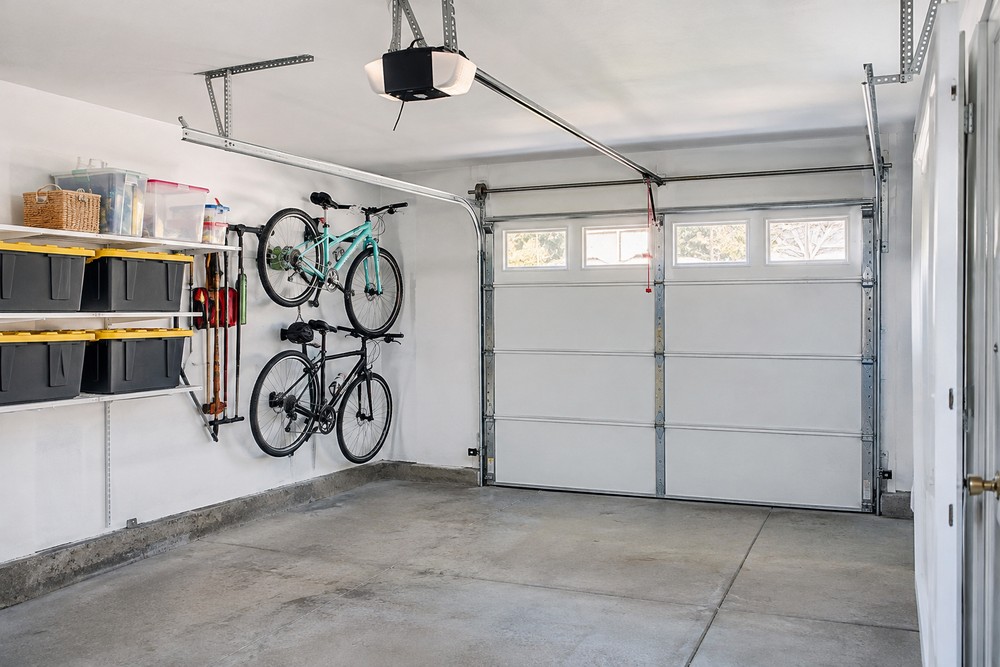
Garage floors tend to fill up quickly because putting something down is easier than finding a proper place for it. Wall-mounted shelves, hooks, and tool racks can help get things off the ground and make the room easier to navigate. Hang bicycles and garden tools where they will not swing into the door tracks or block access to the sensors. For heavier belongings, use shelving that is properly secured and rated for the weight.
Measure the available space before buying storage equipment. A shelf that fits neatly on paper might stick out too far once it is loaded with boxes. Check the following to ensure a proper fit:
- leave enough room for the garage door to move freely
- double check sections that travel along the ceiling
- measure the boxes you intend to use
If you are unsure how much clearance your setup needs, check the door manufacturer’s instructions rather than guessing.
Keep the Safety Sensors Clear
Those small sensors near the bottom of the garage door opening are easy to overlook, especially when boxes and cleaning supplies start piling up. They send a beam across the doorway to detect objects in the door’s path. Common culprits that have the door malfunctioning are:
- a storage bin
- broom
- pile of shoes
- toys
These blocks th beam, so the door may refuse to close or reverse unexpectedly. Keep the area around both sensors clear, and avoid using them as convenient spots to lean things against.
Dust and cobwebs can also affect sensor performance, so give the lenses an occasional gentle wipe with a soft cloth. Check that the sensor brackets have not been bumped out of position while moving belongings around. If the door continues to reverse or the sensors do not appear to work properly, consult the manufacturer’s instructions or call a qualified garage door technician. Do not bypass the sensors just to get the door to close.
Make Your New Setup Easy to Maintain
A garage does not stay organized simply because you cleaned it once. The trick is making it easy to put things back where they belong, even when you are tired or in a hurry. Here are some handy hacks to keep thing organized:
- label storage bins
- keep similar items together
- leave a little extra room on shelves for things you might need later
When every item has a sensible home, you are less likely to drop it beside the door and forget about it.
Set aside ten minutes every few weeks to check the floor, tracks, and sensor area. Put stray tools away, move boxes that have started creeping toward the doorway, and look for anything hanging too close to the moving parts. If your residential garage door starts making unusual noises or struggles to open and close, do not assume clutter is the only cause. Clear the area and have the door inspected if the problem continues.
Final Word
You do not have to turn your garage into a spotless showroom to make it safer and easier to use. Start with the door’s path, give the safety sensors some breathing room, and find storage solutions that work for the things you actually own. Keeping up with these small jobs can make a real difference, whether you have a single-car garage or a space packed with family gear and tools. With residential garage doors from Shank Door, a little attention to the surrounding space can help you keep your garage organized without getting in the way of everyday use.