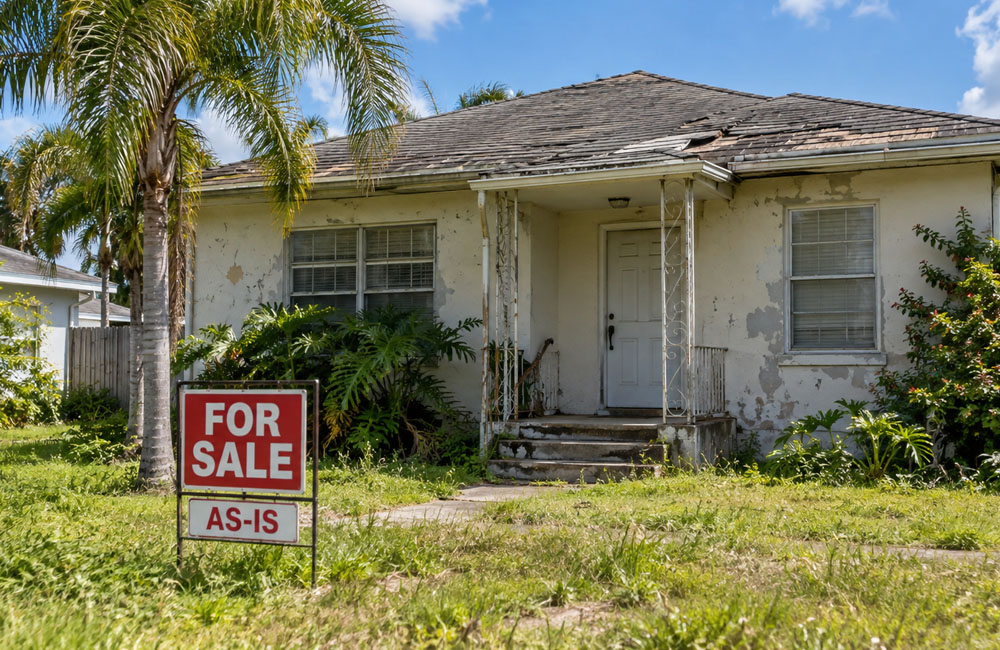
A retired schoolteacher in Kissimmee spent four thousand dollars on a new roof she never got to enjoy, because the buyer’s inspector flagged the plumbing two weeks later anyway. She sold the house six months after she’d planned to. That story isn’t unusual. It’s the quiet math behind a decision thousands of Florida homeowners make every year: stop fixing, start selling.
The core idea is simple. Some houses don’t need repairs to sell. They need a different buyer, one who prices the work into the offer instead of walking away from it. If you’re staring at a repair list that keeps growing while your timeline keeps shrinking, you’ve got options that don’t involve a contractor.
What “As-Is” Actually Means in a Listing
As-is doesn’t mean “mystery house, no disclosures.” It means you’re telling buyers up front that you won’t fix anything after the inspection. They can still inspect. They can still walk. What changes is the negotiation. Instead of you paying for repairs, the buyer factors the cost into what they offer.
That works fine when you’ve got competing offers and a hot neighborhood. It falls apart when the roof is twenty years old and the market has cooled, because every conventional buyer with an FHA loan is going to require certain minimum property standards before the loan closes. I’d rather be honest about that than pretend as-is works in every scenario. It doesn’t.
When Skipping Repairs Saves You Money
Here’s the part that surprises people. The repairs themselves are rarely the biggest cost. It’s the time, the carrying costs, and the risk that each fix reveals something worse underneath.
- You’re paying two mortgages. Every month you’re holding an empty house, you’re covering taxes, insurance, and utilities on a property nobody’s living in.
- The repair chain keeps growing. You fix the water stain, the plumber finds a cracked pipe, the pipe damage means new drywall. Budgets don’t survive that pattern.
- You inherited the place. Estate sales often mean distant heirs, outdated paperwork, and nobody local to manage a renovation.
- You’ve already moved. Managing a remodel from three states away is a part-time job you didn’t apply for.
- The house needs work you can’t finance. If the estimate is bigger than your available cash, the repair path is closed anyway.
Out of those five, the two-mortgage situation is the one that eats people alive. I’ve watched sellers spend eight thousand on cosmetic fixes to chase a slightly higher offer while paying eleven hundred a month to hold the property. That’s not a strategy. That’s a slow leak.
Why Florida Sellers Face This More Often Than Most
Florida’s housing stock skews older in a lot of the markets where people are trying to sell fast. Coastal humidity, storm exposure, and the simple passage of decades mean roofs, AC units, and plumbing reach the end of their useful life at roughly the same time. A house built in the eighties can be structurally fine and still carry a repair list long enough to scare off a first-time buyer.
Insurance adds another layer. Property insurance costs in the state have climbed sharply over the past several years, and coverage requirements tied to roof age have tightened in many counties. Sellers who can’t get affordable coverage sometimes find that buyers can’t either, which kills conventional financing before the inspection even happens. According to consumer guidance from the Consumer Financial Protection Bureau, mortgage lenders evaluate property condition as part of the underwriting process, not as an afterthought.
So you end up with a house that’s perfectly livable and completely unsellable through normal channels. That’s a frustrating spot, and it’s the exact spot where the as-is conversation starts making sense.
How a Cash Sale Compares to a Traditional One
Let’s put the two paths side by side without the sales pitch.
| Factor | Traditional Listing | Cash Buyer
|
| Repairs required | Often yes, to pass inspection | None |
| Showings | Scheduled, staged, inconvenient | Usually none |
| Closing costs | Seller pays commissions and fees | Typically covered by buyer |
| Financing risk | Loan can fall through late | No lender involved |
| Timeline | Weeks to months | Often days, not months |
| Top dollar | Higher gross price possible | Lower gross, lower cost |
That last row matters and I won’t sugarcoat it. A cash offer usually comes in below what a fully renovated house would fetch on the open market. The trade is simple: you give up some upside to eliminate the repair bill, the showings, the financing gamble, and the waiting. Whether that’s a good deal depends entirely on what your time and stress are worth to you. For some sellers it’s a clear win. For others, listing makes more sense, and a straight-talking buyer will tell you so.
A Short Checklist Before You Call Anyone
Run through this before you decide which path fits your situation.
- Get one real repair estimate. Not a guess. An actual number from a contractor who’s walked the property.
- Add up your monthly holding costs. Taxes, insurance, utilities, and any loan payment. Multiply by the months you expect the sale to take.
- Check what comparable as-is sales closed for in your area over the past six months.
- Confirm your timeline. Is there a deadline driving this, or do you genuinely have a year to spare?
- Talk to two buyers and one agent. You’ll learn more from the contrast than from any single pitch.
The federal government publishes fair housing protections that apply to every sale, whether you list with an agent or sell direct, so it’s worth knowing your rights before you sign anything. The Department of Housing and Urban Development outlines those protections clearly, and it takes ten minutes to read.
What to Ask a Cash Buyer Before You Commit
Cash home buying has a noise problem. Anybody with a phone number can print a flyer. Separating the legitimate operators from the tire-kickers comes down to a few direct questions.
Ask how long they’ve been buying in your state. Ask whether they’ll close through their own title company or leave you to arrange it. Ask for the net number, in writing, after every fee is accounted for. And ask what happens if they find something unexpected during their walkthrough, because that’s where verbal offers tend to shrink.
This is also where you separate a serious buyer from a lead generator. Reputable operations will put the terms in writing and hold to them. Sellers in Central Florida who want a straightforward conversation rather than a form letter often start by contacting a team like Florida Cash Home Buyers, which handles the whole process over the phone and closes through its own title agency.
The other thing worth checking is the chain of title. Older Florida properties sometimes carry open permits, unrecorded easements, or heirs who were never formally added to the deed. These issues stall traditional sales for months and barely slow a cash purchase, because the buyer’s title team deals with them directly. That’s not a small advantage when you’re the one paying the holding costs.
Property records in Florida stretch back generations, and the National Archives maintains the broader historical record of land transactions across the country. If your family has owned the same parcel since the mid-twentieth century, a title search can turn up surprises that nobody living remembers.
The Real Question Isn’t Price, It’s Cost
Most sellers fixate on the offer number. That’s the wrong lens. What matters is what you walk away with after repairs, commissions, closing fees, holding costs, and the months of your life you spent managing it all.
Run those numbers honestly, and the as-is path sometimes wins by a margin nobody expects. Other times it loses badly and listing is clearly right. The point isn’t that one route beats the other. It’s that skipping repairs isn’t lazy or desperate. It’s a calculated trade, and you’re allowed to make it.
So pull out a notepad this week. Write down your repair estimate, your monthly carry, and your realistic timeline. Then ask yourself which number scares you more, the one on the contractor’s invoice or the one on the calendar.