Key Takeaways
- Define the fence’s main purpose before choosing a material.
- Compare materials based on privacy, durability, maintenance, and budget.
- Consider pets, children, gates, and property layout.
- Choose a style that complements the home and yard.
- Check property lines, HOA rules, and local requirements.
- Include labor, gates, removal, and terrain in the budget.
- Contact Virginia 811 before digging.
- Review itemized estimates before installation.
A new fence can make a Prince William County yard feel more private, secure, and finished, but the right choice depends on more than appearance. Homeowners comparing materials, layouts, and installation options can begin by speaking with a fence company in Prince William County, VA that understands the practical needs of local properties, from compact suburban lots to larger rural-style yards. Wood, vinyl, aluminum, chain link, steel, and composite fencing all solve different problems. The best option is the one that fits how you use the property, how much maintenance you want to handle, and how the finished fence will look from the street, patio, and neighboring homes.
Start With Your Main Goal
A fence should first solve the problem that prompted the project. Your priority may be blocking views from a nearby street, containing an energetic dog, defining a property line, protecting a garden, or improving curb appeal. A homeowner behind closely spaced houses may need a solid backyard privacy fence, while a homeowner who wants a welcoming front yard may prefer a lower, more open design. Write down your primary goal and any secondary goals before choosing a material. This makes it easier to avoid paying for features that look appealing but do not improve the way the yard functions.
Compare Common Fence Materials
Each common fence material has useful strengths and limitations. Compare them according to your priorities rather than looking for one universal winner.
- Wood: Offers a classic, warm appearance and many style choices, but normally needs periodic sealing, staining, or painting.
- Vinyl: Provides a clean finished look, solid privacy options, and relatively simple routine cleaning.
- Aluminum: Works well when visibility, defined boundaries, and an open appearance matter more than total privacy.
- Chain link: Delivers broad coverage and practical containment, especially for backyards, pets, and utility areas.
- Steel: Can provide a strong, security-focused option for gates, boundaries, and demanding applications.
- Composite: Gives homeowners a modern alternative that can resemble wood while reducing some routine maintenance needs.
Choose a Fence for Privacy
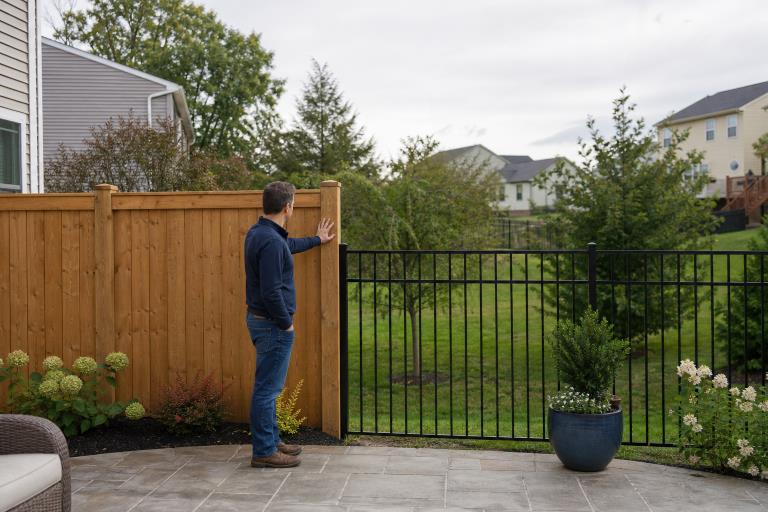
Privacy comes from the complete design, not only the material. Look closely at fence height, board or panel spacing, gate gaps, and the changing sightlines created by slopes. A solid six-foot backyard fence can block many direct views, but a low spot in the yard or an elevated neighboring deck may still create visibility concerns. Walk the property and check views from patios, decks, windows, and seating areas. Landscaping can soften a fence line and add screening, while a lighter-colored or semi-open design can prevent a small yard from feeling overly enclosed.
Choose a Fence for Pets and Children
A pet fence should be evaluated as a safety system. Consider the animal’s size, jumping ability, digging habits, and tendency to squeeze through openings. Picket spacing, rail placement, the gap beneath the fence, secure corners, and dependable gate latches all matter. For young children, visibility can also be valuable because adults can supervise activity without losing sight of the boundary.
Pool areas may be subject to separate barrier rules. Confirm the applicable requirements before committing to a fence style or gate arrangement.
Match the Fence to the Home
The right fence should complement the house rather than compete with it. Traditional homes often pair naturally with wood, picket, or restrained ornamental styles. Modern homes can suit simple horizontal lines, dark finishes, or streamlined metal fencing. Larger properties may benefit from open fencing supported by landscaping, while smaller yards often feel more spacious with lighter colors and less visually heavy designs. Choose a style you will continue to appreciate after short-lived design trends change. Scale, color, texture, and the relationship between the fence, driveway, entry, and landscaping are more important than copying a particular look.
Consider Maintenance and Weather
Prince William County properties experience rain, humidity, wind, summer sun, and winter freeze-thaw cycles. That makes material care an important part of the decision. Ask whether the fence will need staining or painting, how it handles moisture, whether rust or rot could be concerns, and how easily a damaged panel can be replaced. Lower-maintenance materials may cost more initially, while a less expensive material may require more attention over time. Every fence benefits from occasional cleaning, hardware checks, and inspections after severe weather.
Plan the Full Project Budget
Material cost is only one portion of a fence project. Your estimate should account for the total length and height, gates, terrain, removal of the old fence, posts, fasteners, latches, grading, and future maintenance. Slopes, tree roots, difficult access, and multiple gates can all affect labor and layout. Request an itemized estimate so you can see where the budget is going. That makes it easier to compare alternatives, such as selecting a different gate style or changing a decorative feature, without sacrificing the fence’s main purpose.
Check Property Rules and Local Requirements
Check property lines, easements, homeowners’ association standards, and local regulations before ordering materials. Prince William County’s fence guidance explains height, placement, corner-lot, and sight-distance considerations. An excellent-looking fence can still become an expensive problem if it crosses a boundary or conflicts with an approved site plan. Before post holes are dug, request utility markings. Virginia 811 advises homeowners to submit a locate request at least three business days before digging and wait for a positive response. Private lines, such as irrigation or landscape lighting, may require separate attention.
Follow a Simple Planning Checklist
- Define the main reason for the fence.
- Measure the approximate boundary length.
- Mark gates, driveways, patios, utilities, and drainage areas.
- Compare two or three suitable materials.
- Review maintenance needs and expected long-term care.
- Confirm property lines, HOA rules, and local requirements.
- Request itemized estimates from qualified installers.
- Review the final layout before approving installation.
Common Questions About Fence Materials
What is the best fence material for privacy?
Solid wood, vinyl, and composite styles can all provide strong privacy. The better choice depends on the look you prefer, your maintenance expectations, budget, and the design needed to block specific views.
What is the best fence for dogs?
The best dog fence matches the dog’s behavior. Height, opening size, bottom clearance, gate security, and resistance to digging matter as much as the material itself.
Does a fence improve curb appeal?
Yes, when its scale, color, and style fit the home, and the fence is well-maintained. An overly tall, mismatched, or deteriorating fence can have the opposite effect.
Which fence materials need the least maintenance?
Vinyl, aluminum, and many composite options typically require less routine refinishing than wood. They still need cleaning and periodic checks of posts, panels, hinges, and latches.
Conclusion
Choosing a fence for a Prince William County property starts with function rather than appearance alone. Homeowners should consider how the fence will be used, whether the goal is privacy, pet containment, child safety, security, or defining property boundaries. It is also important to balance curb appeal with maintenance needs, weather exposure, material durability, installation requirements, budget, and local property or zoning rules. Factors such as the property’s layout, slope, existing landscaping, gates, and access points can also affect the most practical design. Reviewing these details before choosing a material or contractor can help reduce unexpected costs and installation issues. By considering both immediate needs and long-term upkeep, homeowners can create a fence that works well today, fits the property, and remains practical to maintain for years to come.