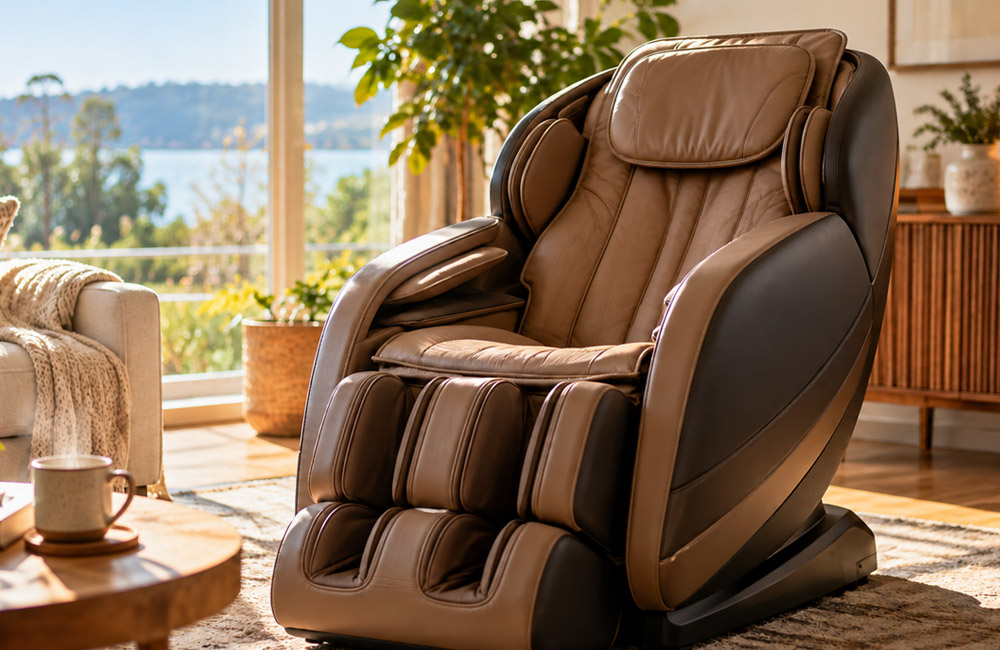
Warmth on a sore muscle has always felt like it does something, long before anyone bothered explaining the biology behind it. A heated massage recliner builds actual technology around that old instinct. Heat and rollers working together, instead of forcing a choice between a heat pack and a massage on any given evening.
Two Systems Working Together Beats Either Alone
Heat loosens tissue before a single roller starts moving. That’s the whole mechanical advantage. Muscle that’s already warm and relaxed lets the massage reach deeper without the discomfort a cold muscle usually puts up as resistance. People managing chronic back pain notice this combination most. So do people recovering from physical work, or anyone who’s spent the day hunched over a desk without really noticing until they stand up.
It’s Not Just for People With a Diagnosed Problem
Ask who actually buys one of these chairs and the honest answer is broader than most marketing suggests. Plenty of buyers just deal with ordinary stiffness after a long week. No arthritis. No injury. Just tight shoulders and a habit of sitting too long. Older adults tend to have a slightly different reason. Daily comfort and mobility at home matter more to them than chasing an intense massage. Heat alone often does most of that work quietly in the background.
Not Every Chair Puts Heat in the Same Place
Some models concentrate warmth purely on the lower back. Others extend it down through the calves, into the seat, sometimes the feet as well. Someone dealing mainly with lumbar tension doesn’t need a chair heating parts of the body that were never bothering them in the first place. Full body relief is a different brief entirely, calling for multiple heat zones working alongside the massage system rather than one warm patch doing all the work.
The Track Underneath Determines the Whole Massage
Rollers follow a fixed path built into the chair’s frame. That path matters more than most buyers realise before their first session.
A shorter track follows the spine from neck to lower back. A longer one continues down under the glutes into the thighs. The difference shows up once someone sits down and feels how far the massage actually travels.
Combining both gives the widest coverage available in a single heated massage recliner. It is worth knowing that before assuming every model on a showroom floor covers the same ground. Some chairs stop at the lower back. Others reach further. Trying both styles side by side is usually the only reliable way to tell which one matches what the body actually needs.
Zero Gravity Isn’t Just a Marketing Term
Tilting the knees slightly above the heart spreads body weight evenly across the whole seat instead of concentrating it through the lower spine. Pressure on the back drops noticeably in that position. The rollers work more effectively too, since there’s less tension for them to fight against.
Most decent chairs in this category include at least one zero gravity preset now. It stopped being a premium extra a while ago.
Materials Matter More Once the Chair Sees Daily Use
PU leather handles constant movement better than most people expect, resisting cracking and peeling in a way genuine leather sometimes struggles with under heavy daily use. Fabric options exist too, for anyone who finds leather too warm or too stiff feeling against skin. Real leather is out there as well, for buyers who specifically want it and don’t mind the extra care that comes with it.
Safety Certification Isn’t Optional, Even If It’s Easy to Skip Checking
Any chair sold legitimately in Australia should carry proper electrical safety certification. That detail gets buried under massage technique descriptions and heat zone diagrams, but it matters more than either of those once the chair’s actually plugged in daily.
Checking for it takes thirty seconds. Skipping that check occasionally costs a lot more than thirty seconds later.
Trying One Beats Reading About One
Photos and spec sheets only communicate so much about how a chair actually feels once someone’s sitting in it. A showroom visit, where one’s available, settles questions a product page never quite answers on its own.
Bringing a rough idea of daily habits into that conversation helps too. Someone managing arthritis needs a genuinely different recommendation from someone just tired after long days at a desk. Even if both walk in asking about the same chair.
Session length ends up mattering more than most buyers expect on day one. A quick fifteen-minute sit after work does more for consistency than an occasional hour-long marathon session on a weekend.
Building the habit into an ordinary evening routine helps. Treating it as a special occasion usually does not. That difference is often what decides whether the chair still gets used six months later.