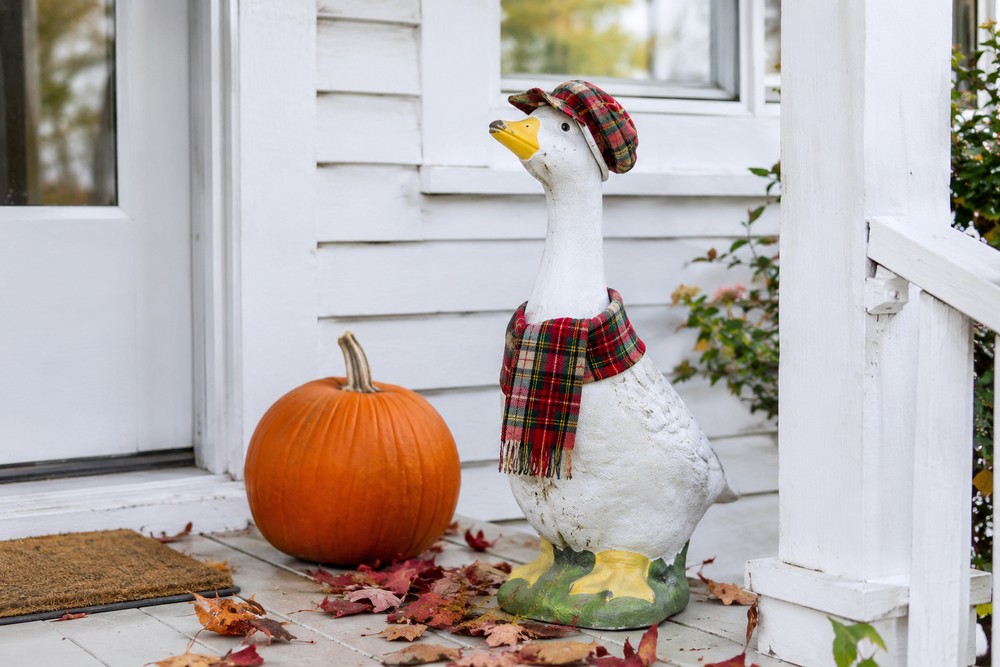
A porch goose gives you a small spot to decorate without rearranging the whole porch. If you enjoy changing its outfits, a loose seasonal schedule can help you have the next hat or wrap ready when you want it. Dress it for a few favorite holidays, keep one look through a season, or leave it bare between outfits. The point is to make the routine enjoyable, not give yourself another deadline.
A simple timing rhythm that actually works
One easy option is to put the new outfit on one to two weeks before a holiday, then change it within a few days afterward. That gives you a starting point for your calendar, but a longer display works too if you enjoy it.
That window gives neighbors time to notice without the display feeling stale. It also leaves room for bad weather or a busy week. If rain hits on Saturday, Sunday still works. If life gets busy, the goose can wait a few days and no one minds. A little flexibility is part of the routine.
Plan the swap for daylight when ties and hats are easier to adjust. Budget roughly ten to fifteen minutes if the outfit has only a hat and a wrap, a bit longer if there are buttons or layers. Lay the next outfit out indoors the night before so small pieces are easy to find. Bring the old outfit inside after the change, then check whether it needs cleaning or drying before you put it away.
Keep the display as simple or colorful as you like. A bright hat can be enough for a holiday, especially when the porch already has wreaths, planters, or other decorations. You don’t need a completely new outfit for every change.
Late winter and spring ideas from Valentine’s Day to Easter
If Valentine’s Day is on your decorating calendar, a pink scarf and a small heart hat can be your first themed change after the winter holidays. Add a bow tie in red or pink if you like, but there’s no need to make it elaborate. Choose pieces suitable for your display location, and check them for dampness after snow or rain.
Saint Patrick’s Day offers another chance to change things up before spring. A green hat or shamrock scarf can mark the occasion without a full outfit. If several dates fall close together on your decorating calendar, keep the pieces for each change together so you aren’t searching for a hat at the last minute.
Easter and early spring allow for softer looks. Pastel wraps with flower crowns are popular. Bonnets tied under the chin stay put better than loose hats on windy days. If Easter is late, the same outfit can stay up through April with fresh flowers swapped in. If you don’t celebrate Easter, a plain floral wrap still reads as spring without tying the display to a specific date.
Summer looks for long days and quick changes
Keep summer low-effort by choosing an everyday look and an optional holiday outfit. For early July, try patriotic prints in red, white, and blue. Stars on a wrap or a striped hat can suggest the theme without a full costume. Store the holiday pieces together so they’re ready when you want to make the change.
For the rest of summer, consider a sunflower crown with a wrap or a fishing hat with a khaki vest. Pick something you enjoy seeing between celebrations. Check the outfit’s care guidance before leaving it outdoors, particularly where it gets direct sun or rain. You can rotate two looks through the summer or keep one favorite in place.
Put the July outfit on in late June if you like, then swap back to the everyday look in the first few days after the fourth. Don’t leave thin summer fabric out in steady sun for a month without checking. A quick shake and re-tie once a week keeps it neat.
Halloween and Thanksgiving outfits for fall
A plaid wrap with a plain hat can bridge September and October. Try brown, gold, or orange to coordinate with pumpkins and fall planters. If Halloween is your next planned change, keep this everyday fall outfit in place until you’re ready to bring out the costume.
Halloween is a chance to try a playful outfit. Consider a witch hat with a black cape or a jack-o’-lantern wrap with an orange scarf, choosing pieces sized for your statue. If you celebrate, put the Halloween outfit on about ten days before the 31st, then swap it in early November. Those dates are simply a convenient reminder, not a deadline.
Thanksgiving calls for quieter colors. A felt collar in brown with a turkey hat is enough for most owners. Miniature wreaths with dried flowers also work for November. Swapping right after Halloween keeps the goose from sitting in a witch hat through mid-November. The fall outfit can come down within a few days after the holiday meal.
Winter nights and the case for light
Between Thanksgiving and New Year’s, the goose is on display mostly after dark. Days are very short, and neighbors walk by at dusk. Porch lights and street lights do some of the work, but a plain goose can still fade into the background by six o’clock.
December is a natural time to consider a Lighted Porch Goose for a display you can enjoy after sunset. Choose compatible outfits using the seller’s guidance, and follow the statue’s setup and operating instructions. You can keep the same loose decorating schedule: put the Christmas outfit on one to two weeks ahead, or start earlier if that fits your other porch decorations.
For Christmas, try a Santa hat with a red wrap or a small decorative wreath sized for the goose. Follow the outfit maker’s instructions for attaching and caring for each piece. If you like, leave the Christmas outfit up through the first week of January, then switch to a plain winter wrap for the rest of the month. A navy scarf with a knit hat works when there is no holiday to mark.
Fit and fabric for outdoor use
Fit causes more trouble than any other part of this hobby. Geese come in different heights and shapes. An outfit cut for a small goose won’t close on a tall one, and a loose outfit will twist in wind. Measuring is the dull but reliable fix. Measure the goose from base to top of head, then match the outfit to the goose using the seller’s sizing guidance. Don’t guess from photos alone.
Try new outfits in daylight before the season starts. Adjust straps then so swap day stays quick.
Ready-made outfits, handmade pieces, and secondhand finds offer different ways to build a wardrobe. For a ready-made set, read the sizing information before ordering. If you sew, compare the pattern measurements with your statue before cutting fabric. Check secondhand pieces for missing fasteners and loose seams. Start with one outfit that fits well before buying several more, and check the return policy before removing tags.
Use the outfit’s care instructions to decide where to display it and how to clean it. Keep long fabric tails out of puddles, and use the provided fasteners to secure hats and wraps. Check the fit after windy weather. If a piece has slipped, adjust it before leaving the display in place for another week.
Storage and rotation without the mess
Rotation is where wardrobes survive or fall apart. Toss outfits in a pile and straps tangle and hats lose shape. Sort by season in labeled plastic bins kept indoors. One bin for spring and summer is enough for most owners, with a second bin for fall and winter to handle bulkier hats and wraps. Labels save time next year when memory fades.
Clean outfits according to their care labels, and let them dry completely before storage. Don’t pack damp fabric in a closed bin. Inspect for fading and loose seams while you have each piece laid out. Make small repairs now rather than on a cold porch in December. Keep a small bag of spare ties and safety pins with the outfits.
Timing for storage is simple. Bring last season’s outfit inside on swap day rather than leaving it in the garage for a week. Fold wraps flat for storage, and stuff hats with tissue so crowns don’t dent. Slide the bin back indoors the same day. The whole reset takes about as long as the swap itself, though exact minutes depend on buttons and layers.
A loose yearly calendar you can copy
Think of this as a starting point, not a set of deadlines. Skip any holiday that doesn’t fit your preferences or schedule. You could plan six to eight changes per year, using everyday outfits for the long gaps between major holidays. Adjust that number to suit the pieces you already have and the time you want to spend. February brings hearts for Valentine’s Day if you like. March can stay bare or hold a simple green wrap for a week around Saint Patrick’s Day.
April covers Easter or plain spring flowers. May can stay in that spring look or go bare for a few weeks while pollen coats everything. Late June brings out patriotic prints in red and blue for the fourth. August returns to the everyday summer outfit until early September.
September suits plaid or earth tones. October brings Halloween hats and capes for about ten days at the end of the month if you take part. November shifts to brown and gold after the first weekend. December keeps Santa hats and red wraps through the first week of January before a plain winter scarf takes over.
Bare is fine too.
Most swaps need only a few minutes once outfits fit well. Budget a little extra the first time you try a new style with ties or layers.
A goose that changes with the seasons doesn’t need a big budget or a closet full of outfits. A rhythm you can keep and a dry place to store outfits between swaps are enough. Pick the holidays you enjoy and let the timing do the work.