Roofing problems include visible damage and defects that affect hidden parts of the structure. Ground-level inspections help identify warning signs, but diagnosing concealed damage requires specialized roofing knowledge. Knowing when professional roof repair is necessary helps prevent unresolved defects from worsening and causing further deterioration. Here is more information on when to provide roof repairs yourself and when to call a professional:
Checking Roof Conditions Safely
Homeowners can identify roofing concerns through ground-level observations around the property. Missing shingles, displaced materials, and changes in the roofline indicate possible damage. Strong winds and hail also warrant an exterior inspection for visible damage. Water stains on ceilings or upper walls, peeling paint, and dampness indicate possible moisture intrusion.
Musty attic odors and wet insulation provide additional signs of water entry. Shingle granules accumulating in gutters indicate asphalt shingle deterioration, while overflow and separated gutter sections point to drainage problems. Climbing onto a damaged roof exposes homeowners to fall hazards, so trained professionals should inspect the roof and identify concealed damage.
Repairing Minor Roof Leaks
Homeowners often handle minor roof repair issues when the damage is easy to access and does not involve major roofing components. If a few shingles have shifted or a small amount of roofing sealant needs attention, a homeowner with the right skills and equipment is able to address the issue. Roof leaks around chimneys and roof valleys require professional attention because these areas need proper flashing and waterproofing.
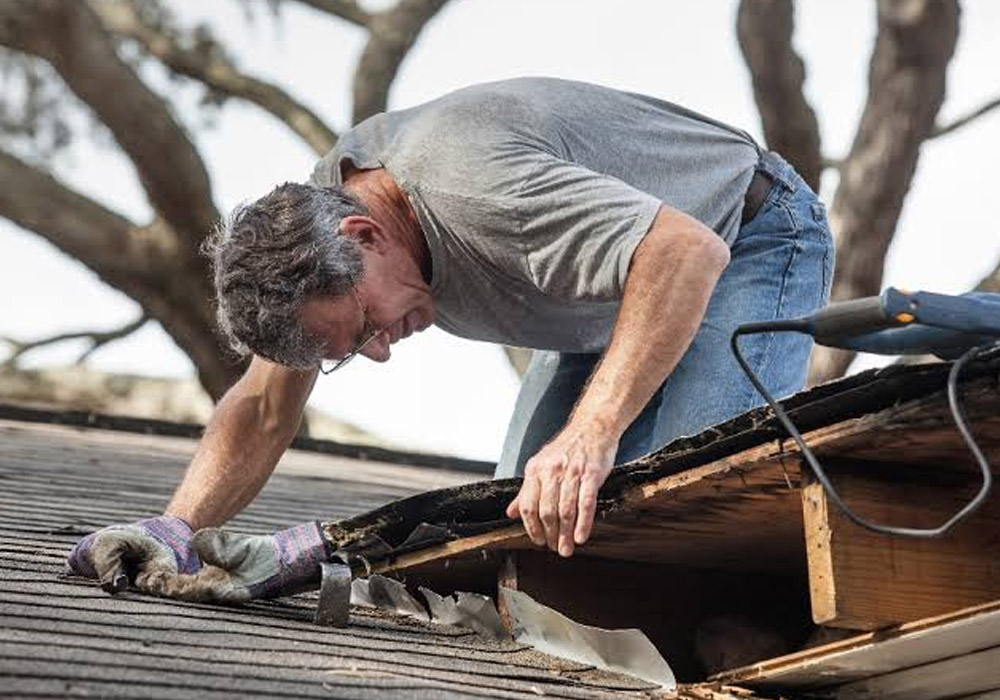
Some roof problems require professional service because the damage extends beneath the outer roofing materials. When water reaches the underlayment or roof decking, contractors inspect the affected area and determine which materials need repair or replacement. Water also travels along roof framing before appearing as a ceiling stain, so identifying the source of the leak often requires a thorough inspection.
Homeowners should contact a professional when repairs involve extensive shingle damage, loose flashing, structural concerns, or persistent leaks. Although minor maintenance is suitable for homeowners with roofing experience, working on a steep or damaged roof presents serious safety risks. Professional roofers have the equipment and experience to complete complex repairs, and they address underlying problems to prevent further roof damage.
Addressing Storm-Related Roof Damage
Homeowners should assess storm damage carefully to determine which roof repairs require professional attention. Storms expose roofing systems to strong winds, hail, heavy rain, and falling debris, which often damage shingles and roof structures. Minor storm damage, such as a few displaced shingles, is sometimes suitable for homeowners with proper roofing experience and safety equipment. Exposed roof sections require temporary protection, and professional roofers use secure tarps to limit additional water intrusion. When storms cause extensive damage, fallen trees, or structural problems, contractors provide the necessary repairs and address potential safety hazards.
Fixing Structural Roof Problems
Structural roof damage often requires professional repairs because it affects the decking and support components beneath the roof covering. When a roofline begins to sag, weakened decking or deteriorating supports are often responsible for the visible damage. Prolonged water exposure also damages wooden components, and poor attic ventilation traps heat and moisture that contribute to condensation and wood deterioration.
Homeowners should contact professional roofers when structural damage affects the roof’s stability. Contractors inspect weakened areas to determine which materials require repair or replacement, and damaged decking must be replaced before new roofing materials are installed. Since the roof covering needs a stable base, proper repairs address the underlying structural problems rather than just the visible damage.
Hire a Roof Repair Company
Roof inspections help homeowners identify damaged areas before roofing problems become more extensive. When damage extends beneath the roof surface, professional roofers inspect the affected components and determine the necessary repairs. Regular inspections also help identify roofing defects caused by hail and strong winds, and storm damage restoration addresses these issues to protect the roof structure. Contact a roofing contractor to discuss your roof repair needs and arrange an inspection.