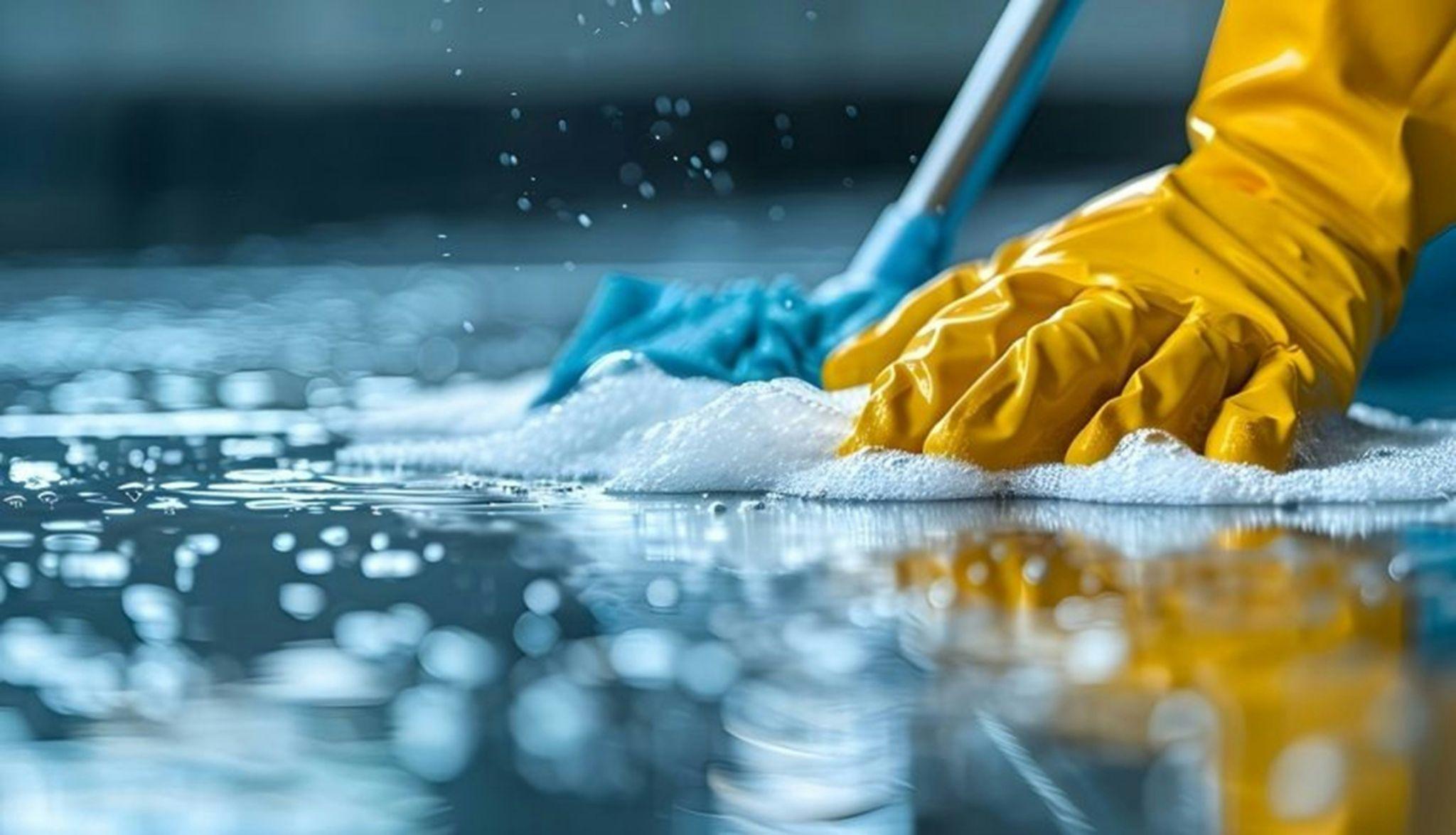
A mop is perfectly adequate for a kitchen, a small office, or an occasional spill. Scale that same cleaning method up to a warehouse, school corridor, supermarket, workshop, or other large facility, however, and its limitations quickly become obvious.
The problem is not necessarily that a mop cannot remove dirt. It is that cleaning hundreds or thousands of square feet manually requires considerable time, repeated passes, frequent water changes, and physical effort. At a certain point, improving floor cleaning means changing the method rather than simply mopping more often.
Large Floors Change the Cleaning Equation
Floor size has a direct effect on how practical manual cleaning remains. A relatively small area can be swept and mopped without consuming much of a working day. Large commercial floors are different because the same basic process has to be repeated across considerably more surface area.
That creates several inefficiencies. Workers must repeatedly refill buckets, wring out mops, move equipment, and return to areas that require another pass. Meanwhile, choosing mechanical equipment introduces its own terminology and operating differences that are worth understanding before changing the cleaning routine. SweepScrub explains the distinction between floor scrubbers and auto scrubbers, helping clarify how different machines approach larger-scale floor care.
Scrubbing Does More Than Move Water Around
Traditional mopping relies heavily on manual pressure and repeated movement. That can be sufficient for light everyday soil, but stubborn grime often requires significantly more agitation.
A floor scrubber uses powered brushes or pads to perform that work mechanically. Instead of relying on the operator to repeatedly scrub the same section, the machine provides consistent contact with the floor while the cleaning solution helps loosen dirt.
This becomes particularly valuable in environments exposed to heavy foot traffic, carts, machinery, deliveries, grease, tracked-in dirt, or other sources of persistent buildup.
Consistency matters too. Manual results can vary depending on how quickly someone is working or how much pressure is applied. Mechanical scrubbing provides a more standardized process across a much larger area.
Removing Dirty Water Changes the Result
One of the fundamental limitations of conventional mopping is what happens after dirt has been loosened. A mop absorbs some of it, but it can also redistribute contaminated water across the surface.
Many automatic scrubbers take a different approach. They apply a cleaning solution, agitate the floor, and then recover the dirty liquid as the machine moves forward.
That distinction can substantially change both efficiency and the condition of the floor after cleaning. Instead of repeatedly returning to a bucket and eventually spreading increasingly dirty water, the operator is working with a system designed to separate the cleaning and recovery stages.
Recovering water also means the surface can be left considerably drier than it would be after traditional wet mopping, allowing cleaned areas to return to normal use sooner.
Match the Machine to the Space
Moving beyond a mop does not mean that every facility needs the largest machine available. The right choice depends on the floor area, layout, surface, soil level, cleaning frequency, and obstacles within the building.
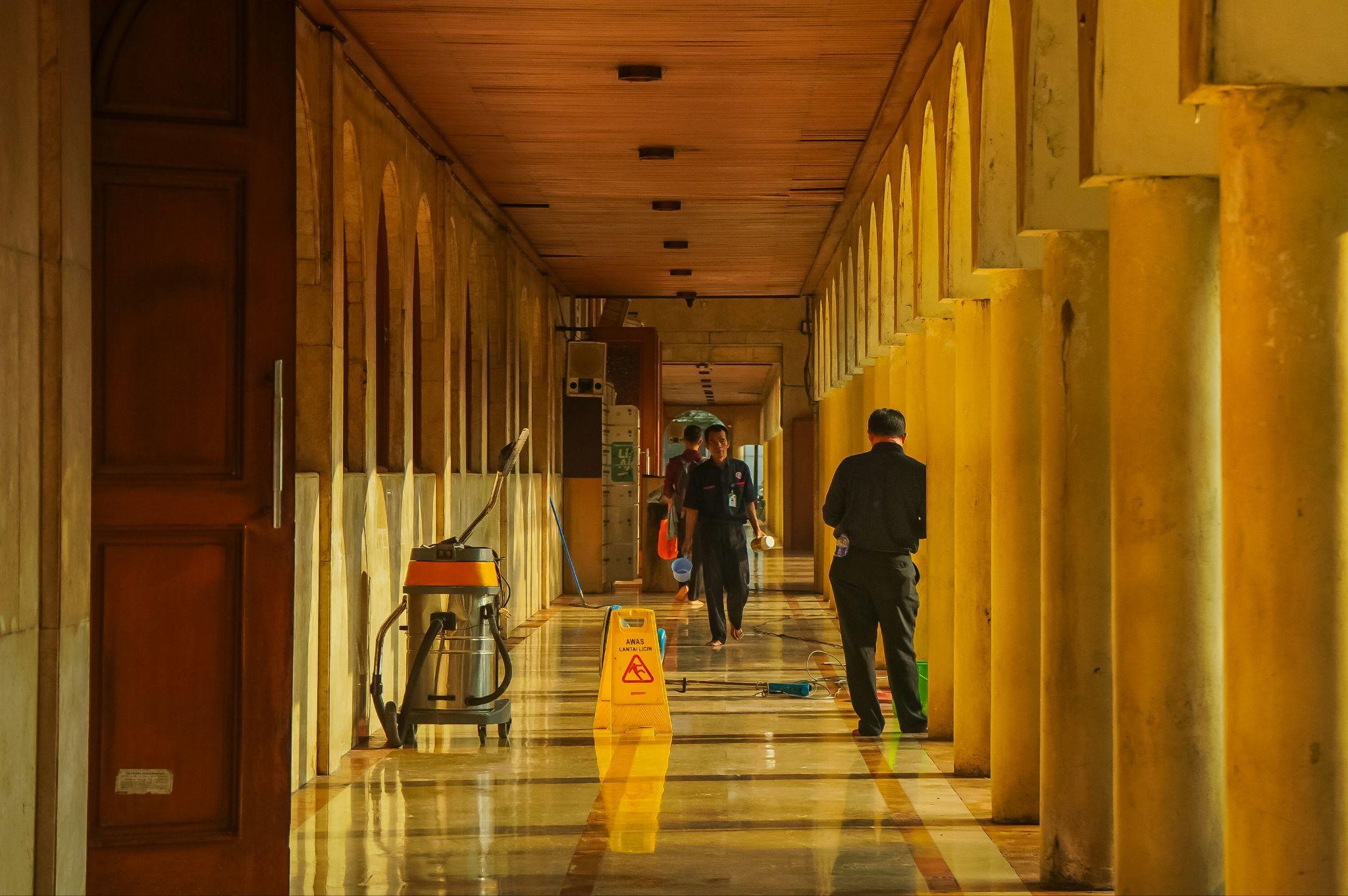
A compact walk-behind machine can be practical for corridors, smaller retail spaces, offices, and areas with frequent turns. Larger walk-behind models can cover more open floor efficiently, while ride-on machines become attractive when operators need to clean extensive areas such as warehouses or large commercial facilities.
Maneuverability deserves as much attention as cleaning width. A machine that covers a large path may sound efficient on paper but become inconvenient in a building filled with narrow aisles, shelving, furniture, or tight corners.
The objective is to reduce total cleaning effort, not simply purchase the machine with the largest specifications.
Preparation Still Matters
Mechanical equipment can dramatically improve the scrubbing stage, but it does not eliminate the need for sensible preparation.
Loose debris such as packaging fragments, stones, dust, and larger pieces of dirt may need to be swept or collected before wet scrubbing begins. Otherwise, debris can interfere with the cleaning process and create unnecessary wear on equipment.
Facilities can make the entire routine more efficient by establishing a logical cleaning sequence. Remove obstacles where possible, deal with loose debris, scrub the floor in an organized pattern, and give extra attention to areas where soil tends to accumulate.
This prevents operators from repeatedly crossing the same space or interrupting the job to handle problems that could have been addressed beforehand.
Consider Labor as Part of the Cleaning Cost
The price of cleaning a large floor is not limited to detergent, water, and equipment. Labor can be one of the most significant costs, especially when the same area must be cleaned frequently.
Suppose a manual process occupies an employee for several hours. If a more efficient method substantially reduces that time, the benefit appears every time the floor is cleaned. Over months or years, those saved hours can become more important than small differences in consumable costs.
Physical effort also matters. Repetitive mopping across extensive areas can be demanding, particularly when workers must move heavy buckets and repeatedly perform the same motions.
Evaluating cleaning equipment therefore requires looking beyond the initial purchase price. Coverage rate, operator time, maintenance requirements, durability, and how frequently the machine will actually be used all contribute to its practical value.
Know When the Mop Has Reached Its Limit
There is no reason to eliminate mops entirely. They remain extremely useful for small spaces, quick spot cleaning, corners that machinery cannot reach, and unexpected spills.
The question is whether they should still be responsible for the majority of the floor.
If routine cleaning takes hours, employees repeatedly cover the same sections, dirty water is difficult to manage, or large areas remain wet after cleaning, the existing method may simply have reached its practical limit.
At that point, the better solution is not necessarily to clean harder or add another person with another mop. It is to rethink how the floor is being cleaned. Matching the method to the scale of the space can produce more consistent results while turning a repetitive, labor-intensive job into a much more manageable part of facility maintenance.