A small leak can hide a bigger plumbing issue. Learn the warning signs before water damage spreads through your home.
One drip under the sink can look harmless. A damp cabinet, higher water bill and musty smell appearing together tell a different story. The useful skill is not pulling the plumbing apart yourself, but recognising when a leak may be part of a bigger issue. Homeowners who need a leak detection plumber in Kogarah often wait until stains, swelling or mould appear, even though the plumbing has usually been giving clues earlier.
Start With the Pattern, Not Just the Drip
A single drip from a tap is one thing. A drip under the vanity, a damp smell inside the cupboard and a water meter that keeps moving when the taps are off is something else. The pattern tells you whether the problem may be local or hidden deeper in the plumbing system.
A visible leak can come from a washer, mixer cartridge, flexible hose, isolation valve, toilet cistern or hot water connection. A hidden leak can sit behind tiles, under floors or inside wall cavities, where it quietly damages timber, plaster and cabinetry before anyone sees running water.
The Water Meter Can Tell You More Than the Tap
A tap may be silent while water is still being lost somewhere else. That is why the water meter is often one of the most useful clues. If all taps and water-using appliances are off, but the meter continues to move, there may be a leak on the property side.
Body: Sydney Water explains that a simple leak check can involve turning off taps and appliances, noting the meter reading, waiting without using water, then checking whether the numbers have changed. Sydney Water says movement can indicate a leak, with a bigger change suggesting a bigger potential leak.
The Location of the Leak Changes the Risk
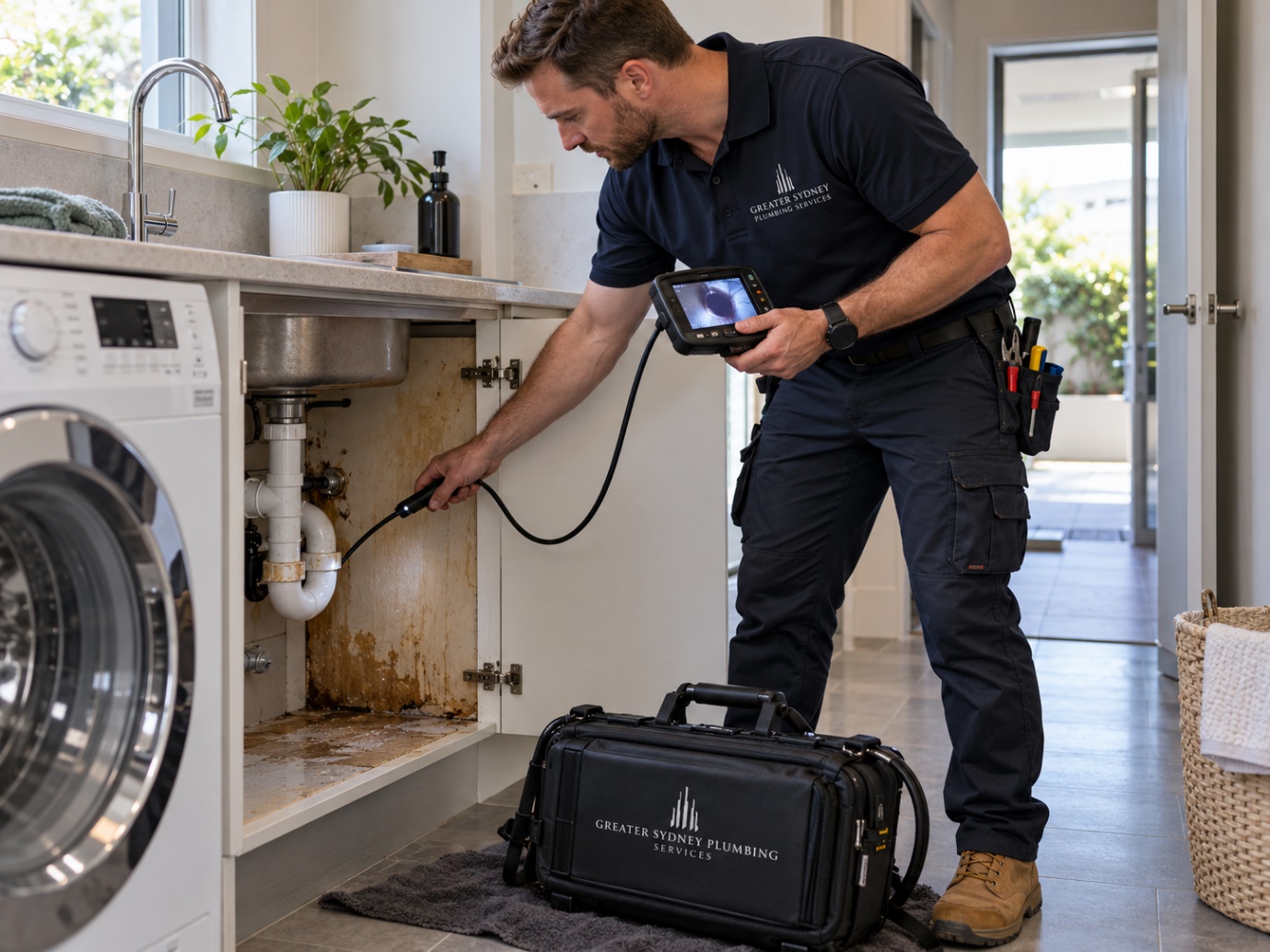
A leak into a bucket under the sink is easier to see and contain. A leak behind tiles, inside a vanity kicker, beneath a laundry cabinet or near a hot water system can be harder to notice until damage spreads.
A bathroom leak can move sideways behind tiles before showing on the other side of a wall. A toilet leak can waste water silently if the cistern is passing water into the bowl. A flexible hose can look normal from the front, while the back of the fitting is corroding or starting to fail.
The location matters because some leaks create more damage before they become obvious. If you can smell dampness but cannot see water, the issue is worth checking sooner rather than waiting for a stain to appear.
Why a Higher Water Bill Should Not Be Ignored
A higher water bill does not always mean there is a major burst pipe. It may come from a small leak running continuously over days or weeks. That is why the bill matters, especially when your household habits have not changed.
A running toilet, leaking irrigation point, dripping outdoor tap or hidden pipe leak can waste water quietly. The problem is not only the cost of the water. It is what that water may be doing to the surrounding building materials while nobody is watching.
If water use rises without an obvious reason, the next step is not guessing. Check the meter, inspect common leak points and arrange a proper plumbing assessment if the cause is not clear.
Not Every Leak Starts at the Fixture You Notice
One of the easiest mistakes is assuming the first wet spot is where the leak began. Water can travel along pipes, timber, tiles, cabinetry and wall framing before it shows itself. The visible stain may be the exit point, not the source.
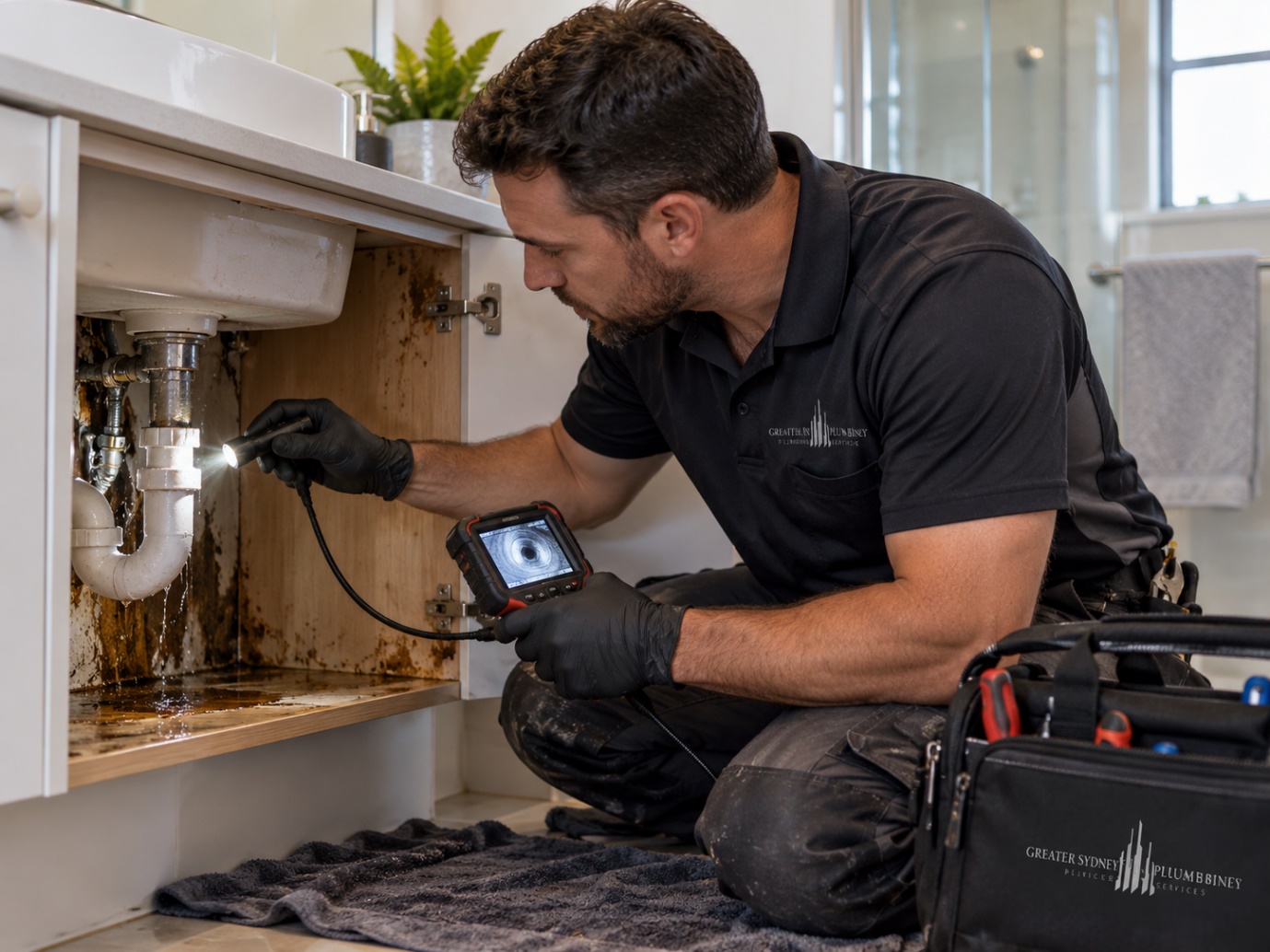
For example, a damp vanity base might come from a basin waste, a mixer connection, a flexible hose, a shower leak nearby or water tracking from the wall. A wet patch near a hot water unit might come from a relief valve, pipe joint, tank issue or overflow line.
This is why wiping the area dry is useful, but it is not a diagnosis. If the moisture returns, the real question becomes where the water started, not just where you first saw it.
Safe Checks Before You Call a Plumber
Some checks are safe and useful before booking help. You do not need to dismantle fittings or open walls. The goal is to gather clues without making the leak worse.
Bullet list:
Turn off taps and appliances, then check whether the water meter moves.
Look under sinks, vanities and laundry tubs for dampness or staining.
Check toilet bowls for quiet running or rippling water.
Inspect hot water valves and pipe connections for moisture.
Note whether dampness appears after showers, laundry use or rainfall.
Keep photos of stains, swollen cabinetry or water pooling.
These details help separate a simple fitting issue from a possible hidden leak. They also help a plumber understand whether the problem is constant, intermittent, hot water related, drainage related or connected to a specific fixture.
What to Avoid When a Leak Keeps Coming Back
The wrong response can make a leak harder to fix. Tightening every fitting you can reach may crack parts or damage seals. Smearing silicone over a wet area may hide the problem without stopping the water. Ignoring a small leak because it only appears sometimes can allow timber, plaster and cabinetry to keep absorbing moisture.
Chemical products are not a solution for hidden leaks. Paint, sealants and quick patches may temporarily change what you can see, but they do not confirm the source. When a leak keeps returning, the useful step is proper detection, not covering the symptom.
A Better Leak Inspection Follows the Evidence
Good leak detection Sydney work is not about guessing which wall to open first. It starts with symptoms, then works backwards. Where is water appearing? When does it happen? Does the meter move? Is the leak hot, cold, waste or weather related?
Numbered list:
Check visible fixtures and flexible connections.
Compare water meter movement with fixtures turned off.
Identify whether the leak is constant or linked to fixture use.
Inspect nearby walls, floors, vanities and hot water components.
Use targeted testing before recommending access or repair work.
That process matters because a dripping mixer, silent toilet leak, failed hose, shower waterproofing issue and hidden pipe leak are not the same job. They may all look like “a leak” from the surface, but they need different decisions.
When a Small Leak Becomes Urgent
A small drip is manageable when it is contained and understood. It becomes more serious when water is near electrical areas, inside walls, under floors, around the hot water system or spreading through cabinetry. It also becomes urgent when the leak cannot be isolated.
Call a licensed plumber sooner if the meter keeps moving with everything off, if dampness keeps returning, if you see mould forming, or if water appears around toilets, walls or ceilings. Those signs suggest the issue may be more than a simple surface drip.
Bullet list:
Water is pooling under a vanity or laundry cabinet.
A toilet refills when nobody has flushed.
Paint bubbles or plaster softens.
The water meter moves with fixtures off.
Damp smells return after cleaning.
A hot water system connection is leaking.
You cannot isolate the affected fixture.
Small Leaks Are Easier to Fix Early
A leak does not need to flood the floor to deserve attention. The earlier signs are often quieter: a musty smell, a swollen shelf, a higher bill, a toilet that refills by itself or one damp patch that keeps returning. The best time to act is before the water spreads, before cabinetry swells and before the leak turns into a larger repair. Watching the pattern early gives you a better chance of finding the real cause, not just wiping up the symptom.