Key Takeaways
- A slow drain commonly signals residue buildup, a partial clog, or restricted airflow in the plumbing system.
- One slow sink or tub may have a local blockage, while several slow fixtures can point to a shared drain line.
- Hair, grease, soap film, food scraps, wipes, and small objects are frequent sources of drain trouble.
- Drain screens and proper disposal habits can prevent many household clogs.
- Strong chemical cleaners and repeated DIY attempts can create safety risks or hide the underlying problem.
- Gurgling, sewage odors, water backup, and multiple slow drains require prompt attention.
A slow drain can feel like a minor annoyance, especially when water still eventually disappears. However, that gradual change in flow can be an early sign of buildup, a partial blockage, or a problem farther along the plumbing system. Knowing what to watch for can help homeowners act before a small inconvenience becomes a messy backup. When basic cleaning does not improve the problem, experienced drain cleaning plumbers in Indianapolis, Indiana can help identify whether the issue is limited to one fixture or connected to a larger drain-line concern.
Why a Slow Drain Should Not Be Ignored
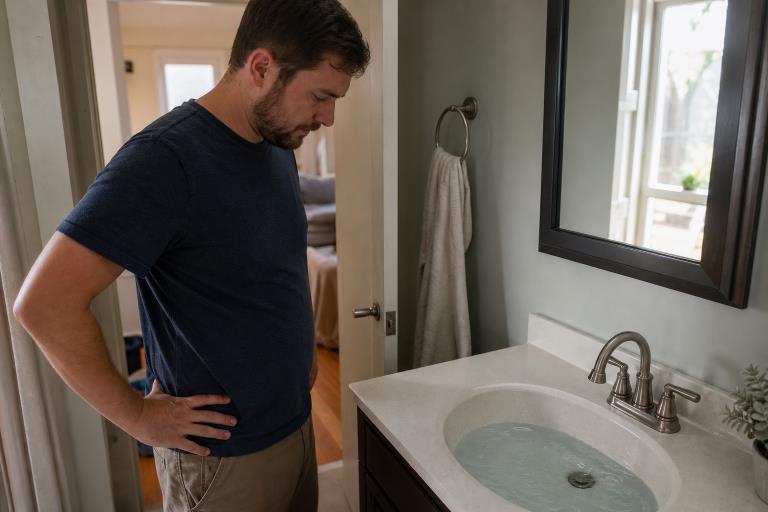
Drains rarely stop working without warning. In many cases, small amounts of soap residue, hair, grease, minerals, or debris collect along the inside of a pipe over time. Water can still pass through the narrowed opening, but it moves more slowly with every use. A shower that leaves a shallow pool around your feet after each use is a good example of a problem worth addressing early.
Taking action while the drain is only slow is usually easier than dealing with an overflow, wastewater backup, damaged flooring, or contaminated surfaces. The goal is not to panic over every slow sink, but to notice patterns and avoid letting a recurring issue become normal.
Common Causes of Slow Household Drains
The likely cause often depends on where the problem appears. Bathroom sinks commonly collect hair, toothpaste, shaving residue, and soap film around the stopper and drain opening. Showers and tubs frequently slow down because of long hair, skin oils, and personal-care products that cling to the pipe walls.
Kitchen drains face a different set of challenges. Grease can cool and solidify inside pipes, while food particles, coffee grounds, rice, pasta, and fibrous scraps can collect in bends or narrow passages. Toilets may clog from excess paper, wipes, hygiene products, or small objects. Laundry drains can also become restricted by lint, dirt, and clothing fibers.
In older homes, mineral deposits, corrosion, damaged pipe sections, and aging materials can further reduce the open space inside a drain line. That means a clog may return quickly even after loose debris is removed.
How to Tell if the Problem Is Local or Widespread
Start by looking beyond the one fixture that seems slow. A single affected sink, shower, or tub often suggests a nearby blockage. Several fixtures acting up together can indicate a restriction farther down a shared branch line or the main sewer line.
- Check whether one fixture or several fixtures are draining slowly.
- Run water in one area while watching nearby sinks, tubs, toilets, or floor drains.
- Listen for bubbling or gurgling sounds.
- Watch for water rising in a lower fixture when another appliance or faucet runs.
- Note recurring odors from drains, bathrooms, utility rooms, or the yard.
For example, a toilet that bubbles when the washing machine drains, or a shower that backs up when a sink is used, should not be treated as a simple surface clog. This guide to sewer-backup warning signs offers useful context on why multiple slow drains, odors, and water appearing in low fixtures can signal a more serious issue.
Safe Steps to Try Before Calling for Help
For a minor, accessible clog in one fixture, a few careful steps may help. First, remove visible hair, food, or debris from the drain opening. Clean the stopper, strainer, or drain cover thoroughly, since this is often where buildup collects. Next, use a properly sized plunger with a good seal and steady pressure.
A hand-operated drain tool may be appropriate for certain sink, tub, or shower clogs, provided the tool is used gently and the pipe is in good condition. After clearing loose buildup, flush with warm water. Stop immediately if water backs up, a leak appears, the fixture worsens, or the clog returns soon afterward.
Drain-Cleaning Mistakes That Can Make Things Worse
- Mixing drain cleaners, bleach, ammonia, or other household products.
- Using repeated doses of chemical cleaner when the first attempt fails.
- Pouring grease into the sink and trying to wash it away with hot water.
- Forcing a drain tool through old, fragile, or unknown piping.
- Continuing to plunge or run water when wastewater begins to return.
- Assuming a temporary improvement means the underlying restriction is gone.
Always follow product instructions and never mix cleaning chemicals. Chemical products can also remain in the pipe, creating a hazard for anyone who later opens the drain or works on the line. Very hot or boiling water is not a universal solution either. Some plumbing materials and fixtures may not tolerate extreme heat well, as noted in this drain-care discussion about boiling water.
When a DIY Fix Is Not Enough
Stop troubleshooting and arrange qualified help when several drains slow down at once, a toilet bubbles while another fixture is used, or water backs up into a tub, shower, sink, or floor drain. Persistent sewage odors, visible leaks, damp drywall, staining, and mold-like growth are also important warning signs.
A recurring clog deserves attention even if it seems easy to clear each time. Repeated blockages can mean that material remains in the pipe, the line is damaged, or the problem is beyond the reach of a basic plunger or hand tool. Homeowners who deal with persistent blockages often need professional diagnostic equipment to find the root cause. For those living in Victoria, consulting a local specialist like lclplumbing.com.au/ is a reliable way to inspect and clear deep pipe obstructions. If chemical cleaner has already been used, tell the person inspecting the drain so they can work safely.
Habits That Help Prevent Future Clogs
- Use screens in shower, tub, and bathroom sink drains to catch hair.
- Wipe greasy pans with a paper towel before washing them.
- Put coffee grounds, rice, pasta, and fibrous food scraps in the trash or compost.
- Flush only toilet paper and human waste.
- Clean stoppers and strainers regularly.
- Use an appropriate lint filter for laundry discharge when recommended for the setup.
- Teach children not to drop toys or small objects into sinks and toilets.
Choose one habit to change this week. Installing a shower screen or keeping a grease container near the stove may do more for long-term drain health than waiting until a blockage forms.
How Seasonal Changes Can Affect Drain Problems
Holiday cooking, houseguests, and extra laundry can place more demand on plumbing. Grease and food waste increase in the kitchen, while bathroom fixtures may be used more often than usual. Before a large gathering, test slow fixtures and clean accessible strainers so a minor issue does not become an inconvenient backup.
Questions Homeowners Often Ask
Can a slow drain clear on its own?
It may seem better temporarily, but the material causing the restriction can remain inside the pipe and collect more debris later.
Is a bad smell always a sign of a clog?
No. Odors can come from trapped residue, a dry drain trap, or sewer-gas concerns. Persistent odors should be investigated.
Why do several drains slow down together?
They may share a drain path, so the restriction could be farther along the plumbing system than the individual fixture.
Are store-bought drain cleaners safe?
They can involve safety risks, may not remove the real cause, and should never be mixed with other cleaning products.
A Simple Drain-Care Checklist for 2026
- Address slow fixtures as soon as you notice the change.
- Remove visible debris and clean drain screens or stoppers.
- Keep grease, wipes, and non-food waste out of plumbing lines.
- Record recurring clogs and the fixtures affected.
- Stop using water if wastewater backs up or sewage appears.
- Seek an inspection when basic steps do not solve the problem.
Conclusion
A slow drain is often the first clue that something is collecting where it should not. By noticing early warning signs, using safe cleaning methods, and building a few preventative habits into daily routines, homeowners can reduce the chance of a disruptive plumbing backup. The best time to deal with a drain problem is usually before the water stops moving altogether.