Key Takeaways
- Get out of traffic if you can do so safely, but do not move a seriously injured person unless there is an immediate danger.
- Call 911 for injuries, dangerous roadway conditions, hit-and-runs, or major damage.
- Take photographs of the scene, scooter, vehicles, road conditions, clothing, and visible injuries.
- Get contact and insurance information from involved drivers and contact details from witnesses.
- Seek medical care promptly, even if your symptoms initially seem minor.
- Save rental-app records, messages, bills, receipts, and documents related to missed work.
- Avoid guessing about fault, signing releases, or accepting a fast settlement before you understand your injuries.
An e-scooter crash can happen quickly, whether you are riding, walking nearby, driving, or using a rental scooter. Your priorities are safety and medical care. Once the immediate danger has passed, a few organized steps can help preserve details that may matter for insurance, treatment, or a later claim. If you need guidance about a collision in Decatur or Metro Atlanta, an e-scooter injury lawyer Atlanta can help you understand your options.
You do not need to decide who was at fault at the scene. Focus on getting help, documenting what you can, and protecting important physical and digital evidence. Local rules, insurance policies, and legal deadlines can affect your next steps.
Why Careful Follow-Up Matters
E-scooter riders have limited protection from pavement, curbs, vehicles, poles, and other hazards. Injuries may include cuts, sprains, fractures, and head injuries. Research on e-scooter injury patterns shows that riders have higher risks of traumatic brain injury and internal organ damage compared to motorcycle and bicycle riders. The research does not determine what happened in any individual crash, but it reinforces the importance of taking symptoms seriously.
Step One: Get to a Safe Place
Check for moving traffic, leaking fuel, fire, exposed wires, or other dangers. If you can move without worsening an injury, go to a sidewalk, shoulder, or another protected area. If a vehicle is involved, turn on the hazard lights when it is safe to do so. Bystanders can help by calling 911 and warning approaching traffic from a safe location.
Safety comes before photographs, damage estimates, or conversations about responsibility. Keep children and uninjured people away from the roadway.
Step Two: Check for Injuries
Call 911 or seek emergency evaluation for loss of consciousness, confusion, severe headache, vomiting, unusual sleepiness, neck or back pain, heavy bleeding, chest pain, breathing problems, numbness, weakness, difficulty walking, or severe abdominal pain. Do not remove a helmet from someone with a serious injury unless they cannot breathe or trained medical personnel direct you to do so.
Step Three: Report the Crash
Call law enforcement when there is an injury, a hit-and-run, a dangerous street condition, or substantial property damage. Ask for the incident or report number. Give a clear factual account of what you saw, but do not estimate speed, distance, or fault if you are unsure.
If you used a rental scooter, report the crash through the app or the company’s customer-service channel. Take screenshots before information disappears, including the trip route, start and end times, scooter number, notifications, and receipt.
Step Four: Collect Useful Evidence
Photographs and Video
- Take wide photos showing the entire scene and each vehicle’s position.
- Photograph lane markings, traffic signals, signs, curbs, potholes, loose gravel, lighting, and weather conditions.
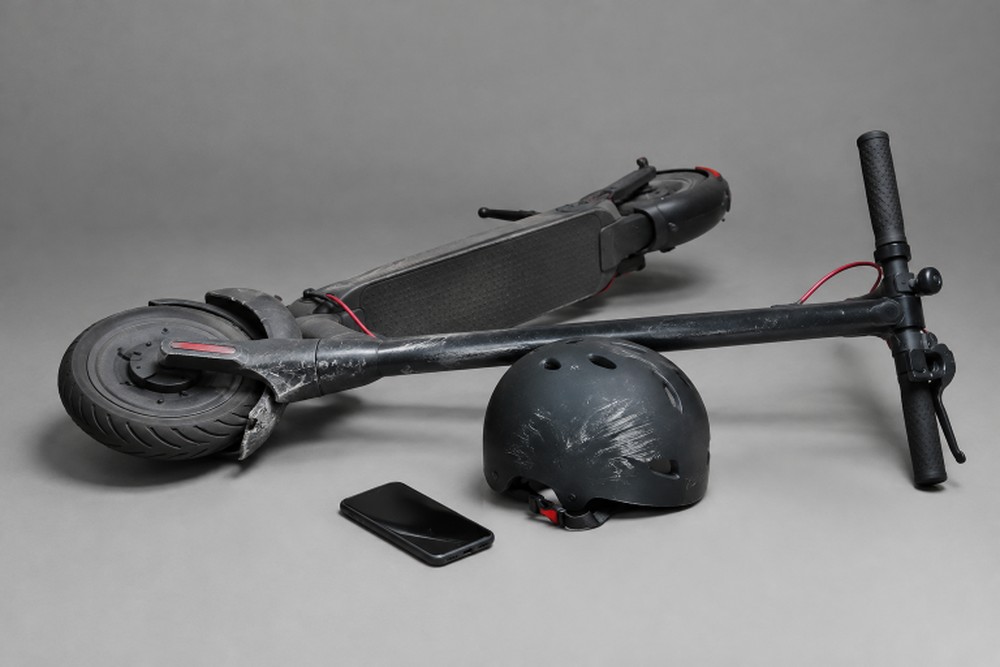
- Document the scooter, helmet, phone, clothing, vehicle damage, and visible injuries.
- Note nearby homes, stores, or intersections that may have security cameras.
People and Vehicle Information
- Get a driver’s name, phone number, license plate, insurer, and policy information when applicable.
- Ask witnesses for their names and contact details.
- Write down the color, make, model, direction of travel, and identifying features of any vehicle that leaves.
- Ask witnesses to describe what they personally observed rather than what they heard from others.
Digital and Physical Records
Save original photos, videos, dashcam files, smartwatch information, texts, emails, and app communications. Back them up in more than one place. Do not repair, discard, or alter the scooter, helmet, clothing, or damaged parts until they have been documented. Those items may help show the force of an impact or reveal a possible equipment issue.
Step Five: Get Medical Care and Follow Through
A same-day evaluation can be appropriate after a fall or collision, especially after a blow to the head. Tell the provider how the crash occurred and describe every symptom, including dizziness, headache, pain, sleep changes, difficulty concentrating, or limited movement. Follow recommended testing, treatment, therapy, and follow-up care.
Keep discharge papers, prescriptions, bills, appointment records, and work restrictions. A simple daily note about pain levels, mobility, sleep, and activities you cannot perform can also help you track your recovery.
Fault and Insurance Questions in Georgia
Responsibility may involve a driver, rider, rental company, property owner, manufacturer, or public entity responsible for roadway maintenance. Evidence matters because fault is not always obvious from the type of collision alone.
Georgia’s comparative-fault law can reduce damages based on your percentage of responsibility and generally bars recovery when you are found 50 percent or more at fault. Many Georgia personal injury claims also have a two-year filing deadline under O.C.G.A. § 9-3-33, although exceptions may apply. Acting promptly helps protect your ability to investigate the crash and identify applicable deadlines.
What to Avoid After a Crash
- Do not argue or make accusations at the scene.
- Do not apologize in a way that could be understood as accepting blame.
- Do not give a recorded insurance statement without understanding its purpose.
- Do not accept a quick payment or sign a release before the full extent of your injuries is known.
- Do not delete posts, photographs, messages, or rental-app records.
- Do not post public comments that speculate about the cause of the crash.
A Simple Crash-Day Checklist
- Move away from immediate danger.
- Call 911 when medical help or law enforcement is needed.
- Exchange information and identify witnesses.
- Photograph the scene, damage, roadway, and injuries.
- Report a rental-scooter incident through the app.
- Get medical care and follow the treatment plan.
- Save every record connected to the crash.
- Review insurance and deadline issues promptly.
Frequently Asked Questions
Should you report a crash if no one appears seriously hurt?
Reporting can still be helpful when a vehicle, rental scooter, hazardous road condition, or property damage is involved. Symptoms and memories can change, while basic scene details are often easiest to confirm right away.
What if the driver leaves the scene?
Move to safety, call 911, and provide every detail you remember, including the vehicle’s color, license plate, direction of travel, damage, and possible camera locations.
Can you have a head injury without passing out?
Yes. Head injuries can involve headache, dizziness, nausea, confusion, memory problems, or fatigue without a loss of consciousness. Seek medical advice after a head impact.
Conclusion
After an e-scooter crash, a calm and organized response can protect your health and preserve essential information. Put safety first, seek appropriate medical care, document the scene, save records, and avoid rushed statements or settlements. These steps can give you a clearer foundation for deciding what to do next.