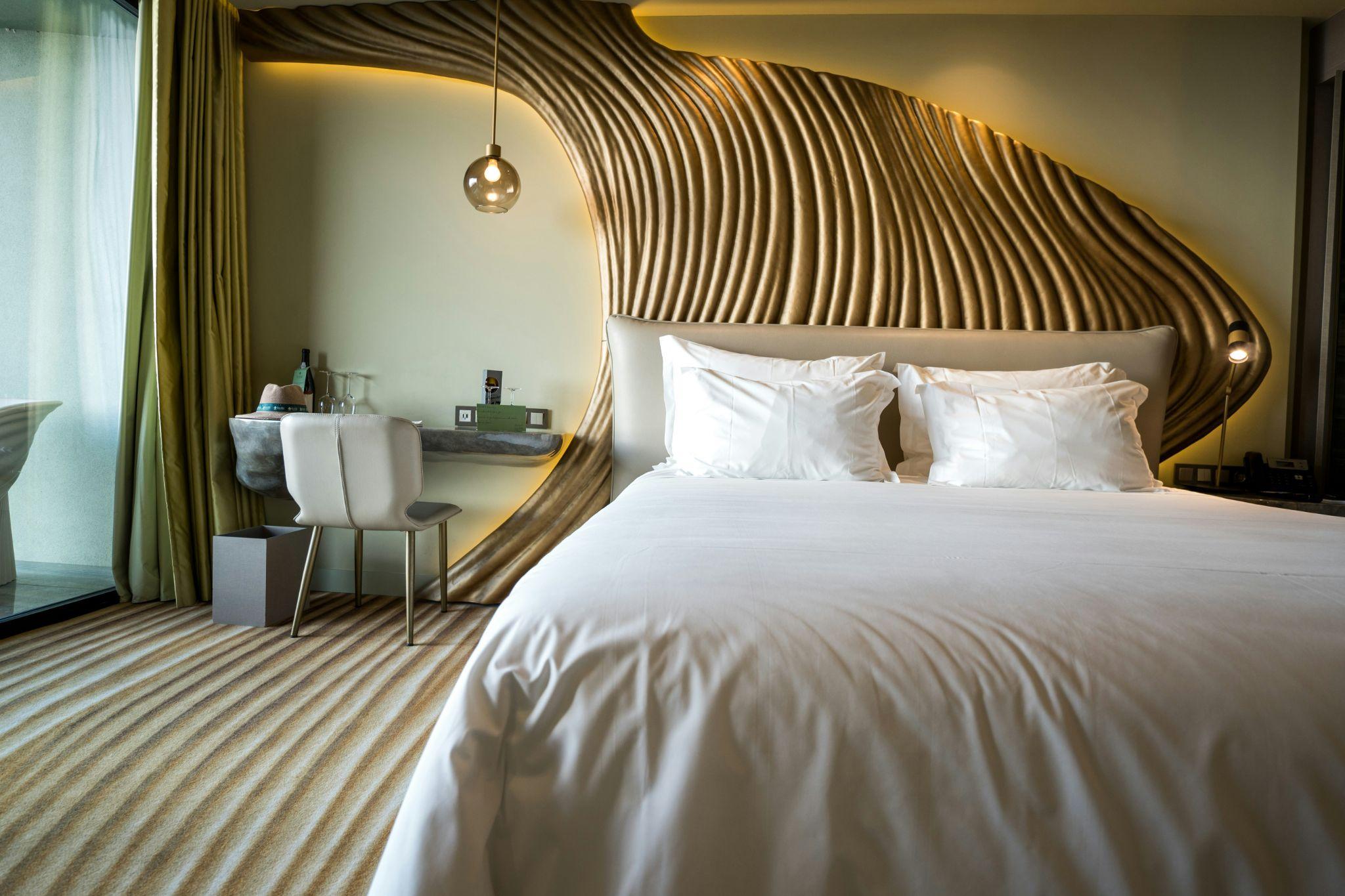
Some hotel rooms immediately feel luxurious even though nothing inside them appears particularly extravagant. There may be no marble bathroom, designer furniture, enormous television, or spectacular view. Yet the room still creates the impression that considerably more money was spent on it than probably was.
That feeling is rarely produced by one expensive object. Hotels can create it through lighting, layout, bedding, organization, materials, and dozens of small decisions that make the room feel deliberate. When everything appears to have a purpose and nothing interrupts the experience, even relatively simple interiors can feel surprisingly high-end.
The Best Comfort Features Rarely Look Improvised
One characteristic of an expensive-feeling room is that practical features appear to belong exactly where they are. Lighting controls are easy to reach, outlets are positioned where guests need them, curtains close properly, and furniture does not seem to have been squeezed into leftover space.
The same principle applies when planning substantial comfort features at home. Browsing a specialist site such as premiumsaunas.com may focus attention on the finished product, but whether a major installation ultimately looks refined depends heavily on what was planned before it arrived: available space, electrical requirements, access, surrounding materials, and how naturally it relates to the rest of the room. Hotels use a similar design logic on a broader scale. Guests see the polished result rather than all the infrastructure required to make it work.
That absence of visible improvisation is powerful. A relatively inexpensive room can feel sophisticated when cables disappear, switches make sense, furniture aligns properly, and nothing looks as though it was added as an afterthought.
Lighting Changes the Value of Everything Else
An expensive sofa can look surprisingly ordinary beneath harsh overhead lighting. An inexpensive chair can look considerably better when surrounded by warm, carefully positioned light.
Good hotel rooms rarely depend on one central ceiling fixture. Instead, lighting is distributed according to purpose. Bedside lamps provide softer illumination, reading lights handle practical tasks, bathroom lighting helps around the mirror, and indirect sources create atmosphere without making every corner equally bright.
The result is depth. Different surfaces and textures become visible, while the room feels calmer after dark.
Control matters almost as much as the fixtures themselves. Guests should not need to walk around switching off six lamps individually before sleeping. Well-positioned controls beside the bed are a small detail, but convenience itself can communicate quality.
Curtains contribute during the day. When window treatments appear substantial and hang correctly, the entire wall can look more finished. Effective blackout curtains also provide something far more valuable than decoration: control over the room environment.
The Bed Does Most of the Visual Work
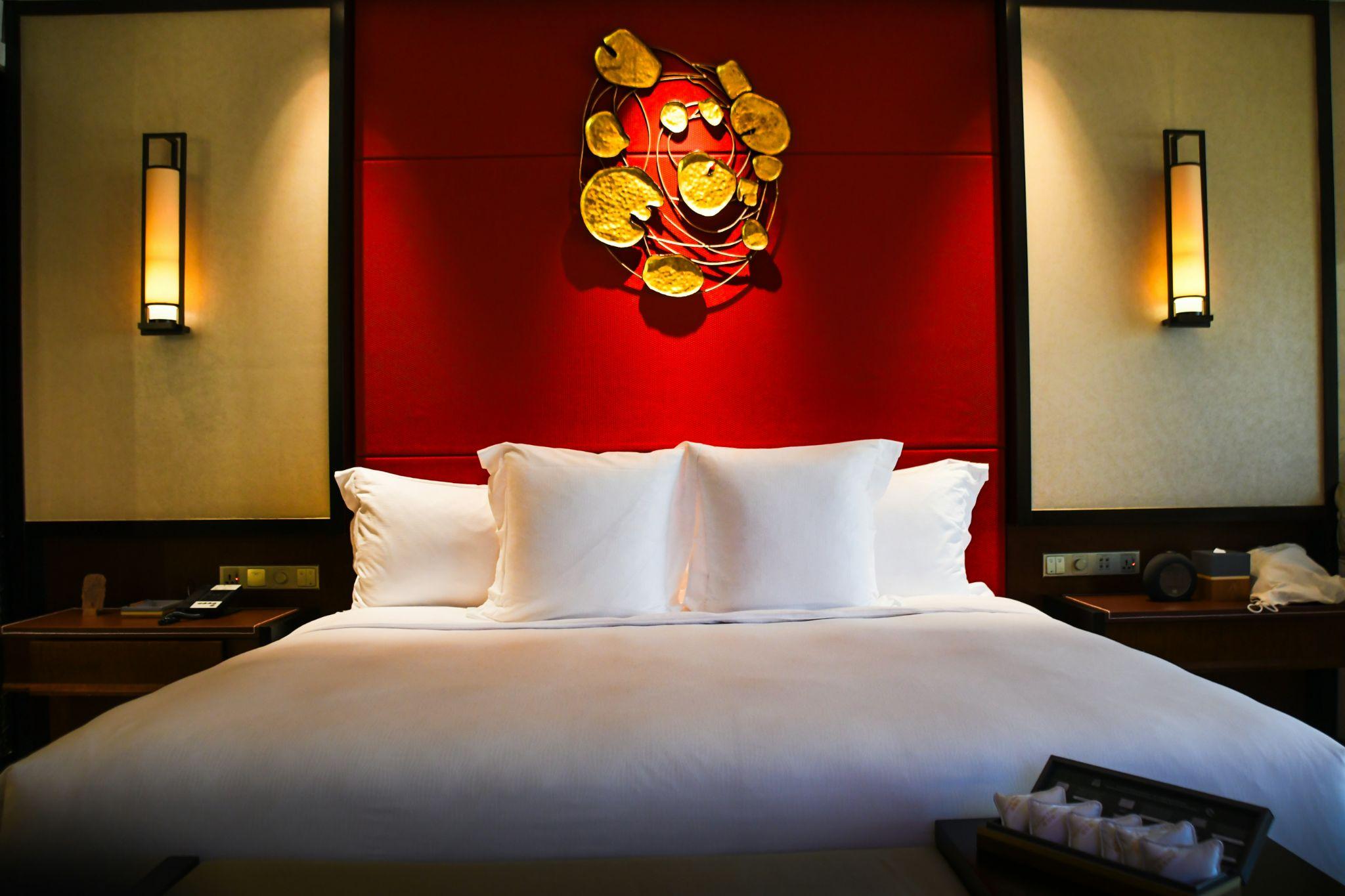
In most hotel rooms, the bed is the largest object and the first thing guests notice. That makes it one of the most efficient places to create an impression of quality.
A bed does not need an enormous number of decorative pillows to look expensive. Proportion and presentation matter more. Bedding that fits correctly, sheets that look fresh, pillows with some structure, and a headboard appropriately scaled to the wall can make the entire room appear more considered.
Layering helps because it introduces texture without requiring complicated decoration. Smooth sheets, a duvet, and perhaps one additional throw or textile provide enough variation to prevent the bed from looking flat.
Symmetry can strengthen the effect. Matching or visually balanced bedside tables and lamps give the central part of the room an intentional structure. They do not necessarily need to be expensive, or even identical, but they should look as though their relationship was planned.
Condition matters enormously too. Worn linens, sagging pillows, stained upholstery, or damaged furniture can undermine expensive finishes elsewhere. A simple room maintained extremely well often creates a stronger impression than a more ambitious room whose details have been neglected.
Empty Space Can Look More Expensive Than More Furniture
Budget rooms are sometimes designed around the assumption that providing more things creates more value. Another chair, another table, additional decorative objects, and more storage are added until the room technically contains everything but feels increasingly cramped.
Luxury often communicates itself through restraint.
A clear path around the bed, enough room to open a suitcase, uncluttered bedside surfaces, and furniture that does not block movement can make modest square footage feel more generous. Guests notice when they can use a room without constantly moving objects out of the way.
Hidden or visually quiet storage helps. A wardrobe with enough empty space for a guest’s clothes feels more useful than open shelving filled with decorative objects. A desk with an accessible outlet is more valuable than a beautifully styled surface that provides nowhere to put a laptop.
The bathroom follows the same principle. Clear counter space, neatly arranged towels, and a logical place for toiletries can create a better impression than covering every surface with amenities.
The room feels expensive because it appears to have been designed around the person staying there rather than around filling every available gap.
Small Details Create the Final Impression
Once the basic room works well, relatively inexpensive details can make it feel much more polished.
Consistency is particularly effective. Matching hangers cost little compared with major furniture but look more deliberate than a random assortment. Towels presented consistently create order. Hardware that follows the same general finish makes separate pieces of furniture feel connected.
Sound also influences how guests perceive quality. A beautifully decorated room can quickly lose its luxurious feeling when conversations from the hallway, traffic outside, or mechanical equipment dominate the experience. Quiet creates a sense of privacy that expensive decoration cannot replace.
Cleanliness may be the most important detail of all. Dust around fixtures, marks on walls, tired bathroom grout, or fingerprints on reflective surfaces are disproportionately noticeable in a small hotel room. Conversely, immaculate presentation can make ordinary materials look significantly better.
Even scent requires restraint. A room that simply smells fresh and neutral can feel cleaner and more sophisticated than one filled with an aggressive artificial fragrance.
Ultimately, an expensive-feeling hotel room is usually the product of editing rather than excess. The lighting is where it needs to be, the bed dominates for the right reasons, clutter is controlled, and practical features work without demanding attention.
Guests may never consciously identify those individual decisions. They simply walk through the door and feel that the room has been carefully considered.
That is perhaps the most useful lesson behind affordable hotel luxury: expensive design is visible, but thoughtful design often disappears into the experience. When nothing feels awkward, neglected, or accidental, a surprisingly ordinary room can feel like somewhere that should cost considerably more.