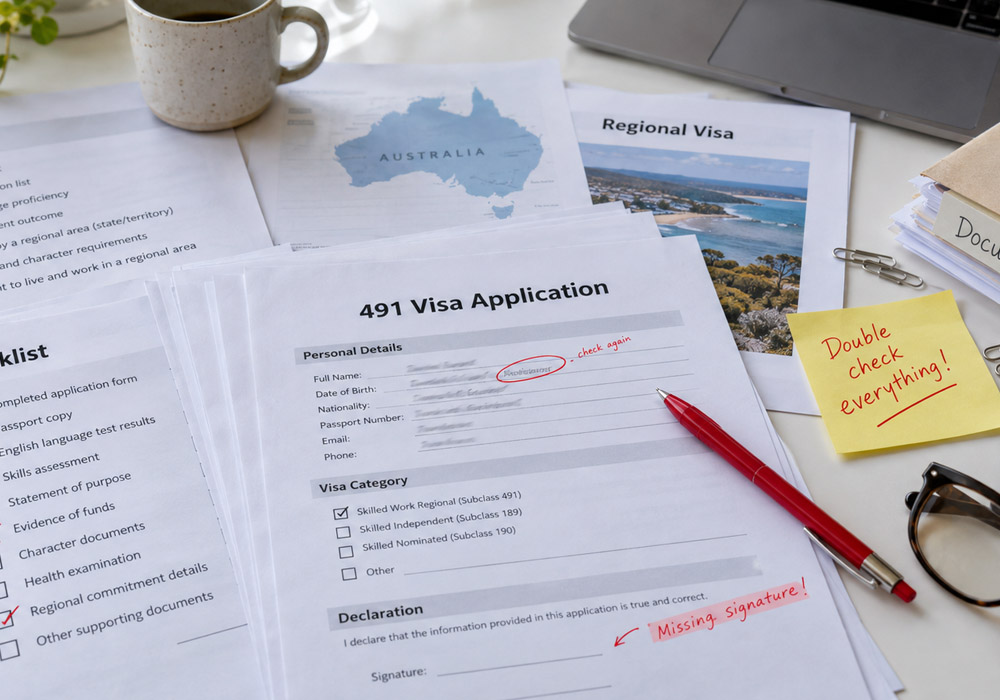
The 491 Skilled Regional Sponsored Visa represents an accessible pathway to Australian residence for skilled professionals, yet countless applications face rejection or significant delays due to entirely preventable errors. Understanding common pitfalls and actively working to avoid them dramatically increases your chances of a successful 491 visa application. This guide highlights the critical mistakes that undermine 491 visa success and how to sidestep them.
Mistake 1: Not Verifying Occupational Eligibility
One of the most fundamental errors applicants make is assuming their occupation qualifies for 491 visa Australia sponsorship without thoroughly verifying state-specific requirements. While your occupation might appear on a national skilled occupation list, individual states determine which occupations they’ll sponsor, and these lists vary considerably.
Many applicants invest months preparing applications only to discover their chosen occupation isn’t on their target state’s sponsored list. This isn’t merely disappointing—it wastes time during which your qualifications age or your circumstances change. Before investing energy into your application, contact your target state’s migration office and confirm that your occupation appears on their current priority occupation list for 491 sponsorship.
Some occupations face additional complexity. If your role exists in multiple classifications, you need to determine which classification your state prioritizes. This classification affects both your eligibility and your competitiveness within that state’s selection process.
Mistake 2: Inadequate Skills Assessment Preparation
Applicants frequently underestimate the importance of skills assessment or approach it carelessly. Skills assessment isn’t merely a formality; it’s your formal proof that you meet Australian standards for your occupation. The assessing authority evaluates whether your qualifications and experience genuinely align with Australian industry expectations.
Submitting inadequate documentation to support your skills assessment application represents a critical error. If your overseas qualifications don’t directly match Australian standards, you’ll need to demonstrate extensive relevant work experience to compensate. Vague descriptions of your work history won’t suffice. You need detailed evidence showing that your actual job responsibilities align with your nominated occupation.
Another common mistake involves engaging the wrong assessing authority. Each occupation has a designated assessing body, and submitting your assessment to an incorrect authority wastes time and money. Verify which body assesses your occupation before investing in the application process.
Some applicants also make the error of assuming a skills assessment completed years ago remains valid. While assessments don’t technically expire, immigration authorities want recent assessments reflecting your current capabilities. If your assessment is more than two or three years old, consider obtaining a fresh one to strengthen your 491 application.
Mistake 3: Poor English Language Test Preparation
Many applicants underestimate the importance of English language proficiency or approach test preparation inadequately. While competent English (typically IELTS 6.0 overall) satisfies the minimum requirement, most successful 491 applicants score higher because of the significant points advantage.
The mistake many make is sitting language tests unprepared or only once, hoping for the best. If you don’t achieve your target score on your first attempt, you’ll need to prepare carefully before retesting. Each test attempt costs money and consumes valuable time. Investing in proper preparation before your first attempt often proves far more cost-effective than multiple test attempts.
Another error involves choosing the wrong language test. Different tests suit different test-takers. IELTS works well for those comfortable with British English formats, while PTE Academic may suit those preferring computer-based testing. TOEFL appeals to those with American English backgrounds. Selecting the test format most compatible with your strengths increases your likelihood of scoring well on your first or second attempt.
Some applicants also waste opportunities by not understanding how different English test scores translate into points. Knowing exactly what score you need and planning your preparation toward that specific target is more effective than vague aspirations to “do well” without specific goals.
Mistake 4: Incomplete or Inaccurate Documentation
Documentation errors sink applications more frequently than applicants realize. Immigration authorities process hundreds of applications monthly and scrutinize documentation carefully for inconsistencies or gaps that might raise concerns.
Submitting documents without proper translation is a common error. Any documents not originally in English must be translated by an accredited translator. Using a friend or family member who speaks English, no matter how fluent, doesn’t satisfy immigration requirements. This oversight can result in application delays or requests for resubmission.
Date inconsistencies between different documents create suspicion. If your resume indicates you worked somewhere from 2015 to 2018, but your employment reference letter specifies different dates, immigration authorities will question your honesty and accuracy. Ensuring that all dates, job titles, and responsibilities remain consistent across every document is absolutely essential.
Applicants also frequently provide incomplete employment history. Gaps in your work timeline require explanation. If you left a position and took time before starting the next role, specify what you were doing during that period. Unexplained gaps raise red flags and may prompt additional scrutiny of your entire application.
Mistake 5: Failing to Demonstrate Regional Commitment
A subtle but critical error involves failing to demonstrate genuine commitment to your sponsored region. Immigration authorities want evidence that you plan to stay and contribute to regional Australia, not simply use the 491 as a temporary stepping stone.
In your application, articulate specific reasons for choosing your nominated region. Generic statements like “I want to experience regional Australia” don’t convince anyone. Instead, discuss concrete factors: employment opportunities in your field within the region, family connections, educational opportunities for children, community involvement plans, or lifestyle factors that genuinely appeal to you.
If you have no genuine connection to your chosen region, reconsidering your state choice is wise. Applying for sponsorship in a region where you have no real intention to build your life invites skepticism. Conversely, if you have legitimate reasons for targeting a specific region—perhaps you’ve already secured employment there or have family connections—emphasizing these factors strengthens your application significantly.
Mistake 6: Neglecting Medical and Character Requirements
Applicants frequently focus exclusively on occupational and English language requirements while underestimating the importance of health and character clearance. These aspects reject applications just as effectively as insufficient points.
Before formally applying, ensure you have no undisclosed health conditions that might exclude you from Australian residency. If you have health concerns, consult with immigration health professionals who can advise whether your conditions require disclosure. Some conditions that seem minor might affect your eligibility.
Similarly, character assessment scrutinizes criminal history, even minor infractions. If you have any criminal history—including traffic violations, fraud allegations, or assault charges—disclosure is necessary. Attempting to conceal past issues creates grounds for automatic rejection and potential future immigration bans.
Mistake 7: Overestimating Your Points Score
Applicants sometimes overestimate their points, leading to misguided decisions about which visa pathway to pursue. Conducting an honest self-assessment of your points is crucial before investing significant time and money.
Counting points for work experience that doesn’t genuinely meet Australian standards is common. Simply working in a role for a number of years doesn’t guarantee those years count toward visa points if your duties don’t match your nominated occupation. Being ruthlessly realistic about which years of employment qualify for points prevents disappointing surprises.
Mistake 8: Poor Application Timing
Finally, many applicants apply without considering current demand trends or state quotas. Submitting your application when your state has already fulfilled its sponsorship quotas for your occupation means waiting longer for potential sponsorship or facing rejection.
Researching when states typically release their priority occupation lists and understanding current application volumes helps you time your application strategically. Applying during periods of lower competition increases your chances of receiving an invitation promptly.
Moving Forward Successfully
Avoiding these mistakes requires diligent preparation, honest self-assessment, and thorough verification of requirements before committing resources. Take time to research thoroughly, prepare systematically, and when possible, engage experienced migration professionals who can help you navigate these potential pitfalls and present your strongest possible 491 visa application to immigration authorities. Use Skilled Visa Point Calculator by Immivisa to know about your chances of getting your Australia skilled visa.
By recognizing these common mistakes and taking deliberate steps to avoid them, you significantly improve your chances of receiving your 491 visa invitation and successfully establishing yourself in regional Australia.