That chalky film on your shower glass isn’t a cleaning problem. It’s a mineral deposit, and it’s also forming inside your water heater, your faucet aerators, and the pipes behind your walls. Most Phoenix homeowners scrub the visible version and never think about the hidden one until something fails.
The math is simple. Water picks up calcium and magnesium as it moves through desert rock, and those minerals come out of solution the moment the water gets hot or sits still. Your home is full of places where that happens. When the buildup finally announces itself, it’s usually a cold shower or a puddle under the sink, and that’s the moment people search for a plumber in Phoenix, AZ, at seven in the morning. Catching it earlier is cheaper, quieter, and honestly not that hard.
Here’s what hard water is actually doing in your house, how to tell where you are on the scale, and which fixes are worth your money.
Why Phoenix water leaves deposits everywhere
Hardness is measured in grains per gallon, and a lot of the groundwater feeding Valley utilities sits well above the point where most treatment guidelines start calling water hard. The U.S. Geological Survey tracks groundwater chemistry nationally, and the pattern holds across the Southwest: the more limestone and mineral-rich rock water passes through, the more dissolved calcium it carries to your tap.
This is not contamination. It’s geology. But geology still leaves a ring in your toilet bowl.
What makes it worse here is evaporation. Phoenix loses an enormous amount of water to the air every day, and when water evaporates it leaves its minerals behind. That’s why your glass shower door spots faster than a friend’s in a wetter climate, why your drip irrigation emitters crust over, and why your swamp cooler pads turn into concrete by July. Same water, more concentrated effect.
The four places hard water costs you real money
I’ve walked enough homes to rank these by how much damage they do before anyone notices.
Your water heater. This is the expensive one. Sediment settles at the bottom of a tank heater and forms an insulating layer between the burner and the water. The unit runs longer, heats worse, and dies early. Tankless units aren’t immune either, since scale collects in the heat exchanger. If your heater is making popping or rumbling sounds, that’s steam forming under a sediment bed, and it’s a warning, not a quirk.
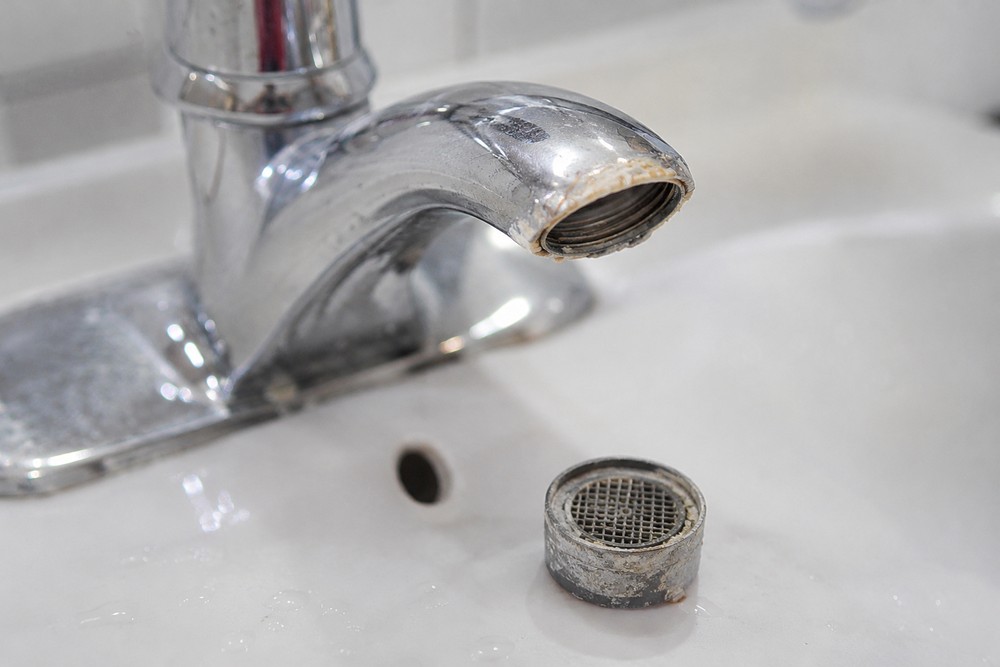
Fixtures and aerators. Cheap to fix, annoying to live with. Aerator screens clog, sprayers lose pressure, and the cartridge in your shower valve starts grinding. You can pull an aerator, soak it in white vinegar for an hour, and watch a spoonful of white grit rinse out. That’s the same material lining your pipes.
The pipes themselves. Scale narrows the inside diameter of a pipe over years. You won’t see it. You’ll just notice that the upstairs shower takes longer to get hot and the kitchen faucet dribbles. In older homes with galvanized steel, scale and corrosion tend to arrive together, and that’s a much bigger conversation than a cleaning.
Anything with a heating element or a fine orifice. Dishwasher valves, ice makers, coffee machines, humidifiers. Small openings are where scale wins first.
A two-minute hardness test you can run tonight
You don’t need to guess. Do this before you buy anything.
- Fill a clear glass with tap water and let it sit overnight on the counter.
- Look at the bottom and the waterline in the morning. A white film or a ring at the surface means minerals are present.
- Boil a small pot of the same water dry. The residue left behind is what’s coating your heater.
- Check your utility’s annual water quality report, which lists hardness for your specific system. Valley cities publish these.
If you get visible residue from all three, a softener is worth pricing out. If you get a faint film only after boiling, you can probably get by with a whole-home sediment filter and some discipline about flushing your heater.
Soften, filter, or just maintain?
Here’s the judgment call most people get wrong. They buy a softener for a problem that’s actually a maintenance problem, or they skip treatment entirely and replace a water heater every six years.
My stance: a whole-home softener earns its cost if you have a tank water heater, a tankless unit, or more than one bathroom. The Environmental Protection Agency notes that water softening is a treatment choice rather than a health requirement, which is the right framing. You’re buying equipment life and better showers, not safety. Pair a softener with an annual tank flush and you’ll get years back on the heater.
If you’re renting, or you’re not ready for that spend, do the free things. Flush the water heater once a year. Soak aerators quarterly. Wipe glass shower doors dry with a squeegee, which takes eight seconds and saves scrubbing later. Run a descaling cycle on the coffee maker and the washing machine every few months.
| Sign you notice | What it usually means | First move |
|---|---|---|
| Popping sounds from the water heater | Sediment bed on the burner plate | Flush the tank or call for service |
| Chalky ring in the toilet bowl | Mineral scale, normal for the region | Pumice stick plus a softener quote |
| Faucet pressure dropping slowly | Clogged aerator or cartridge | Remove and vinegar soak |
| Spots return within a day of cleaning | High hardness at the tap | Check the city water report |
What the Arizona heat adds to the equation
Hard water is only half the story in the Valley. Heat and sun push the other half.
Exterior hose bibs and irrigation lines bake in full sun, and the minerals inside them concentrate as water evaporates at the fittings. That’s why a hose bib that worked fine in April can shear off in your hand in August. Wrap exterior pipe runs. Shut off and drain hose lines before a freeze, rare as those are, because a hard freeze on a scaled line is when the split happens.
Inside, the air conditioning runs for months straight and pulls moisture out of the air, which means the water sitting in your toilet bowls and drain traps evaporates faster than you’d expect if you close up a guest room for the season. Keep the lids down, and run the taps in unused bathrooms once a week. The American Home Shield resource library has a solid rundown of seasonal home maintenance tasks if you want a broader checklist to hang this on.
When to call someone instead of DIY-ing it
Some of this you should absolutely handle yourself. Vinegar soaks, aerator cleaning, water heater flushes, and squeegee habits cost almost nothing and prevent most of the grief.
Call a pro when you see a pressure drop across the whole house, hear the heater popping, find any moisture around a water heater base, or smell gas near a line. Those aren’t maintenance items. They’re early failures, and each one gets more expensive the longer it sits. A slow leak behind a wall in a slab-on-grade Phoenix home can run for weeks before it shows, and by then you’re looking at drywall, flooring, and a repair bill that dwarfs the plumbing call.
Watch your water meter when nothing in the house is running. If the dial moves, you have a leak, and you should stop reading and start calling.
Here’s what I’d do this week if I were you. Run the overnight glass test. Write the result on a sticky note and put it on the water heater. Then set a phone reminder for a year out to flush that tank. Four minutes of work now saves you a panicked morning later, and the grit on your shower door is telling you exactly what’s coming next. What’s your water telling you?