A bathroom can look clean in one area and already need attention in another.
The mirror may still be clear while the sink has water marks. The floor can look fine while the shower glass is beginning to show residue. A shelf may stay nearly untouched for weeks even though the faucet needs wiping every few days.
That uneven pace is normal.
Bathrooms contain surfaces exposed to very different conditions, so treating the entire room as though it needs one cleaning frequency can create unnecessary work in some places while allowing faster-changing areas to fall behind.
A better approach is to watch how quickly each part of the bathroom changes and build the routine around those patterns.
Start With the Wettest Surfaces
Water changes cleaning frequency more than almost anything else in a bathroom.
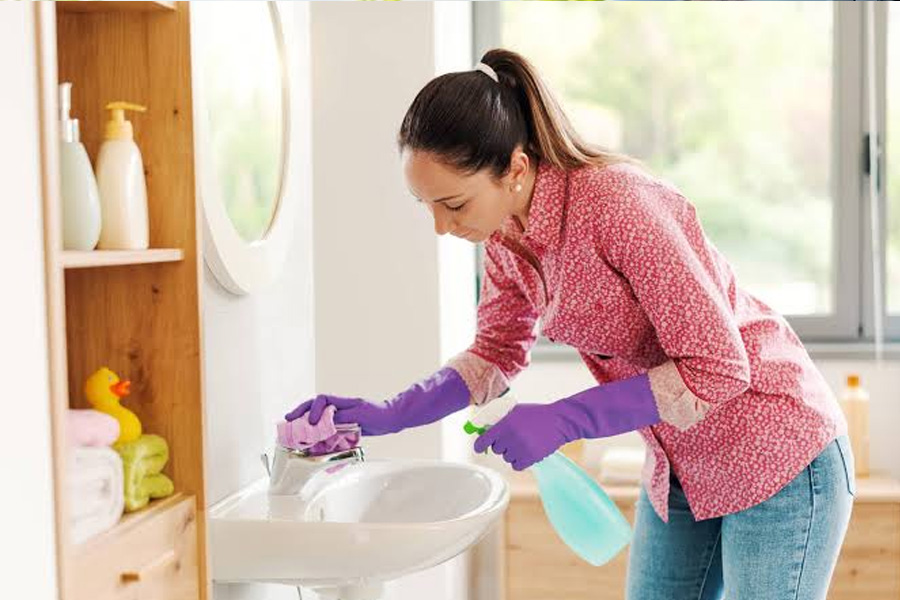
The sink receives splashes from handwashing, brushing teeth, shaving, and everyday grooming. The shower or tub deals with a much larger amount of water, along with soap and personal-care products.
These areas often need attention sooner than shelves, cabinet sides, or decorative surfaces.
Look at the sink after several normal days.
Are water marks visible around the faucet? Has residue collected near the drain or soap dispenser? Are small splashes drying on the surrounding counter?
Those signs can tell you more about the right frequency than a calendar can.
The Sink Usually Has the Shortest Cleaning Cycle
A bathroom sink is touched and splashed repeatedly.
Because of that, it may reach the “needs attention” point much sooner than other surfaces in the room.
The exact timing depends on how many people use it and how they use it.
A guest bathroom used occasionally may stay presentable for quite a while. A primary bathroom shared by several people can show toothpaste spots, hair, soap residue, and water marks quickly.
Instead of waiting for the entire bathroom to look dirty, give the sink area its own shorter cycle.
A quick reset there can keep the room looking cleaner between more complete sessions.
Mirrors Change According to Where They Sit
Mirrors can stay clean for a surprising amount of time, or they can show marks almost immediately.
Location matters.
A mirror directly above a small sink may receive tiny droplets whenever the faucet is used. A larger mirror positioned farther back may collect more fingerprints or dust than water spots.
Lighting affects perception too.
Marks that are nearly invisible from straight ahead may become obvious when sunlight or overhead lighting hits the glass at an angle.
The mirror does not need cleaning simply because the sink does.
Inspect it separately.
Shower Surfaces Follow Their Own Schedule
The shower is another fast-changing zone, but the type of buildup is different.
Water, soap, shampoo, body products, and repeated use all affect the surfaces.
Glass doors may show dried droplets before tile walls look noticeably different. Fixtures can lose their clean appearance faster than surrounding walls because water spots are easier to see on reflective finishes.
Corners and ledges may also behave differently from open vertical surfaces.
This is why “clean the shower” can be too broad as a single task.
Some areas may need frequent light attention, while others belong in a deeper rotation.
The Floor Tells You How the Bathroom Is Used
Bathroom floors collect more than dust.
Hair tends to gather along edges and around fixtures. Water may reach the floor near the sink or shower. Products can drip. Towels or clothing may temporarily create damp spots.
Pay attention to where the floor changes first.
If most visible debris appears near the vanity, the whole floor may not need equally intensive cleaning every time.
Likewise, a floor beside the shower may need attention sooner than a low-traffic corner.
The pattern reveals where activity is concentrated.
One Bathroom Can Have Several Cleaning Clocks
This is where a fixed room-based schedule starts to break down.
The sink may need frequent attention. The toilet may follow another rhythm. Shower glass can change faster than upper shelving, while baseboards and cabinet tops may remain relatively stable for much longer.
That uneven pace is the reason a single “bathroom day” can be misleading. In a recurring plan involving cleaning services edison nj, the more useful question is which bathroom surfaces have actually crossed their cleaning threshold since the last visit, rather than whether every part of the room should receive the same amount of work each time.
Frequency should follow buildup.
High-Touch Areas Can Change Faster Than Large Surfaces
Small surfaces often need attention before large ones.
Think about:
- Faucet handles
- Cabinet pulls
- Door handles
- Light switches
- Flush handles
- Frequently used shelves
These areas may not dominate the room visually, but repeated contact can make them look worn or marked quickly.
Because they are small, they are also easy to include in a short maintenance pass without turning it into a full bathroom clean.
This is one reason cleaning frequency should be based on use rather than surface size.
Dry Surfaces Often Need Less Frequent Work
Not everything in a bathroom is constantly exposed to water.
Upper shelves, picture frames, light fixtures, cabinet tops, and certain decorative surfaces may mainly collect dust.
Those areas can often stay on a slower cycle.
Trying to clean them as often as the sink or toilet usually adds time without much benefit.
Instead, rotate them into periodic detail cleaning.
This keeps slower-changing areas from being forgotten without treating them as urgent every week.
Ventilation and Household Habits Change the Pattern
Two bathrooms with the same fixtures may still need different routines.
One may be used by several people every morning. Another might be used only by guests.
A bathroom where people leave wet towels, bottles, and grooming products on the counter will also change differently from one where surfaces stay mostly clear.
Air movement and drying conditions can affect how quickly moisture-related marks become noticeable as well.
The routine should reflect how the room actually behaves.
Use a Three-Level Frequency System
A simple way to organize bathroom cleaning is to divide tasks into three groups.
Fast-Cycle Tasks
These are the surfaces that show change quickly.
Examples may include the sink, faucet, toilet contact points, and visible floor debris.
Regular-Cycle Tasks
These need attention consistently but may not change every day.
That could include the full floor, shower surfaces, mirror, counter, and exterior cabinet areas.
Slow-Cycle Tasks
These are details that build up gradually.
Upper shelves, baseboards, light fixtures, cabinet tops, and less accessible corners often fit here.
The exact contents of each group will differ from one bathroom to another.
That is the point.
Let Visible Change Set the Schedule
A calendar is useful for remembering tasks, but it should not override what the room is showing you.
If the sink looks clean, it may not need the same effort simply because a certain day has arrived.
If shower glass is already marked, waiting another week because it is “not time yet” is equally arbitrary.
Observe the room between cleanings.
After a few weeks, patterns become easier to predict.
You begin to know which surfaces change quickly and which ones can wait.
Clean the Bathroom According to Its Different Speeds
A bathroom is not one cleaning task.
It is a collection of surfaces aging at different rates between cleanings.
Water-exposed areas usually change the fastest. High-touch points can show use quickly despite their small size. Dry shelves and upper surfaces often move much more slowly.
Once those differences are recognized, the routine becomes easier to manage.
Instead of deep-cleaning everything whenever one surface looks dirty, address fast-cycle areas sooner and keep slower details in rotation.
The bathroom itself will show you the right frequency.
You only have to pay attention to which parts change first.