Dog boarding provides overnight care for pets when their owners are away from home. Feeding schedules and supervised activity help maintain a dog’s daily routine throughout the stay. Vaccination records, behavioral evaluations, and overnight supervision assist facilities with managing group safety, and each requirement supports daily boarding operations. Here are some tips for choosing the right dog boarding facility:
Review Supervision and Safety Measures
Continuous supervision can enhance the safety of pets staying at a boarding facility. Trained staff monitor dogs throughout the entire stay; they remain on-site during both daytime activities and overnight boarding. Staff complete canine CPR, first aid, Heimlich maneuver, and canine behavior training, which supports structured responses during routine care and emergencies.
Direct observation continues after business hours, so changes in behavior or physical condition receive prompt attention. Live camera access allows registered clients to view boarding activities during business hours, and it enhances operational visibility. A dog boarding facility that prioritizes safety should also maintain dedicated environmental systems alongside documented sanitation procedures.
Epoxy flooring provides a durable surface, and veterinarian-grade disinfectants support routine cleaning throughout the facility. Dog-safe cleaning products help reduce chemical exposure during sanitation because they are formulated for animal environments. A dedicated HVAC system circulates conditioned air, while air purification equipment maintains indoor air quality across shared spaces.
Evaluate Playgroup Compatibility
Playgroup assignments at some boarding facilities group dogs by size, weight, and temperament. This combination creates groups with similar physical characteristics and behavioral traits, which can support appropriate social interaction. Facilities with a temperament trial evaluate each dog before daycare or boarding admission, and staff use those observations to determine group eligibility. Dogs enter playgroups only after completing this evaluation. This establishes a consistent admission process.
The group placement process may also highlight each dog’s comfort level, and staff select the playroom that best matches those observations. Dedicated rooms provide space for play, relaxation, and socialization throughout the day. Staff monitor interactions within each group, and they may encourage dogs to move to another room when a different environment better matches their current comfort level.
Compare Boarding Accommodations
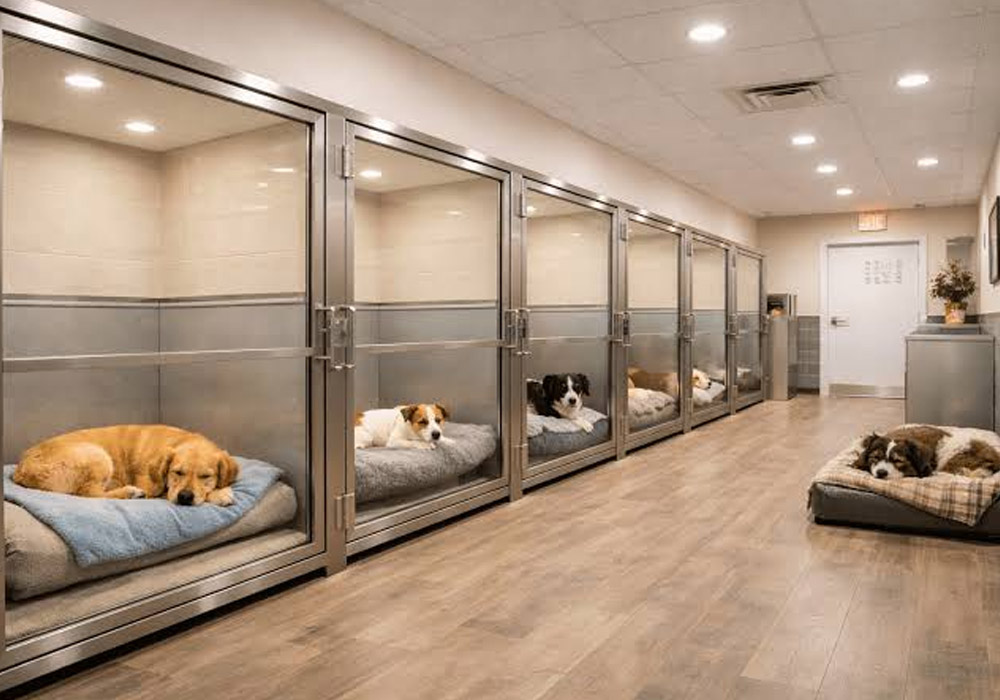
Overnight boarding accommodations provide a safe place for dogs to sleep during their stay. A kennel-free boarding environment allows dogs to sleep outside traditional crates. Designated sleeping spaces may provide multiple resting options, including:
- Air beds
- Plush beds
- Donut beds
- Blankets
Daycare accompanies overnight boarding stays, so dogs can participate in supervised group play before returning to their sleeping areas. Private suites provide an individual boarding option; this is ideal for dogs that prefer separate accommodations. Personal beds, food, toys, and other familiar belongings can remain with the dog throughout the stay, supporting continuity between home and boarding. Staff also provide one-on-one interaction for dogs staying in private suites. Shared boarding accommodations and private suites offer different overnight arrangements, allowing owners to select the environment that matches their dog’s needs.
Verify Health Requirements
Health requirements provide measurable information about a boarding facility’s admission process. Facilities with rabies, Bordetella, and distemper vaccination requirements limit entry to dogs with documented immunization records. Official veterinary records verify each vaccination, and a signed rabies certificate confirms rabies immunization. Registration collects these documents before boarding begins, which creates consistent admission standards for dogs entering shared daycare and boarding environments. Published medical exemption policies help owners determine whether a facility accepts veterinarian-issued exemption letters during the admission process.
Schedule Your Dog Boarding Visit
Choosing a boarding facility requires reviewing how each program manages admission, supervision, and overnight care. Documented requirements and trained staff provide details about the procedures followed during each stay, and these details help owners compare available options. Published service information explains the boarding environment before a reservation is made, which gives owners clearer expectations. Explore dog boarding options and schedule a temperament trial before your dog’s first stay.