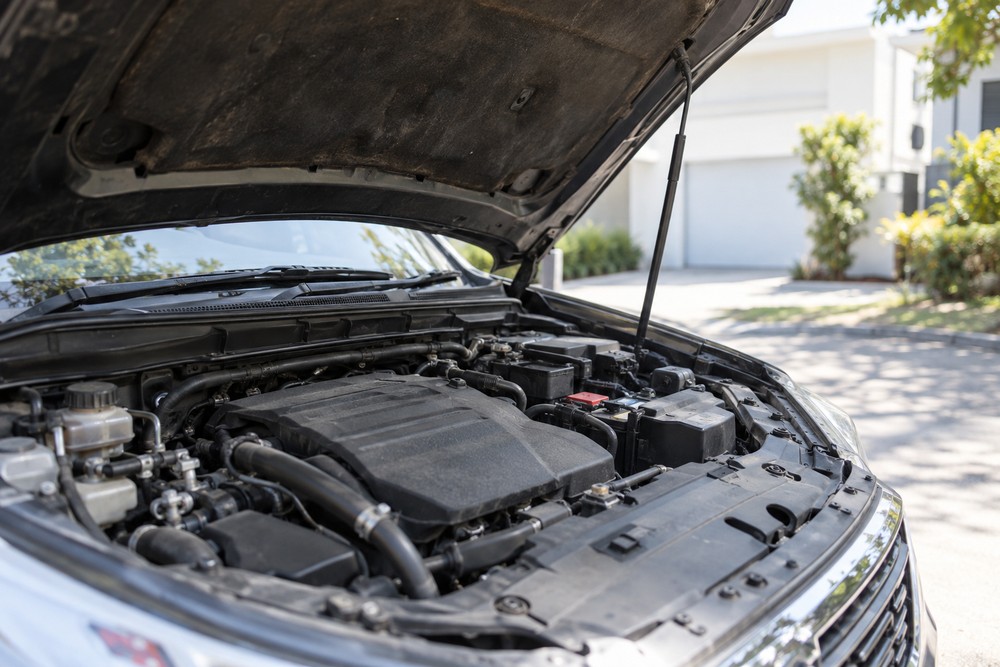
Picture a ten year old SUV on a Sunday afternoon. It starts first go. The dash is clean, no warning lights. The steering feels tight, and the seller’s even got a folder of service receipts on the passenger seat.
What the buyer can’t see is that the check engine light was glowing on Wednesday. The seller plugged in a forty dollar scanner, cleared the code, and listed the car on Friday.
That’s the gap a pre purchase car inspection in blacktown or anywhere else is built to close. A test drive tells you how the car behaves for ten minutes today. An inspection tells you what it’s been through.
A Clean Dashboard Doesn’t Mean Much
People trust warning lights. That’s the problem, really.
Clearing a stored code takes seconds. And some faults never trip a light straight away anyway. Early timing chain wear is one. Certain emissions faults are another.
A proper diagnostic scan digs past all that. Manufacturer-level software, matched to the exact make and model, can pull fault history out of every module in the car. That includes codes someone deliberately wiped.
It also reads live data while the engine runs. That includes readings like these.
- Fuel trim, which hints at air leaks or injector trouble
- Misfire counts on each cylinder
- How coolant temperature behaves as the engine warms
A turbo that still spins but can’t make full boost won’t light anything up. It shows up in the numbers, though.
Paperwork Only Covers Half the Story
Every buyer should run a history check. A PPSR search tells you whether there’s money owing and whether the car’s listed as stolen. It’ll flag a recorded write-off too. Match the VIN on the car to the papers and you’ve ruled out a cloned identity.
Here’s what it won’t do. It can’t describe a car that was smashed and fixed privately with no insurance claim. That car could have three accidents behind it and a spotless title. Write off status only kicks in when an insurer decides repairs aren’t worth it. Anything below that line just doesn’t exist on paper.
Odometers are similar. Online records depend on someone entering readings at services, and newer cars sometimes have almost nothing logged. Checking what the car’s own computer has stored is a much stronger test.
Where Old Repairs Give Themselves Away
Bodywork usually snitches if you know where to look.
- Panel gaps that are wider on one side than the other
- Overspray on rubber seals or window trims
- Bonnet hinge bolts with fresh tool marks
- A door that’s a shade off in direct sun
Paint depth readings make those hunches measurable. When one panel reads far thicker than its neighbours, it’s been resprayed. Very high readings can mean filler under the paint.
Underneath, fresh black underseal on chassis rails could be honest rustproofing. Or it could be hiding rust that’ll keep spreading. Telling those two apart is a big chunk of what you’re paying an inspector for.
Isn’t an Inspection Basically a Roadworthy?
No. People mix them up all the time, and it costs them.
Anyone who books a pre purchase car inspection in blacktown is paying for a look at the big ticket stuff. Think engine and gearbox, plus old crash damage and rust. It’s usually done on the street or in the seller’s driveway. There’s no hoist and no permission to pull anything apart. So brake pad thickness, for instance, often can’t be measured unless the wheels come off.
A roadworthy is a different animal. It happens in a licensed workshop with the car up on a hoist, and it’s about whether the vehicle’s safe enough to register. A car can pass one with a gearbox on its last legs. Another can have a perfect engine and fail on a worn bush or a dead globe. Plenty of buyers need both.
Before You Book
A bit of prep makes the inspection go smoother.
- Get the seller’s name, number and where the car’s parked, so the inspector can sort access directly
- Write down the VIN and rego from the ad
- Ask whether the seller will let the inspector test drive it, since some won’t
- Go for a dry day if you can, because rain makes leaks hard to confirm
- Decide beforehand what kind of finding would make you walk away
- Plan to see the car yourself too, as small scratches and scuffs are a personal call
That fifth one matters more than it looks. It’s much easier to read a report calmly when you’ve already drawn your line.
What You Do With the Report
Most inspections land in one of three spots.
- The car checks out and you buy it knowing exactly what you’ve got
- There are faults with known costs, so you negotiate on price or ask for repairs first
- The problems are bad enough that someone else can have it
That last one stings on the day. Paying for an inspection and then not buying the car feels like wasted money. Six months later it usually feels like the best money you spent all year.
A detailed report with photos also changes the tone of negotiation. You’re not trading opinions anymore. You’re pointing at page fourteen.
The Story Behind the Car
Every used car’s got a backstory, and the seller only tells the bits that help. The test drive gives you a few minutes of today. A proper inspection fills in the years before it, the good repairs and the dodgy ones. Including that warning light somebody quietly erased on a Wednesday.