Key Takeaways
- Small signs such as damp cabinets, slow drains, and unexpected water use can point to larger plumbing problems.
- Brief, routine inspections can help limit water damage, mold growth, and wasted water.
- Many basic checks are safe for homeowners to complete with a flashlight and a little patience.
- Leak sensors and water-use monitoring tools can provide an earlier warning when something changes.
- Spreading water, sewage backups, and hidden leaks require prompt attention from a qualified professional.
Most plumbing problems do not begin with a dramatic burst pipe. They often start as a faint drip, a cabinet that feels slightly damp, or a toilet that refills more often than it should. Knowing what to watch for can help homeowners make informed decisions about maintenance and plumbing services before a small issue disrupts an entire room.
Early action matters because water travels. A leak under a sink can swell cabinet panels, moisture behind a wall can affect drywall, and a minor ceiling stain can indicate water collecting out of sight. Regular checks are simple, practical habits that can protect finishes, belongings, and indoor comfort.
Why Small Signs Matter
Plumbing systems are hidden behind walls, floors, and cabinets, so visible symptoms often appear after problems develop. A slow leak can weaken wood, discolor paint, attract pests, or cause mold. Early detection helps keep repairs manageable. The EPA reports that the average household wastes over 9,300 gallons of water annually due to leaks, and fixing simple leaks can save around 10% on water bills. They suggest checking water meter readings during periods of no water use to identify leaks.
These same habits apply beyond a single-family home. In offices, restaurants, apartment buildings, and other shared spaces, commercial plumbing concerns can become noticeable through recurring restroom clogs, unexplained water use, fixture leaks, or damp areas near utility equipment.
Early Warning Signs To Watch For
One clue does not always reveal the exact cause, but repeated or worsening symptoms deserve attention. A slow bathroom drain may be due to local hair buildup, while several slow drains throughout the building may suggest a problem farther along the drainage system.
- Water stains: Yellow, brown, or spreading marks on ceilings and walls can indicate moisture above or behind the surface.
- Damp sink cabinets: Moisture, stains, rust, or swollen panels often indicate a loose fitting or a supply-line leak.
- Running toilets: A toilet that refills without being flushed may have a worn flapper or fill-valve issue.
- Dripping fixtures: Faucet and showerhead drips can waste water and may signal worn seals or washers.
- Musty odors: A persistent smell near walls, flooring, or cabinets may indicate a moisture issue. The CDC advises fixing plumbing leaks because moisture gives mold a place to grow.
- Pressure changes: Lower pressure throughout the home can stem from several causes, including fixture problems, supply issues, or pipe concerns.
- Warm or wet flooring: Unexpected warmth or dampness underfoot can be a sign of a hidden water-line leak.
A Simple Room-By-Room Check
Set aside a few minutes each month or every few months for a visual inspection. Use a flashlight, keep electrical safety in mind, and do not open walls, disconnect appliances, or attempt repairs that are beyond your experience.
Kitchen
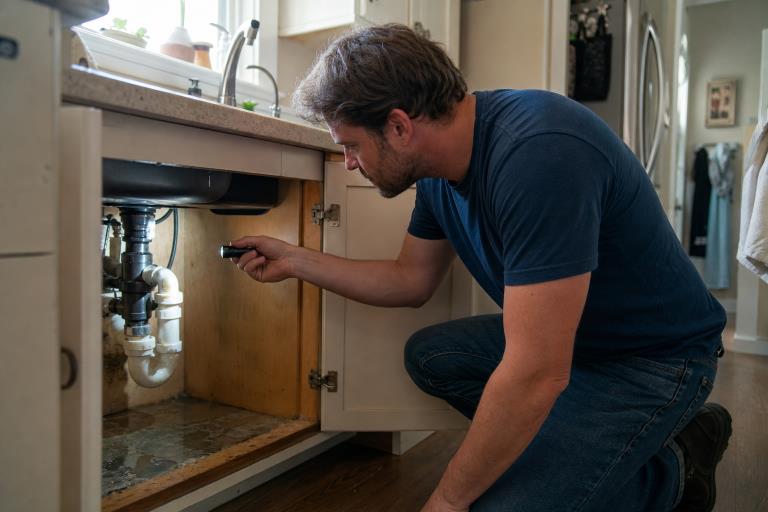
- Look beneath the sink for droplets, corrosion, stains, or soft cabinet material.
- Check around the dishwasher and refrigerator water line for dampness on the flooring.
- Listen for unusual grinding, humming, or leaking around the garbage disposal.
Bathroom
- Check the toilet base for moisture, movement, or a persistent sewer-like odor.
- Inspect faucet connections, exposed supply lines, and shutoff valves.
- Look for peeling paint, loose flooring, dark grout, or recurring mildew.
Laundry, Utility, And Outdoor Areas
- Inspect washing-machine hoses and nearby flooring for wear or moisture.
- Check around the water heater for rust, pooling water, or corrosion at connections.
- Keep stored belongings away from pipes so small leaks remain visible.
- Outside, look for wet patches near hose bibs, irrigation connections, and unusually green sections of the yard.
Safe Tests Homeowners Can Try
A water-meter test can reveal whether water is moving when it should not be. First, turn off faucets, appliances, irrigation, and other water-using equipment. Record the meter reading, avoid using water for about two hours, then check the meter again. A change may indicate a leak, although it does not identify its location.
For a toilet dye test, place a few drops of food coloring in the tank and wait about 10 minutes without flushing. If color appears in the bowl, water is passing through the toilet. Flush promptly after the test to prevent staining.
Common Causes Of Plumbing Trouble
Many small plumbing issues have straightforward causes, including worn toilet flappers, aging seals, loose fittings, deteriorating appliance hoses, and buildup from hair, grease, or foreign objects in drains. Other causes, such as pipe corrosion, excessive pressure, poor connections, shifting soil, or underground line movement, may need a broader inspection. A recurring symptom is often more important than a single isolated event.
When To Call For Professional Help
Stop troubleshooting and seek help when water spreads quickly, a ceiling bulges, sewage backs up, the source is hidden, or a major line leaks. Close the fixture shutoff valve if possible, or turn off the main water supply if the leak is uncontrollable. Keep people away from wet areas near outlets or appliances. A faint ceiling stain might seem cosmetic initially, but ongoing leaks can saturate drywall, causing sagging or failure. Taking photos and noting when symptoms started aids diagnosis.
A Practical Prevention Plan
Monthly
- Check under sinks and around toilets for visible moisture.
- Listen for running toilets, drips, and unexplained water sounds.
- Review utility bills or meter readings for unusual changes.
Every Few Months
- Inspect appliance hoses, visible pipes, and drain strainers.
- Test accessible shutoff valves carefully and keep them easy to reach.
- Remove buildup from sink, shower, and tub drains before it becomes a clog.
Once A Year
- Review the condition and age of major plumbing components.
- Check the water pressure if it seems unusually high or low.
- Consider moisture sensors near water heaters, washing machines, and rarely visited spaces.
Final Checklist For 2026
- Check for visible moisture and new stains.
- Listen for unexplained running water.
- Watch for changes in water use or utility bills.
- Test toilets for silent leaks.
- Inspect sink cabinets and appliance hoses.
- Keep shutoff valves accessible.
- Address repeated clogs rather than relying on temporary fixes.
- Request professional help when damage is spreading or the source is hidden.
Plumbing maintenance does not need to be complicated. A few careful checks, prompt attention to small clues, and a clear plan for emergencies can help prevent unnecessary water waste and reduce the risk of larger home repairs.