Why Safety Drives Speed, Not Just Compliance
Safety is warehouse’s backbone. A robust, flexible body of operations goes rapidly with fewer missteps. Equipment starts dependably, so teams hit dispatch windows. Instead of battling fires, supervisors coach. Eliminating tiny frictions that cause stoppages, rework, and injuries boosts productivity. Think warehouse like racing pit crew. Every activity is planned, risks are anticipated, and downtime is the enemy. Compliance becomes velocity with a clean floor, clear signs, and confident personnel.
Floor Care That Protects Machines, People, and Inventory
Dust and particles act like sand in gears. They damage bearings, jam sensors, and make tight moves dangerous slides. Strong floor care goes beyond sweeping. Divide the facility by traffic intensity, spill likelihood, and material kind, then assign technology to each zone. In large aisles, sweep dry material with industrial sweepers. Use non-slip scrubbers in loading bays and pick modules. To prevent recirculation in fine-particle areas, use HEPA filters on vacuums. Map cleaning routes to match peak traffic to avoid forklift chases. Bin stations and bagging methods capture waste at source. To ensure dangers are gone, perform slip-resistance spot tests and surface inspections following cleaning.
Traffic Management and Visual Order
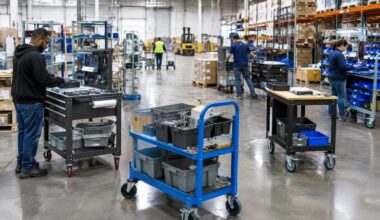
When people and machines mix, design becomes a safety system. Make it easy for workers to read. When possible, create one-way aisles to reduce confrontation. Install convex mirrors at blind corners and match speed restrictions to visibility, not floor space. Mark forklift lanes with high-contrast lines and color-code pedestrian corridors to distinguish them. Add stop bars before dock entrances and zebra crossings at intersections. Mobile devices with loud alerts, blue safety lights, and proximity sensors can alert before contact. Consider low lighting dangerous. Light up junctions, rack fronts, and staging. Remove pothole and pallet-hiding dark areas. Visually organized floors allow operators to move rapidly without guesswork.
Standard Work that Scales
The appropriate instrument without the right habit is half-measure. Document order, method, and who should accomplish what. Keep procedures brief, visible, and user-friendly. Do pre-start inspections and cleaning with checklists. Tiered huddles let frontline teams raise hazards early and supervisors resolve issues swiftly. Shift handovers should include equipment status, open dangers, and unexpected directives. Practice 5S to organize storage and place high-use goods in ergonomic zones. Mark racks, bins, and lanes according to the facility map. Immediately quarantine broken tools and pallets with red tags. When volume rises, consistent processes keep operations functioning smoothly.
Racking and Loads: The Backbone
No compromise on structural integrity. Regularly check uprights, beams, and connectors for rust, twisting, and impact damage. Ensure load ratings are apparent and respected. Split, warped, or nail-bare pallets should be retired. Install end-of-aisle guards, post protectors, and rack netting to catch wayward products. Push-through accidents can be avoided with pallet stops. Anchor racks properly and recheck alignment after impact or layout changes. Teach teams safe high-level and long-load retrieval strategies. Standardize wrapping, strapping, and labeling to ensure pallet stability and identification without personal touch. Strong bones aid speed. A weak one risks all picks.
People Readiness and Micro-Habits
Equipment includes bodies. Warm-ups reduce strains and prepare muscles for lifting, turning, and stepping. Fill the power zone between shoulders and mid-thigh with heavy selections. Vacuum lifters, turntables, and height-adjustable benches help with repeated activities. Avoid fatigue stacking by rotating jobs. With airflow, hydration stations, and shaded breaks, manage heat. Thermal layers and regular warm-ups combat cold. Choose PPE for usefulness, not compliance. Select gloves with grip and dexterity. Hearing protection should fit well in noisy areas. Dust masks should not fog glasses. These micro-habits best hide safety. People move good, feel capable, and keep up without overdoing it.
Maintenance and Data: Finding Risks Before They Bite
Reliability is the quiet hero of safety. Build preventive maintenance around usage hours, not just calendar dates. Track forklift batteries, charger ventilation, tire wear, and brake performance. Keep cleaning machines calibrated so soap concentration and brush pressure do not turn floors slippery. Log defects in a centralized system and assign closure deadlines that managers actually review. Treat near-miss reports like gold. Analyze patterns to find hotspots by time, location, or task. Investigate incidents with simple root cause tools that lead to specific actions, not generic reminders. Monitor leading indicators such as housekeeping scores, inspection completion rates, and number of hazards closed within 48 hours. When data speaks every day, surprises show up less often on the busiest days.
Emergency Readiness
Unexpected events test planning. Display evacuation maps at eye level and check routes for impediments. Know and size muster points for headcount. Place spill kits at liquid handling areas and train responders in containment and cleanup. Stock first aid stations and automatic defibrillators, then practice using them. Regularly check extinguishers, fire doors, and sprinklers. Permits and fire watches regulate hot work. Secure pressurized gas cylinders and separate incompatible substances. Teams should review safety data sheets during onboarding and refreshers to know how to act, not merely locate. While seconds count, drills convert pandemonium into choreography.
Performance Metrics that Link Safety to Output
Measure performance predictors, not just results. Track zone-specific cleaning cycle completion, visual management compliance, and inspection pass rates. Keep track of hazard rectification time from report to closure. Monitor equipment uptime and planned repairs to maintain reliability in busy weeks. Training refreshers should reflect incidence trends. Link safety data to throughput, pick accuracy, and on-time delivery. Safety wins when leaders link decreased hazards to faster cycles and fewer line stops, not cost.
Technology that Amplifies Good Habits
On reliable routines, digital tools multiply. Telemetry helps streamline routes and check coverage in floor care. Use geofencing to separate high-risk areas during intense operations. Create QR-code-based mobile workflows to log inspections, highlight dangers, and fetch SOPs. Before starting a task, refresh a technique using brief films. Set lighting controls to maintain lux levels across shifts and seasons. Technology should make good actions easy and bad ones harder. That keeps adoption and output up without shortcuts.
FAQ
How often should warehouse floors be cleaned in high-traffic operations?
Maintain primary traffic lanes with one full clean every shift and brief touch-ups every few hours dependent on debris collection. Pick modules, loading bays, and staging sections require more frequent maintenance. Using visual checks and incident data, boost cadence before slips or dust issues.
What is the most effective way to separate pedestrians from forklifts?
Define physical and visible boundaries. High-contrast paint, railing, and zebra crossings at junctions should be used on pedestrian pathways. Reduce crossings by aligning one-way forklift aisles. Mirrors at blind areas, speed limits, and vehicle proximity signals help separate. Making the safe way the shortest will naturally draw people to it.
Which safety training topics should be refreshed most frequently?
Practice fundamental habits to avoid common events. Lift technique and ergonomics, pedestrian and forklift interaction guidelines, danger detection and reporting, emergency response basics, and housekeeping standards should be updated periodically or after a major event. Micro-sessions at shift start-up sharpen skills without wasting time.
How do I build an incident-free culture without slowing output?
Tie safety actions to speed outcomes. Show how clean floors reduce equipment failure and how clear routes cut wait time. Celebrate near-miss reporting and rapid hazard closure. Use daily huddles to remove obstacles before they become delays. When teams see that safety eliminates rework and stoppages, they support it as a productivity tool, not a constraint.
What metrics should I track weekly to confirm safety is improving?
Track zone-specific housekeeping scores, equipment inspection percentages, hazard closure time, high-risk task training, and essential machine uptime. Include operational metrics like pick rate, dock turnaround, and on-time dispatch. Improving both sets shows that safety drives throughput, not merely checking a box.