Dentures rest on soft tissue that changes shape every single year. A set that fits perfectly at delivery can loosen within a few seasons. Most wearers adapt quietly and accept the discomfort as a normal cost.
That patience carries a real price for the mouth underneath the appliance. That said, a reliable practice like CD Dental Care checks the fit at every routine visit. Now, this post outlines what a poor fit does over the long run.
Sore Spots and Damaged Tissue
Ulcers Beneath the Flange
A denture edge that presses too hard creates an ulcer within days. The sore appears as a red oval with a pale center underneath. Adhesive masks the pressure without correcting the cause of the injury. A dentist relieves the spot in minutes with a simple adjustment.
Overgrown Tissue at the Border
Constant irritation triggers a fibrous overgrowth along the denture border itself. Dentists call that lesion epulis fissuratum, and surgery usually removes it. Early adjustment prevents the growth long before any excision becomes necessary. The tissue rarely returns to normal shape without professional treatment.
Infection Risk Inside the Mouth
A loose appliance traps food debris and moisture against the palate constantly. Candida grows in that warm space and produces denture stomatitis quickly. The palate turns red and sore while the wearer notices very little. Denture stomatitis affects a large share of full denture wearers.
Cracks at the mouth corners point toward the same underlying yeast problem. Angular cheilitis worsens when a collapsed bite shortens the lower facial height. Nightly removal and proper cleaning reduce that risk across almost all cases.
Bone Loss Beneath the Ridge
The jawbone shrinks after tooth loss, and uneven pressure accelerates that process. An ill-fitting denture concentrates force on a narrow strip of the ridge. That strip resorbs faster and leaves less foundation for the next set. Ridge height drops fastest during the first year after extraction.
Resorption also changes the facial profile as the lower third collapses. Lips fold inward and the chin rotates forward over several short years. Implants preserve the bone far better than any conventional denture alone.
Trouble With Chewing and Speech
Nutrition Suffers First
A wearer with an unstable plate avoids raw vegetables, meat, and crusts. The diet shifts toward soft carbohydrates with far less protein and fiber. Older adults lose weight and muscle mass through that quiet dietary substitution. A dietitian can help once the appliance fits correctly again.
Speech and Daily Confidence
Loose upper plates click during conversation and disrupt certain consonant sounds. A clinic like CD Dental Care adjusts the border seal to stop that. Social withdrawal follows for many wearers who stop trusting the appliance entirely.
Relines, Remakes, and Regular Checks
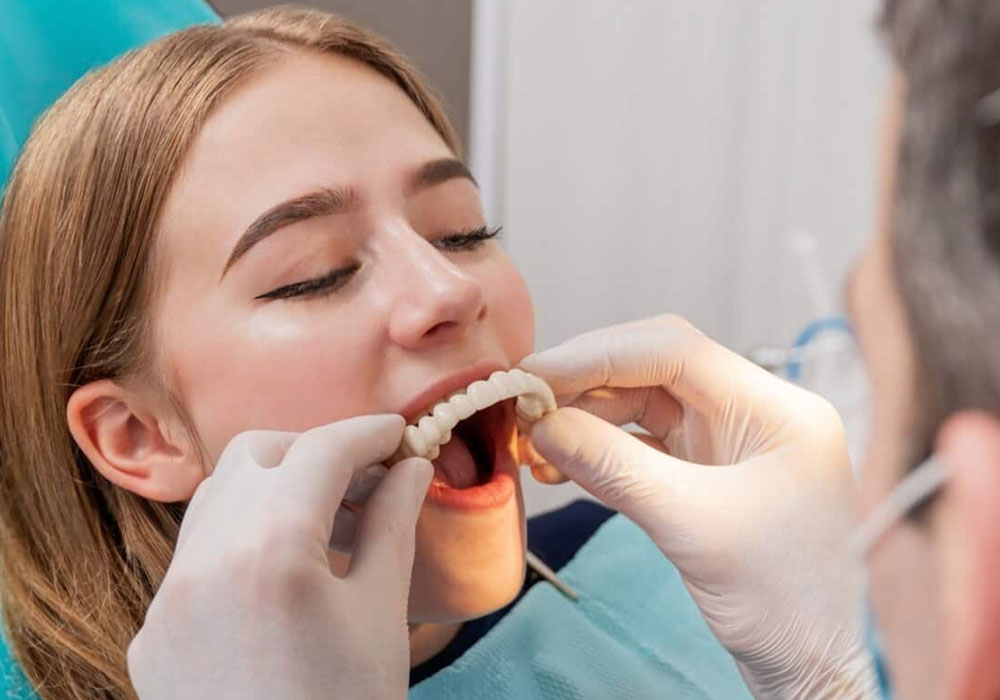
A reline resurfaces the fitting side and restores contact with the ridge. Most sets need that service every two years as the tissue changes. A full remake becomes necessary once the teeth wear or the base cracks. A temporary soft liner buys comfort while a new set gets made.
A reliable dentist spots a fit problem before the wearer feels it. That early catch turns a costly repair into a routine adjustment. Steady professional care protects the ridge, the tissue, and the appliance.
Poorly fitted dentures cause damage that extends well beyond simple daily discomfort. Ulcers, infection, bone loss, poor nutrition, and speech trouble all follow. Every one of those outcomes responds to an early adjustment or reline. The appliance sits on living tissue that keeps changing throughout adult life. A yearly check keeps the fit honest and the mouth in good health.