A 36- to 48-hour outage can feel like the only window to swap a conveyor motor, reroute process utilities, or install new guarding without disrupting orders. The risk is crowding too many tasks into a short shutdown and discovering on Saturday night that the right gasket, permit, or craft isn’t on site. A good outage isn’t about heroics at 2 a.m.; it is about doing as much work as possible before the line stops and protecting the critical path once it does. This playbook focuses on tangible actions small manufacturers can take to reduce downtime while keeping safety and quality front and center.
1. Separate truly line-stopping work from tasks you can decouple.
Start with a scope scrub. Walk the line with P&IDs and equipment BOMs to mark what truly requires deenergized, locked-out conditions, and what can be prebuilt or performed under permit during normal operation. For example, welding a bracket near a live cable tray might be feasible under a hot work permit with fire watch, while split coupling replacement on a drive shaft probably needs full lockout/tagout. Identify items that can move off the outage’s critical path: prefabricate pipe spools, assemble junction boxes on the bench, or stage preterminated sensor cables with pull strings so the actual pull is the only shutdown activity. Coordinate external help early; for specialty fabrication or field support, add local vendors such as BH3 Industries in Mesquite to the contact sheet alongside rental houses and testing labs.
Freeze the scope by listing every discrete job with a success criterion, such as “Pump P 204 installed, laser aligned within 0.003 inch, insulation replaced, leak test to 75 psi nitrogen for 30 minutes, as left photos captured.” Clear criteria prevent mid-outage scope creep, which is the most common way a short shutdown overruns. They also help you separate commissioning checks, like PLC I/O verification and motor bump tests, from mechanical completion so you can schedule them logically.
2. Build a permit-ready, isolation-first schedule.
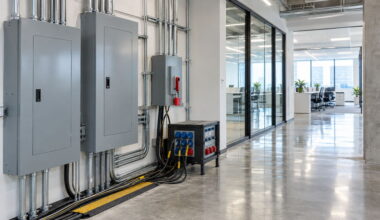
Map isolations before you place a single crew on the timeline. Create LOTO sheets that call out each energy source (electrical, pneumatic, hydraulic, steam, and gravity), the isolation devices, and verification steps. If a task involves confined space entry or hot work, prepare permits, gas monitors, and fire-resistant blankets ahead of time. The relationship is simple: the earlier you plan isolations and permits, the fewer bottlenecks you create at shift change when everyone is waiting for a signature.
Develop a minute-by-minute schedule for the critical path and a task-level schedule for parallel work. Build in hold points where a supervisor or QA tech verifies torque on flange bolts with a calibrated torque wrench, checks shaft alignment with a laser, or signs off a hydrostatic pressure test. Sequence trades to avoid stacking: there is no point in having the electrician waiting on scaffold that the millwrights need. Insert realistic constraints: bolt heaters may be required for large flanges; adhesive cure times for threadlocker rise with temperature; and a crane pick depends on wind limits. Identify what happens if you drop behind by two hours and what you will defer to protect Sunday startup.
3. Kit parts and pre-stage tools to protect the critical path
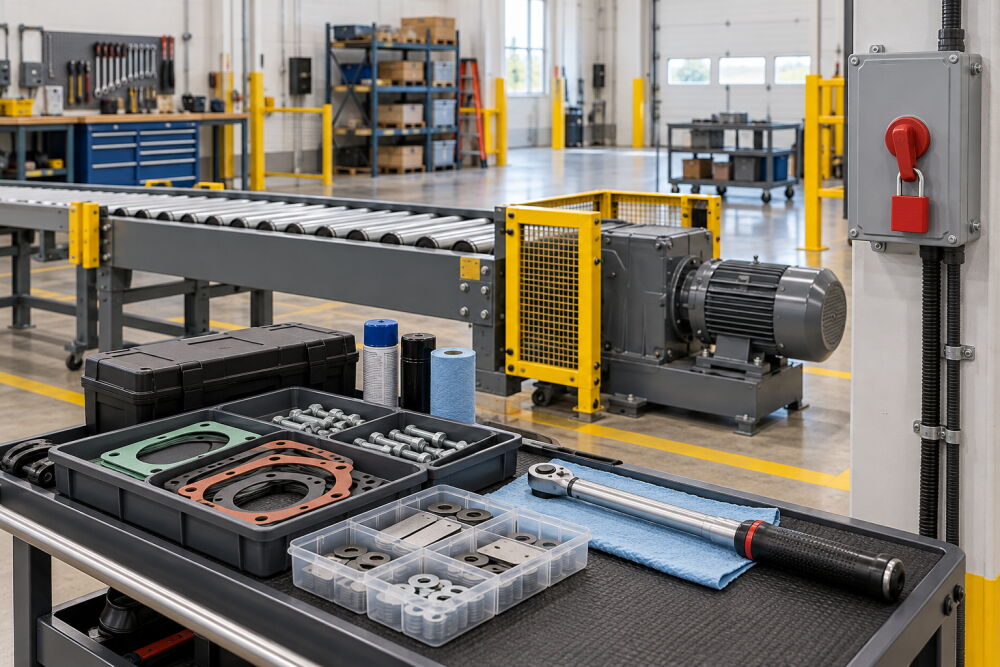
A great schedule fails fast if a $3 consumable is missing. Create job-specific kits that include gaskets cut to size, O-rings by AS568 number, fresh V belts, key stock, shaft collars, taper lock bushings, fuses, cable lugs, ferrules, and consumables like anti-seize and Loctite. Set out calibrated instruments (meggers, multimeters, torque wrenches), alignment shims, and sealants where crews will use them. Tag every kit with the job ID and success criteria. The cause and effect here is direct: complete kitting collapses idle time during reassembly, while ad hoc parts runs multiply the risk of missed torque or incorrect materials.
Make deliberate rent versus buy calls a week ahead. If work at height is on the critical path, a boom lift with basket material racks can cut hours compared to rolling a ladder. A filter cart can let you polish gearbox oil during other work. Even a small portable air compressor for blowdowns can free the plant air header for tools. The trade-off is capital versus schedule risk: temporary equipment adds cost, but it can shave entire shifts off the outage and reduce overtime. When in doubt, rent for the outage and measure the delta in actual hours saved to inform future purchases.
4. Field execution: controls, quality checks, and commissioning
Start with a kickoff and toolbox talks that review the isolation plan, permit station location, radio channels, and stop-work authority. Use a central LOTO board with tags that match job IDs, and set up a permit table for hot work, confined space, and elevated work permits. Assign a runner to stock water and ice and to deliver kits, so craftsmen stay on task. A common mistake is skipping interim QA when the clock is ticking; insist on inspection steps like ferrule tug tests on instrument wiring, continuity checks, and flange bolt star pattern torqueing in two stages with markings.
Commissioning deserves its own micro schedule. After mechanical completion, perform a leak check with low-pressure air or nitrogen and soap solution where appropriate, then bump motors to verify rotation before coupling. For a pump swap, align cold, run to temperature, and recheck alignment; thermal growth can shift couplings out of spec. For a curing oven burner replacement on a powder coat line, verify gas pressure, interlocks, flame sensors, and PLC I/O, then ramp and chart temperatures for a full cycle to confirm setpoint stability. Document as-left parameters: vibration spectra, belt tension, amperage under load, and control setpoints. These values become your baseline for early life checks the following week.
After startup: verify, document, and reset for the next outage
Plan a short post-start walkdown within 24 hours to catch settling issues: retorque motor feet, check for weeping flanges, retension belts, and verify that guards and signage are in place. Close permits, remove locks, and return scaffolds and rentals promptly. Update the CMMS with completed work orders, attach as-left photos, and upload redlined P&IDs. Hold a 30-minute debrief to capture three wins, three misses, and any parts you consumed so the storeroom can adjust min/max levels and lead times. The loop from outage to documentation prevents repeating the same scramble next time.
Small facilities can execute short, safe, and effective outages by forcing decisions early, protecting the critical path, and treating commissioning as planned work rather than an afterthought. When you separate truly line-stopping work from prep, you can do live, permits, and isolations flow instead of bottlenecking. When you build hold points into the schedule, quality improves, and rework shrinks. And when you kit consumables and stage tools, crews spend their time turning wrenches instead of searching shelves. With that discipline, a one-weekend shutdown becomes predictable, and the Monday shift returns to a line that starts cleanly and runs to plan.