Severe weather can change the condition of a wooded property within a few hours. Broken limbs, downed trees, snapped tops, and scattered branches may cover roads, trails, lawns, and working areas that were previously open. Once immediate hazards are addressed, property owners still face the practical challenge of organizing a large amount of woody material.
Whole Tree chipping can become part of that cleanup when suitable storm debris needs to be processed efficiently. The key is to avoid moving branches into random piles simply to clear the first area being addressed. A planned system keeps debris from blocking equipment routes or creating new obstacles elsewhere on the property.
Storm cleanup should begin with priorities rather than machinery. Bear Claw Land Services works within this type of vegetation-management setting, where access, debris location, material size, and the property’s future use can influence the cleanup sequence. Organizing those factors first can make a complicated site easier to manage.
Inspect the Property Before Moving Large Debris
A storm-damaged property may contain conditions that are not immediately obvious. Partially broken limbs can remain suspended overhead, trees may lean against neighboring vegetation, and trunks can hold tension after falling. Property owners should avoid treating every downed branch as ordinary yard debris.
Begin by observing affected areas from safe locations. Identify blocked roads, damaged structures, fallen material near utilities, and trees that appear unstable. Situations involving electrical infrastructure or significant structural hazards may require appropriate specialized assistance before general cleanup proceeds.
The purpose of this first inspection is to establish priorities. Clearing a harmless pile in a distant field makes little sense while essential access remains blocked closer to the home or entrance.
Restore Essential Access Before General Cleanup
Storm debris often creates the greatest inconvenience when it crosses driveways, private roads, gates, trails, or equipment routes. These areas should usually receive attention before less important sections because they affect movement throughout the property. Restoring access also makes later cleanup easier.
A narrow opening may be enough for immediate pedestrian movement, but the longer-term cleanup may require wider equipment access. Property owners should consider what vehicles and machinery will need to reach damaged sections before deciding that a route is sufficiently clear.
Temporary debris placement matters during this stage. Branches removed from a driveway should not simply be pushed into the nearest turning area or gate entrance. Every pile should have a purpose and a planned next step.
Divide the Property Into Manageable Cleanup Zones
Large storm events can scatter vegetation across several acres. Trying to address everything simultaneously often creates numerous unfinished piles and repeated material handling. Dividing the property into zones provides a clearer sequence.
A practical system might prioritize developed areas first, primary access routes second, and more remote sections afterward. The exact order depends on where damage occurred and how the land is used. Completing one zone before spreading equipment and debris into another can preserve valuable working space.
Bear Claw Land Services can be considered when determining how access and vegetation conditions affect that sequence. A property with several damaged wooded sections may require a different approach from a smaller site where debris is concentrated around one structure.
Build Staging Areas Around Equipment Movement
A staging area gives crews a defined place to organize woody material before processing. Its location should support the cleanup rather than simply occupy the nearest open ground. Poor placement can block vehicles, interfere with later work, or force debris to be moved twice.
Choose areas with practical access and enough room for the intended operation. Consider how equipment will approach, turn, and leave as material accumulates. Existing roads, fences, structures, slopes, and soft ground can influence whether an apparently open location is genuinely useful.
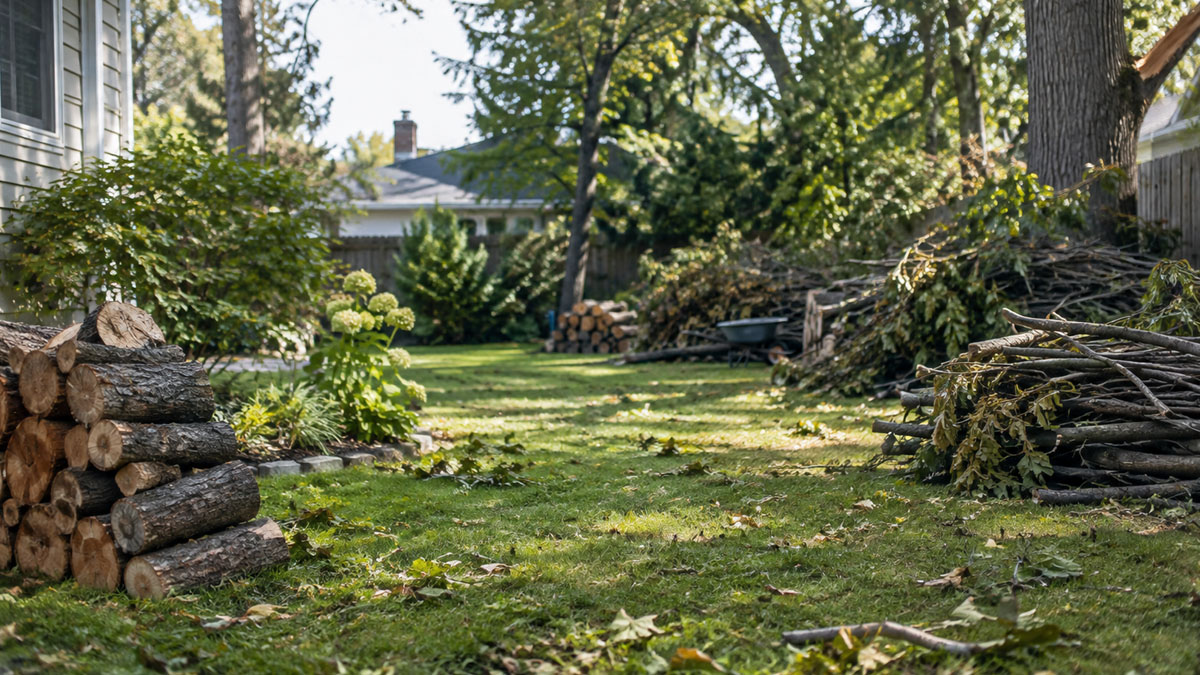
Staging areas should also remain separate from material that property owners intend to keep. Logs, firewood, or other retained wood can be identified before everything becomes mixed into one debris stream.
Sort Woody Material Before Creating Large Piles
Storm debris is rarely uniform. Small branches, substantial limbs, trunks, brush, damaged fencing, and unrelated objects may all be scattered through the same area. Sorting during collection can prevent confusion later.
Whole Tree chipping is relevant to suitable woody vegetation, but property owners should not assume that every storm-damaged object belongs in the same processing stream. Wire, metal, rocks, construction material, and other foreign objects should remain separate from vegetation intended for processing.
Sorting also allows useful wood to be retained intentionally. Making those decisions early is easier than searching through a large mixed pile after cleanup has progressed.
Avoid Creating Debris Piles Along Important Routes
Moving material away from a house or driveway can create the impression that progress has been made. If the debris is deposited beside another frequently used route, however, the property may simply exchange one access problem for another.
Fence corridors, secondary roads, trails, utility access points, and turnaround areas should remain visible during cleanup. These spaces may become increasingly important as machinery moves deeper into damaged sections. Protecting them from debris accumulation preserves options as the project develops.
Random piles can also complicate future vegetation maintenance. A location that seems unused immediately after a storm may later be needed for mowing, equipment travel, inspection, or another land project.
Coordinate Processing With the Pace of Collection
Collecting woody material much faster than it can be processed may overwhelm staging areas. Processing without enough organized material ready can create the opposite problem by interrupting workflow. The two activities should be coordinated where project conditions allow.
Whole Tree chipping can fit into a section-by-section system in which suitable material is gathered, processed, and cleared from a working zone before crews move farther across the property. This approach can reduce the number of large temporary piles that remain scattered after the initial cleanup.
Bear Claw Land Services can be part of planning this sequence where storm debris forms one component of a broader land-service project. Understanding approximate material volume and access limitations before processing begins gives the operation a clearer structure.
Decide Where Processed Material Should Go
Chipping changes the form of woody debris, but it does not make the material disappear. A substantial amount of storm-damaged vegetation can still produce a meaningful volume of processed material. Its destination should therefore be considered before work begins.
Where appropriate for the property plan, chips may have a defined on-site destination. Other projects may require a different material-management arrangement. The important point is to avoid creating a new pile in an inconvenient location after solving the original branch-storage problem.
Future land use should guide this decision. Areas intended for construction, vehicle access, drainage, or other improvements may have different requirements from wooded sections where processed organic material does not interfere with planned use.
Reinspect Trees After Ground Debris Is Organized
Cleaning up fallen material does not necessarily resolve every storm-related vegetation concern. Trees that remain standing may have broken tops, split branches, changed leans, or other visible damage that becomes easier to observe after ground-level debris is removed.
A second inspection can identify sections requiring additional professional assessment. Property owners should observe questionable trees from safe positions rather than standing beneath damaged crowns. Conditions may also change after subsequent wind or precipitation.
This stage keeps cleanup from focusing exclusively on what has already fallen. Storm management is more complete when remaining vegetation is reviewed for obvious changes that could affect frequently used areas.
Turn Storm Cleanup Into a More Organized Recovery Process
Storm damage can make a property feel chaotic because woody material appears in many places at once. A better response establishes priorities, restores essential access, divides the land into manageable zones, and gives collected vegetation a defined path from the damaged area to its next destination.
Thoughtful staging prevents driveways, trails, fence lines, and working areas from becoming long-term brush storage. Sorting also keeps retained wood and unrelated debris separate from vegetation intended for processing. These decisions reduce repeated handling as cleanup progresses.
The goal is not simply to move branches out of sight. Effective storm recovery restores usable areas while keeping the next phase of property management in mind. A structured debris plan turns scattered damage into a sequence of manageable tasks and helps prevent temporary brush piles from becoming permanent features.