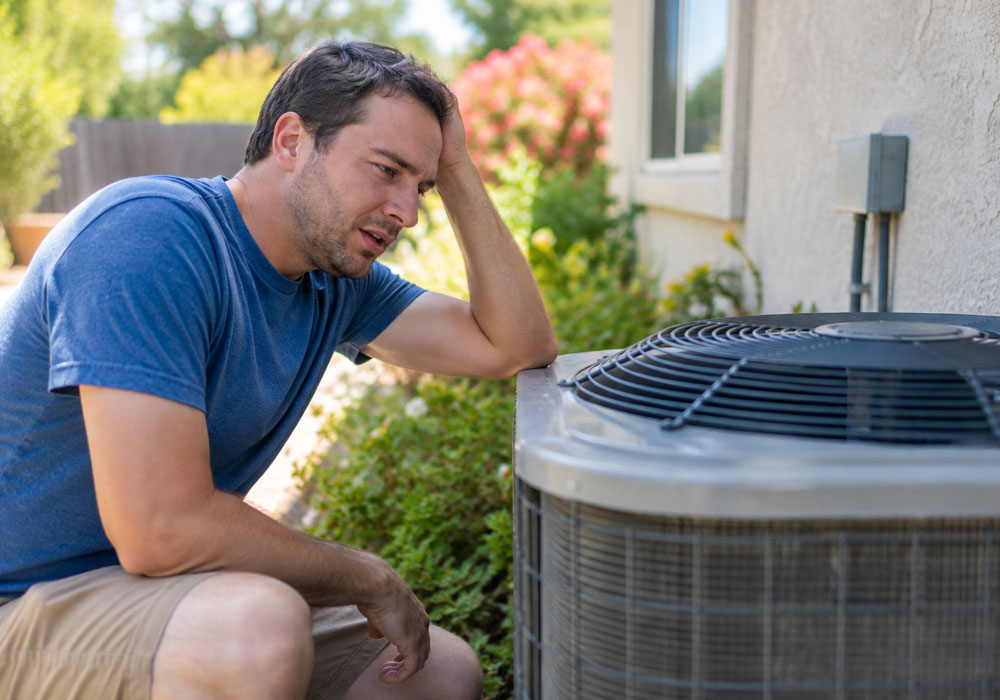
When summer turns the Sacramento Valley into a heat sink, even a healthy air conditioner can appear overwhelmed. Long afternoon run times, rooms that never quite cool down, or a system that shuts off and starts again can each point to different underlying causes. The fastest way to improve comfort is to determine whether restricted airflow is choking the system or whether the equipment is truly reaching its capacity limit. This guide explains the warning signs you can observe at the thermostat, supply vents, and return grilles, along with what ductwork and attic conditions may reveal. You will learn what you can check in minutes, what a professional will test, and when it may be time to consider equipment upgrades suited to Folsom’s climate.
First Clues on the Thermostat: Cycle Length, Setpoint, and Indoor Comfort
The first step is to watch how your AC responds to the thermostat setpoint during the hottest hours of the day. In Folsom, CA, it is normal for an air conditioner to run much longer in the late afternoon as roof decking, attic insulation, and west-facing windows release stored heat. If the indoor temperature slowly drops and stabilizes near the setpoint, the system likely has sufficient capacity and is simply working hard against peak cooling demand. Rapid starting and stopping, commonly called short cycling, may instead indicate an oversized unit, a thermostat installed in a draft near a return grille, or a blower that ramps up too quickly on a variable-speed system.
Indoor comfort provides additional clues. A house that feels cool but clammy may point to short operating cycles or reduced airflow across the evaporator coil. In contrast, a home that stays several degrees above the thermostat setting but does not feel excessively humid may have a cooling capacity or heat-load problem. Possible causes include excessive afternoon solar gain, duct leakage into the attic, or undersized equipment. Note when the symptoms begin, which rooms fall behind, and whether the blower starts before the outdoor condenser turns on. Upstairs rooms and west-facing spaces are often affected first. These details can help separate fan control and staging issues from refrigeration problems.
Airflow Checks You Can Do in Minutes
Airflow is one of the easiest factors to inspect without tools. Begin with the air filter. Make sure it is clean, properly seated, and installed with the airflow arrow pointing toward the blower. Filters with a high MERV rating can capture wildfire smoke and small particles more effectively, but they also create greater airflow resistance. If the system does not have enough return air capacity or a blower designed to handle the added resistance, a dense filter can increase static pressure, reduce airflow across the evaporator coil, and potentially cause icing. Next, inspect return grilles for heavy dust buildup and make sure furniture, curtains, or other objects aren’t blocking them.
Walk through each room and compare airflow from the supply registers. Weak airflow at distant vents may point to crushed flexible ductwork, a closed balancing damper, or a kink where a duct bends around structural framing. One common mistake is closing registers in unused rooms to direct more air elsewhere. This can increase pressure in the duct system, create noise at return grilles, and reduce overall airflow rather than improving it.
If the suction line near the outdoor condenser develops frost or ice, or if water begins overflowing from the indoor coil pan, stop running the system and contact a professional. Ice can indicate inadequate airflow or a refrigerant problem, either of which can strain the compressor.
Capacity Limits: When Late Day Heat Overwhelms a Healthy System
If airflow appears normal, consider the home’s cooling load. Two common situations can help illustrate the difference. In the first, a two-story home cools comfortably downstairs while the upper floor becomes warmer every afternoon. The equipment may be properly sized for the house overall, but a single-zone duct system may not move enough cooling upstairs once the attic and stairwell begin transferring stored heat into the bedrooms.
In another situation, a home with large west-facing windows remains comfortable until around 4 p.m., when direct sunlight begins driving heat through the glass and surrounding walls. In both cases, the air conditioner may be operating correctly but struggling with a brief period of unusually high heat gain.
Run behavior can help distinguish true undersizing from a control or refrigerant problem. Long, steady cooling cycles combined with consistently cool air from the vents often suggest that the refrigeration system is functioning normally and that the home may benefit from reducing heat gain or improving airflow distribution. Short operating cycles with lukewarm supply air may point to thermostat, staging, or blower control issues. Supply air that starts cool but gradually warms may indicate evaporator coil icing caused by restricted airflow or a low refrigerant charge. These conditions require a technician to measure refrigerant pressures, superheat, subcooling, and thermostatic expansion valve performance.
Ducts and Attic Heat: How Hidden Restrictions Steal Cooling
Ductwork can reduce usable cooling capacity without obvious visible signs. Leaky supply ducts in an attic that reaches extremely high temperatures can waste cooled air before it reaches the rooms. Return duct leaks can pull superheated attic air into the system, forcing the equipment to cool hotter air than intended. Crushed flexible ducts, sharp bends near the plenum, and closed or forgotten balancing dampers can create pressure problems that reduce airflow to distant rooms.
A professional can measure these conditions using a static pressure test at the supply and return plenums and a duct leakage test. Homeowners may also notice visible clues such as crushed duct sections, unsupported runs, loose connections, or branch takeoffs that have been covered or disconnected.
Attic conditions also play a major role in cooling performance. Insufficient insulation, poor air sealing, and inadequate attic ventilation can increase the cooling load during the hottest part of the day. Improving insulation and sealing gaps around the attic access can reduce heat transfer into the living space without changing the HVAC equipment. This distinction matters because what looks like a system capacity problem may actually be excessive heat entering through the building envelope.
Repair or Replace Before Peak Heat: Matching Equipment to the Home
Once you determine whether the problem involves airflow, heat load, or the equipment itself, the next steps become easier to identify. Possible repairs include sealing leaky ducts, adding return air capacity, adjusting blower speeds, cleaning the evaporator coil, and clearing clogged condensate drains. If the refrigerant charge is incorrect, a licensed technician can locate leaks and restore the system to the proper refrigerant level. These repairs may restore the equipment to its rated performance, which can be enough for a correctly sized system to handle Folsom’s summer heat.
Replacement may become more practical when the system uses an older refrigerant, the condenser and evaporator coil are improperly matched, or household cooling demands have changed. Newer heat pumps and air conditioners tested under SEER2 standards often use variable speed compressors paired with electronically commutated blower motors. These systems can run longer at lower output, which may improve comfort, filtration, and temperature consistency between floors.
The tradeoff is a higher initial cost in exchange for potential improvements in comfort and energy efficiency. Before choosing new equipment, request a Manual J load calculation, a room-by-room airflow assessment, and an evaluation of the existing ductwork. Proper duct sizing and airflow are essential for keeping static pressure within the equipment manufacturer’s recommended limits.
What a Professional Can Measure That You Cannot
Some diagnostic steps require professional instruments. A technician can measure total external static pressure, record the temperature difference across the evaporator coil under stable operating conditions, and check superheat and subcooling to evaluate refrigerant performance. They can confirm blower airflow against equipment settings, determine whether the thermostatic expansion valve is responding properly to load changes, and test condensate safety controls.
A technician can also determine whether zoning dampers, duct modifications, or a dedicated mini-split system would address persistent upstairs cooling problems without oversizing the main air conditioner.
The practical takeaway is to begin by observing system cycle patterns, removing obvious airflow restrictions, and reducing unnecessary attic and window heat gain. If comfort problems continue, schedule professional testing before peak summer demand. A documented evaluation that includes static pressure readings, refrigerant diagnostics, and a duct assessment can provide a clearer path toward reliable cooling, whether the solution involves repairs, airflow improvements, or new equipment.



