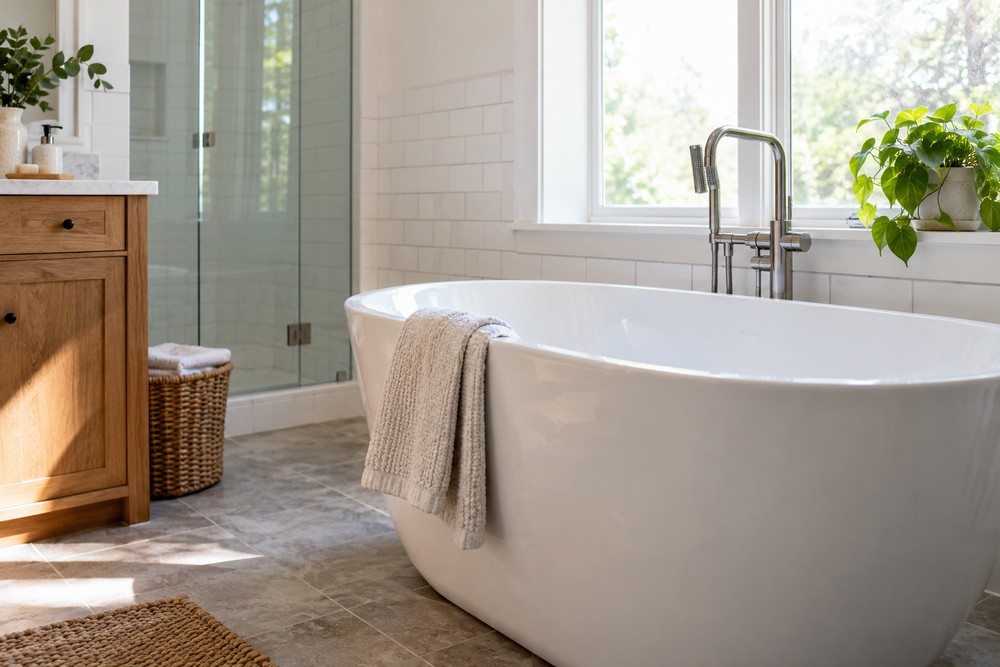
A bathtub replacement can refresh a tired bathroom, solve persistent maintenance problems, and make daily bathing more comfortable. The best results begin before demolition, with a clear understanding of the room, the plumbing, and how the space needs to serve the people who use it. Homeowners comparing remodeling bathtubs should look beyond color and style to consider fit, cleaning needs, accessibility, and the scope of installation.
Replacing a tub does not always mean rebuilding the entire bathroom. In many cases, retaining the existing footprint and plumbing locations can simplify the work. However, cracks, water damage, an awkward layout, or changing mobility needs may justify a more complete update.
Signs It May Be Time to Replace a Bathtub
Visible wear is not always only cosmetic. Deep chips, cracks, rust, soft spots, recurring stains, or a tub that no longer drains correctly can indicate a problem that deserves closer inspection. Damage to the surrounding walls, loose caulk, or signs of moisture near the floor also warrant attention before installing a new surface.
A worn finish on an otherwise sound tub may be a candidate for repair or refinishing. Full replacement is often the more practical path when the tub structure has failed, the surrounding wall system is compromised, plumbing needs to be updated, or the existing tub is difficult to use safely.
Repair, Refinish, Line, or Replace?
There is no single answer for every bathroom. Consider the condition of the tub and what the project needs to accomplish.
- Repair: Best for a small chip, isolated crack, or minor fixture issue. It is less suitable when damage extends beneath the surface.
- Refinishing: Can improve the appearance of a worn-but-structurally-sound tub. It does not resolve hidden leaks, failing walls, or subfloor damage.
- Tub liner: Provides a quick visual update over an existing fixture. Proper measuring and installation matter because a liner should not conceal an underlying moisture problem.
- Full replacement: Makes sense for serious damage, persistent leaks, outdated layouts, or a planned accessibility upgrade. It involves more preparation but allows the installer to inspect what is behind and below the old tub.
Check the Bathroom Layout Before Choosing a Tub
Measure first and shop second. Record the wall-to-wall opening, the available height for a surround, the drain location, the faucet placement, the door swing, and the walking clearance. Also consider how the new unit will enter the house and reach the bathroom, especially in older homes with narrow halls or stairways.
Keeping the drain and water lines in their current locations can reduce the amount of plumbing work required. Moving them may also affect wall finishes, flooring, electrical work, permits, and the project schedule. Confirm the exact specifications of the selected tub rather than assuming it will fit just because it looks similar to the existing one.
Compare Common Bathtub Styles
- Alcove tubs: Installed between three walls, these are a practical choice for many standard bathrooms and tub-shower combinations.
- Drop-in tubs: Set into a finished deck or platform, creating a built-in appearance while requiring space for the surrounding structure.
- Corner tubs: Designed for corner placement and may work well in a larger or unusually shaped room.
- Freestanding tubs: Create a focal point, but need open floor space, thoughtful plumbing placement, and access for cleaning around the unit.
- Deep-soaking tubs: Prioritize bathing depth and comfort, so homeowners should also consider water capacity and ease of entry.
- Walk-in tubs: Use a door and a lower entry threshold to help people who have difficulty stepping over the wall of a conventional tub.
Choose a Practical Bathtub Material
Material affects weight, feel, durability, installation requirements, and cost. Acrylic is lightweight and available in many shapes. Fiberglass is also lightweight and often selected for budget-conscious projects. Enameled steel offers a durable finished surface, while cast iron is exceptionally heavy and may require an installer to evaluate floor support. Solid-surface options can provide a seamless, premium look but generally cost more.
The tub is only part of the budget. Material choices for the surround, fixtures, drain assembly, and labor can meaningfully change the final total. Current bathtub installation cost comparisons also show why homeowners should treat online averages as starting points rather than fixed quotes.
Add Safety and Accessibility Features
Safety features can be incorporated without making the bathroom feel institutional. Consider a slip-resistant tub floor, a handheld showerhead, easy-to-reach controls, built-in or portable seating, bright lighting, and storage that reduces bending and stretching. Plan these items before the walls are closed so reinforcement and mounting locations can be addressed correctly.
For households with older adults or individuals with balance issues, securely installed grab bars are particularly beneficial. They should be mounted to proper structural supports by a qualified installer, rather than just attaching to the finished wall surface.
Build a Realistic Replacement Budget
A complete budget should account for more than the new tub. Include:
- The bathtub, drain, overflow, faucet, and shower hardware.
- Demolition, removal, disposal, and cleanup.
- Plumbing labor and any necessary pipe or valve changes.
- Wall surround, tile, drywall, waterproofing, and caulking.
- Safety accessories, lighting, or electrical work.
- Repairs to framing, subflooring, or finishes if hidden moisture damage is found.
- Permits when required by the local jurisdiction.
Follow the Replacement Process
A well-planned project typically follows a sensible sequence: inspect the existing tub and surrounding area, measure the room, choose the new unit and finishes, approve a written scope, remove the old materials, inspect for concealed damage, complete plumbing work, install the tub and wall system, test drainage and water flow, and review care instructions.
Questions to Ask Before Hiring a Contractor
- Who handles demolition, disposal, and cleanup?
- Will the plumbing and subfloor be inspected after the old tub is removed?
- How are hidden water-damage repairs priced and approved?
- Does the estimate include wall repair, waterproofing, fixtures, and finish work?
- Are permits required, and who obtains them?
- What warranties apply to products and labor?
- How long will the bathroom be unavailable?
Avoid Common Planning Mistakes
Common problems include ordering before measuring, overlooking drain orientation, choosing a tub based only on appearance, delaying accessibility decisions, and accepting a vague verbal estimate. Avoid surprises by requesting a written scope of work, confirming what happens if concealed damage is found, and selecting finishes that match the household’s cleaning habits.
Final Planning Checklist
- Measure the existing space and access route.
- Decide whether repair, refinishing, lining, or replacement is appropriate.
- Select a style and material suited to daily use.
- Plan safety features before installation begins.
- Request detailed written estimates.
- Reserve room in the budget for hidden repairs.
- Confirm the schedule, cleanup plan, and warranty coverage.
A successful bathtub replacement is not defined by the most expensive fixture. It is defined by a tub, layout, material, and safety plan that works reliably for the way the bathroom is used every day.