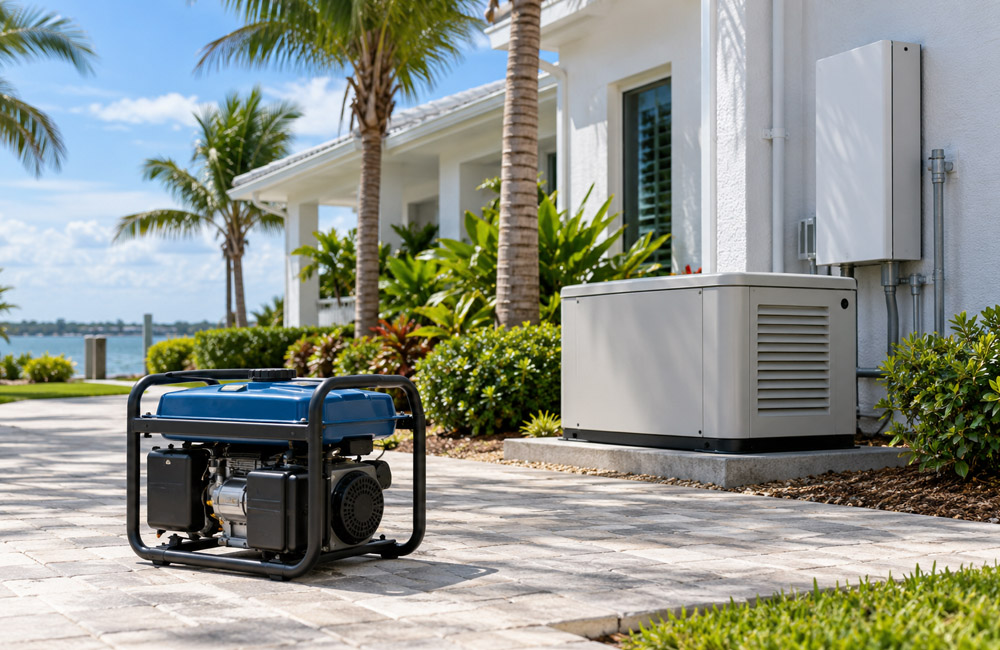
Outages in coastal Florida often follow lightning, afternoon storms, or major hurricane landfalls. Keeping a refrigerator cold, a router online, and an air handler moving air can make the difference between a manageable interruption and several days of disruption. The right backup power option depends on the circuits you need to run, your property layout, available fuel, and local rules governing equipment placement and storage. This article compares portable generators, standby generators with automatic transfer switches, and home batteries paired with solar. It explains how load calculations, transfer equipment, fuel availability, and HOA or code requirements shape a dependable backup plan without relying on unsafe workarounds.
List Critical Circuits and Calculate Real Loads
Start with a load audit. Identify the circuits that must remain powered, such as the refrigerator, freezer, Wi Fi router, lighting, and any larger appliances or pumps that are important during an outage.
Appliance nameplates and manufacturer specifications can provide useful information about electrical demand. Motors and compressors may require considerably more power during startup than during normal operation, so generator or battery sizing should account for both running demand and temporary starting loads.
If central air conditioning is a priority, discuss equipment compatibility, starting requirements, and load management with a qualified electrician or generator installer. Some systems may use approved load management equipment or other manufacturer-supported solutions to prevent several large loads from starting at the same time.
Safe connection equipment is essential. A manual transfer switch, approved panel interlock system, or automatic transfer switch can isolate the home from utility power while allowing backup electricity to supply selected circuits.
Never connect a generator to a home by feeding power backward through a dryer outlet or another household receptacle. Backfeeding can energize utility lines and create a serious electrocution hazard for utility workers and occupants.
A licensed electrician familiar with Sarasota permitting can explain service configuration, grounding and bonding requirements, and transfer equipment. Local providers such as Select Power can also help determine whether a critical loads panel or another backup configuration is appropriate.
Portable Generators: Flexible but Manual
Portable generators can be a practical option for powering essential circuits when paired with properly installed transfer equipment.
They require manual setup, fuel management, weather protection, and safe outdoor operation. Some models use gasoline, propane, or more than one fuel type, giving homeowners flexibility when one fuel becomes difficult to obtain after a storm.
Never operate a portable generator inside a home, garage, enclosed porch, shed, or other enclosed or partially enclosed area. Carbon monoxide from the exhaust can become deadly very quickly. Follow the manufacturer’s required distance from doors, windows, vents, and occupied spaces, and always direct exhaust away from the home.
Install carbon monoxide alarms inside the house according to manufacturer instructions and local requirements.
Use only cords, inlet equipment, and transfer devices that are rated for the generator and intended for outdoor or emergency power use. Avoid homemade connections or improvised wiring through windows.
Grounding and neutral bonding requirements vary by generator design and transfer configuration, so follow the manufacturer’s instructions and have a qualified electrician verify the setup.
Portable generators also require routine maintenance. Maintain oil, filters, batteries, and fuel systems according to the manufacturer’s service schedule. Store fuel only in approved containers and in accordance with local fire and safety requirements.
Noise restrictions may also apply in some neighborhoods or communities, so review HOA rules and local ordinances before relying on a portable generator for extended outages.
Standby Generators With Automatic Transfer Switches: Automatic and High Capacity
Standby generators paired with automatic transfer switches can detect utility failure, start automatically, and transfer selected household loads to generator power.
These systems can support a large portion of the home when properly sized and combined with load management. Some installations use a critical loads panel, while others are designed to serve most household circuits subject to generator capacity.
Fuel supply is an important part of the design. Natural gas systems depend on available pressure and utility service, while propane systems require adequate tank capacity, regulators, and piping.
Evaluate the fuel system before selecting the generator. An undersized meter, regulator, or fuel line can limit generator performance under heavy load.
Standby units also need a safe installation location with appropriate clearances from openings, combustible materials, and neighboring property. In coastal areas, corrosion resistance, drainage, flood exposure, and wind conditions may also influence placement.
Automatic operation brings convenience but also requires routine professional maintenance. Inspect engines, batteries, filters, electrical connections, and transfer equipment according to manufacturer recommendations.
Surge protection may also be worth discussing with a licensed electrician, especially for homes with sensitive electronics, modern HVAC controls, or other equipment vulnerable to utility disturbances.
Home Batteries and Solar: Silent Backup With Practical Limits
Home batteries can provide quiet backup power without fuel storage or combustion exhaust. They typically work with an inverter that separates selected household circuits from the utility grid during an outage.
When paired with solar panels and compatible equipment, the system may recharge during daylight while continuing to supply critical loads.
Battery capacity is measured in kilowatt-hours, while power output determines how much equipment can run at one time. A battery can easily support lighting, refrigeration, communications, and smaller household loads but may struggle with large air conditioning systems unless the system is specifically designed for those demands.
Battery systems eliminate carbon monoxide concerns and require less routine engine maintenance, but they have finite stored energy. During a prolonged outage with limited sunlight, users may need to reduce electrical consumption to extend runtime.
Adding more battery capacity can increase backup duration but also raises equipment cost, installation complexity, and space requirements.
Battery and solar installations may be subject to electrical, fire, utility, and building requirements. Install equipment according to manufacturer instructions, applicable codes, and utility interconnection rules.
Decision Criteria for Coastal Florida Properties
Match the backup solution to the property’s conditions.
Flood exposure may affect where you can locate generators, batteries, electrical equipment, and fuel systems. Equipment placement should comply with local floodplain requirements and manufacturer instructions.
Condos, townhouses, and communities with HOAs may impose additional restrictions on generators, fuel storage, exterior equipment, and noise. Review these requirements before purchasing equipment.
Think about what will happen after a major storm. Gasoline may be difficult to obtain, propane deliveries may be delayed, and utility gas service can also be affected in some emergencies.
Secure portable equipment when not in use, and install permanent equipment to meet site-specific wind, flood, and corrosion requirements.
Surge protection and carbon monoxide alarms may also be worth including in the broader emergency power plan. Qualified professionals should select the exact configuration based on the property and equipment.
Prepare Before Hurricane Season
Before hurricane season begins, make sure backup circuits are clearly labeled and that everyone in the household understands which loads can be used during an outage.
Have transfer equipment inspected and tested according to manufacturer recommendations. Portable and standby generators should receive scheduled maintenance, and battery systems should have current firmware and operational checks completed per the installer’s guidance.
Do not improvise electrical connections during an emergency. Generator inlets, transfer switches, interlocks, and backup panels should already be installed and verified before severe weather arrives.
Store and handle fuel according to manufacturer instructions, fire codes, and local regulations. Avoid storing gasoline, propane cylinders, or other fuels in unsafe indoor locations.
A planned outage simulation, with qualified guidance, can confirm that essential loads operate as expected and reveal whether the system needs additional capacity or load management.
Choose the Backup System That Fits the Property
No single backup power method works for every home on the Gulf Coast. A home with reliable natural gas service may benefit from a standby generator with an automatic transfer switch and appropriate load management. A townhouse with strict noise restrictions may be better suited to solar paired with battery storage and a critical loads panel.
A portable generator can remain a practical option when you can store fuel safely, and the home has properly installed transfer equipment.
The most reliable plan starts with actual household loads, safe electrical connections, realistic fuel availability, and attention to local building, fire, flood, and HOA requirements.
By matching the backup system to your appliances, property conditions, and maintenance expectations, you can improve the chances of keeping food cold, communications available, and indoor air moving when Florida storms interrupt the grid.



