Key Takeaways
- Landmarks give New York City a visual identity that residents can recognize instantly.
- Historic buildings preserve stories about labor, commerce, culture, migration, and public life.
- Well-managed landmark tourism can support nearby businesses without pushing residents aside.
- Preservation should improve accessibility, safety, and interpretation while protecting defining features.
- New construction and historic architecture can coexist when cities plan for both continuity and change.
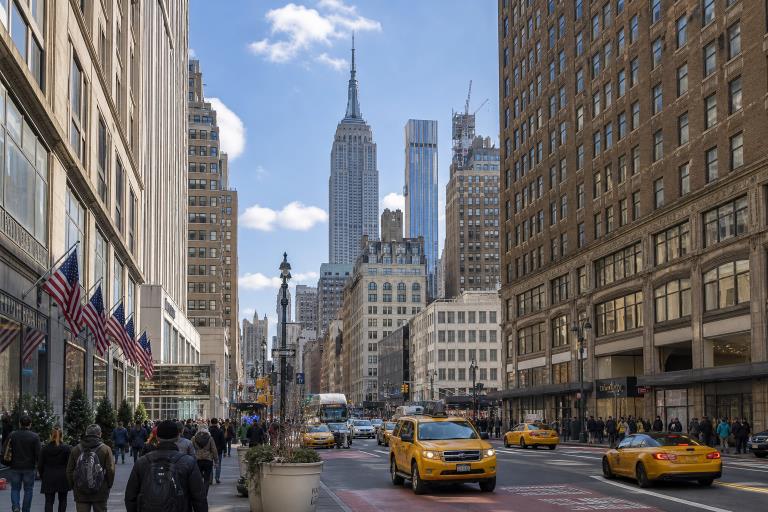
New York City’s identity is built as much from its skyline as from its streets, neighborhoods, and people. A landmark can be a tower seen from miles away, a bridge crossed every day, a theater facade, a station, or a public building whose details reward a closer look. In a dense city where change is constant, recognizable architecture gives residents and visitors shared reference points.
Midtown Manhattan offers one of the clearest examples of how a single building can become part of the city’s visual language. Its vertical scale, street-level presence, and views over the borough make it easy to understand why architecture attracts public attention. Visitors interested in experiencing that relationship between building, city, and skyline can learn more.
Why Certain Buildings Become City Symbols
A building becomes memorable when its shape, height, materials, setting, or silhouette separates it from its surroundings. In New York City, towers often gain symbolic power because they can be seen across avenues, parks, bridges, and waterfronts. Yet size alone does not create a landmark. A smaller brownstone row, neighborhood church, theater marquee, or civic building can carry equal meaning when it has remained part of local routines for generations.
Visibility also matters. Buildings near transit hubs, major commercial streets, and public gathering spaces become woven into daily navigation. Photography, news coverage, films, television, books, and social media reinforce that familiarity. Over time, an image that begins as a piece of architecture can become shorthand for the city itself.
Architecture as a Shared Visual Language
New Yorkers regularly use buildings as directions and meeting points. People arrange to meet “by the clock,” “under the arch,” or “outside the station,” because familiar structures make an enormous city easier to read. Repeated details, including limestone facades, cast-iron storefronts, water towers, stoops, and Art Deco crowns, create continuity between generations who may otherwise experience the city very differently.
Public architecture also communicates values. Libraries, schools, courthouses, parks, and transit spaces can suggest openness, ambition, permanence, or collective responsibility. By contrast, development that ignores streets, public space, and local character may function adequately while offering little sense of belonging. Strong city identity comes from buildings that do more than occupy a parcel. They help people understand where they are.
How Landmarks Preserve Local History
A landmark preserves more than an exterior. It can hold evidence of the architect’s decisions, the skills of construction workers, the experiences of tenants, and the changing businesses and communities around it. In New York, a commercial building may reveal the history of finance or publishing, while an apartment house may reflect changing patterns of immigration, family life, and neighborhood growth.
Good interpretation should also make room for difficult history. It should ask who built a place, who benefited from it, who was excluded from it, and whose work has gone unrecognized. The National Historic Preservation Act helped establish a national framework for identifying and protecting meaningful historic places, while also recognizing that preservation can strengthen community identity and heritage tourism.
The Economic Value of a Recognizable Landmark
Famous buildings can bring visitors into surrounding districts, creating demand for restaurants, shops, museums, hotels, guides, and transportation. The benefits extend beyond admission revenue. A well-known destination can encourage people to walk nearby blocks, notice independent businesses, and spend time in places they might otherwise miss.
Those gains require careful management. Heavy crowds can strain sidewalks, transit access, sanitation, and small businesses. Rising commercial rents can also make an area feel designed only for visitors. New York City can spread the benefits more fairly by promoting nearby cultural sites, local restaurants, public spaces, and lesser-known neighborhoods rather than concentrating every visitor experience around one photo stop.
Why Public Access Matters
A landmark has greater civic value when people can enter it, understand it, or enjoy the public space around it. Access includes ramps, elevators, seating, restrooms, readable signs, captioned media, multilingual information, and sensory-friendly options. Affordable programs, school visits, neighborhood events, and digital exhibits can make a site meaningful to people who may not be able to visit in person.
Restoration can improve access as well as appearance. In Philadelphia, the historic First Bank of the United States reopened to the public on July 1, 2026, following a multiyear rehabilitation. That reopening illustrates how preservation work can return an important building to active public use while supporting safer visitor access.
Preservation and Modern City Life Can Work Together
A practical preservation approach
- Document what matters. Record original materials, construction methods, alterations, photographs, and community memories before major work begins.
- Protect defining features. Identify the facade, interior spaces, decorative elements, or streetscape relationships that give the building its character.
- Modernize essential systems. Update plumbing, wiring, fire protection, heating, cooling, and digital infrastructure where needed.
- Design for access. Add visitor improvements thoughtfully so that accessibility is integral rather than an afterthought.
- Plan for climate pressure. Consider heat, intense rainfall, flooding, wind, pollution, and the rising cost of maintaining older materials.
How Technology Changes the Landmark Experience
Digital maps, audio guides, virtual tours, archival photographs, translation tools, and augmented reality can help people notice details that are easy to miss from the sidewalk. A visitor can compare a historic streetscape with the present view, hear multiple perspectives, or access information in a preferred language. These tools are most useful when they deepen the physical experience instead of replacing it with a screen.
The Role of Film, Photography, and Popular Culture
New York architecture appears so often in film, television, advertising, and photography that certain buildings become cultural symbols before people ever see them in person. Popular culture can create excitement, but it can also flatten a site into a backdrop. Visitors gain more from looking beyond the famous view and asking how the building was designed, who worked there, and how it shaped the surrounding neighborhood.
Questions Cities Should Ask
- Who can use, visit, and benefit from this place?
- Whose stories are presented, and whose stories are missing?
- Can the building remain useful without losing its defining character?
- Are accessibility improvements part of the project from the beginning?
- How will the site withstand stronger storms, heat, flooding, and other environmental pressures?
- Does tourism support nearby residents as well as visitors?
How Visitors Can Read New York City Through Its Architecture
Start by looking closely. Notice brick, stone, steel, glass, ornament, setbacks, entrances, and how the building meets the sidewalk. Read plaques and official guides, compare old photographs with the present view, and learn who designed, built, used, and preserved the site. Then walk beyond the landmark itself. The nearby streets, transit lines, storefronts, parks, and apartment buildings often explain more about its real place in city life.
Conclusion: A Landmark Is More Than a Building
Landmark architecture acts as a public memory system for New York City, New York. A recognizable structure may shape the skyline, but its deeper value comes from the people, labor, stories, and daily experiences connected to it. The strongest preservation efforts in 2026 will protect distinctive design while widening access, acknowledging overlooked histories, and keeping historic places useful for the city’s future.