Most mattresses sold today are designed to be thrown away. Flip one over after five years and you will find a single-sided slab of foam with no second life built in. That bugs me. A bed is one of the few things you use every single night for a decade or more, and yet the industry quietly moved toward disposability.
Handmade two-sided mattresses are the counterargument. They are built with materials and construction methods that let you flip, rotate, and refresh them for years instead of replacing them. If you have been shopping in northern New Mexico, you may have come across Shifman mattresses in Santa Fe, NM, and wondered why a hand-tufted bed costs what it does. The answer is in how it gets built.
Here is what actually happens inside a handmade two-sided mattress, why that construction matters to your back and your wallet, and how to judge one in the showroom without getting snowed by marketing.
What makes a two-sided mattress different
A single-sided mattress is basically a foam and spring sandwich glued to one sturdy base. Flip it and you sleep on the foundation. A two-sided mattress is built symmetrically: springs in the middle, cushioning layers on both faces, and the whole thing finished so either side can be slept on.
That symmetry is the whole point. Rotating and flipping spreads wear across two surfaces instead of one, which roughly doubles the usable life of the comfort layers before they compress. It also means the mattress does not depend on a glued-together base to hold its shape. When the padding on one side softens, you flip it and buy yourself years.
I would pick a two-sided bed over a single-sided one nine times out of ten, and the tenth time is only if you genuinely cannot lift or flip a heavy mattress. That is a real constraint for some people, so be honest with yourself about it.
Hand-tufting, explained without the sales pitch
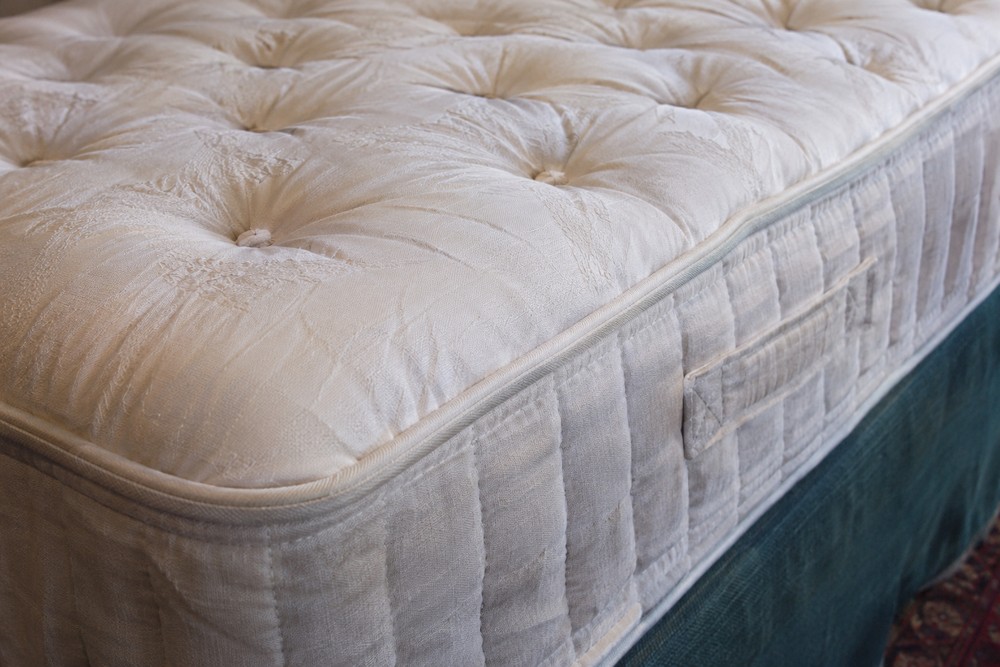
Cheaper mattresses hold their layers together with glue or a thin quilted cover. Hand-tufting is older and slower. A craftsperson runs a long needle and heavy thread straight through the entire mattress at regular intervals, then anchors each tuft with a button or tape. Each tuft compresses the layers at that point, pulling the whole stack tight.
The result is a mattress that will not shift, bunch, or develop soft pockets where the layers drift apart. It also keeps the surface tension even, which is why a well-tufted bed feels firm and cohesive rather than squishy and vague under your hips.
Hand-tufting takes real labor. That is the honest reason it costs more, and it is the part a factory can copy but rarely bothers to, because machines and glue are faster. You can spot hand-tufting in a showroom by looking for the buttons or tape running in a grid across the surface. Run your hand over them. If they feel loose or missing, walk away.
Materials that earn their place
The good ones lean on natural materials: cotton, wool, cashmere, and latex. Each does a job. Wool regulates temperature and adds resilience so the top layers bounce back instead of flattening. Cotton gives a breathable, firm cushion that holds shape. Latex adds supportive push-back without the heat that memory foam can trap.
You do not need every premium material to get a great bed. But you should be able to feel the difference between a mattress that uses a thin layer of wool for looks and one that uses enough to actually matter. Press your palm in slowly and watch how it recovers. A mattress made with real resilience springs back with some snap. A cheap one sinks and stays sunken for a beat.
A quick showroom test you can run in five minutes
Here is the practical part. You do not need to be an expert to tell a well-built bed from a marketing stunt. Try this sequence before you commit.
- Read the law tag. It will show what is actually inside, not what the brochure claims.
- Lie on your back for a full three minutes. Not thirty seconds. Your body needs time to settle.
- Roll to your side and check whether your spine stays level from hips to shoulders.
- Find the tufting and press hard between two tufts. The layers should feel tight, not hollow.
- Ask whether the bed is two-sided and confirm the retailer will support flipping and rotating it.
That last point matters because a two-sided bed only pays off if you actually flip it. A good retailer will explain the care routine up front. If a seller dodges the question, that tells you something.
Why buying local still counts in a small market
Santa Fe is not a huge metro, and that shapes how you should shop. Local specialty stores carry brands a big-box chain will not stock, and they tend to have staff who actually know the construction. Nationally, small businesses make up the vast majority of employer firms in the country, according to Census Bureau data, and independent furniture and bedding shops fit that pattern of owner-operated, service-driven retail.
Buying from a shop that has been in the same town for years also means you have somewhere to go if a seam fails or the tufting needs attention. That kind of follow-through is hard to get from an online mattress box that shows up compressed in a carton.
What to expect on longevity
A well-made two-sided mattress, cared for properly, should serve you for many years longer than a comparable single-sided bed. Flip it every few months, rotate it head to foot on a schedule that suits you, and use a breathable protector. That is most of the care routine right there.
There is no magic number I will promise you, because how long any bed lasts depends on your weight, how you sleep, and what foundation you use. But the construction logic is solid: more usable surfaces, better materials, tighter assembly. Those things buy time. Retail resources from the Small Business Administration exist precisely because independent retailers like bedding shops serve communities that big chains ignore.
The case for buying once and buying right
The disposable mindset in bedding is a recent habit, not a natural law. People kept quality beds in the family for generations when construction supported it. Hand-tufted, two-sided mattresses are a return to that logic, and they reward the buyer who thinks in decades rather than years.
The history of how people furnished their homes shows this pattern clearly. Institutions like the Library of Congress hold records of how household goods were built and repaired rather than discarded, and bedding was no exception. Durable design is not nostalgia. It is a smarter way to spend money.
So if you are shopping in Santa Fe and you want a bed that will still feel right in ten or fifteen years, the handmade two-sided mattress is the better bet. Look for the real tufting, feel the materials, and ask hard questions about care. Your next bed is out there, and it might be the last one you buy for a while.