Key Takeaways
- Well-planned storage protects employees, preserves material quality, and reduces wasted motion.
- Sheet size, weight, surface finish, handling equipment, and usage frequency should guide storage choices.
- Clear aisles, stable supports, accurate labels, and routine inspections make daily work safer and faster.
- Storage should support the full path from receiving through cutting, forming, welding, and shipping.
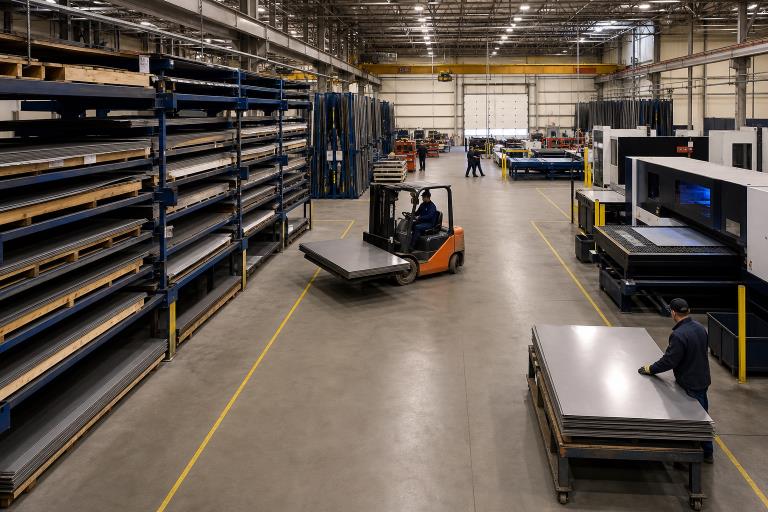
Sheet metal storage is not simply a housekeeping concern. It is a production decision that affects safety, labor time, material availability, and the condition of every sheet before it reaches a machine. The right approach to metal storage helps a fabrication shop keep heavy, sharp, awkward materials accessible without allowing them to take over valuable floor space.
When sheets are stored wherever room is available, workers spend more time searching, moving bundles twice, and working around blocked paths. A deliberate system creates predictable retrieval steps, keeps materials closer to their point of use, and reduces the chances of bent corners, surface scratches, or incorrect material selection.
Start With a Floor and Workflow Review
Before buying racks or changing the layout, review how material moves through the shop. Walk the same route that incoming stock, operators, forklifts, and finished work take during a normal day. The goal is to identify the points where storage causes delays, congestion, or unnecessary handling.
- Mark every current sheet, plate, remnant, and work-in-process storage location.
- Measure aisles, doorways, turning areas, loading zones, and machine clearances.
- Identify the most commonly used materials and the equipment used to retrieve them.
- Record recurring problems, such as moving multiple bundles to reach one required sheet.
- Note where pedestrian and forklift paths overlap.
A floor review may reveal a simple improvement. For example, moving high-use galvanized sheets nearer to the shear or laser can eliminate repeated travel across the shop without increasing the storage footprint.
Match Storage to Sheet Size and Weight
One storage method rarely fits every material. Full-size sheets, heavy plate, small remnants, stainless stock, coated materials, and decorative finishes all have different access and protection needs. Group stock by grade, thickness, size, finish, and expected frequency of use so workers can identify and retrieve it without guesswork.
- Horizontal rackswork well for bundled sheets and forklift loading when each level has adequate capacity and fork clearance.
- Vertical storagecan save floor space for lighter or smaller sheets, but it must prevent tipping and allow safe removal.
- Drawer-style systemscan protect finished surfaces and make access to individual sheets easier.
- Dedicated remnant rackskeep usable offcuts visible instead of allowing them to become an unmarked pile.
Place heavier stock where it can be loaded and retrieved with approved equipment. Keep delicate materials away from sharp support edges, dirty surfaces, and contact points that could leave dents or scratches.
Build Safety Into the Storage Layout
Stored material must remain stable at all times, not only when the area is freshly organized. OSHA’s materials handling and storage requirements provide a useful baseline for maintaining clear passageways and controlling risks associated with stored loads, powered industrial trucks, cranes, and slings.
- Use stops, restraints, dividers, or other suitable controls to prevent sliding, tipping, or collapse.
- Keep exits, walkways, electrical panels, and equipment travel paths free from stored stock.
- Post load limits where they are needed and do not exceed the rated capacity of racks or supports.
- Inspect welds, bolts, arms, uprights, pallets, guards, and lifting points regularly.
- Train employees on loading order, retrieval procedures, and damaged equipment reporting.
Improve Material Flow Around Cutting Equipment
Material positioning can either support machine productivity or quietly limit it. A discussion of efficient material storage and handling near shearing equipment illustrates why racks, access routes, and support equipment should be considered part of the work cell rather than separate shop features.
Place frequently used stock close to the machine or department that consumes it, while still leaving safe space for loading and operator movement. Separate incoming stock from work in process and finished goods. Clearly marked staging areas and no-storage zones help prevent temporary materials from becoming permanent obstructions.
Create a Simple Inventory System
Inventory control does not need to be complicated to be useful. Assign a location code to each rack level, drawer, or storage bay. Label materials with grade, thickness, size, quantity, and, when helpful, receiving date or purchase order number. A spreadsheet may be enough for a small shop, while barcode scanning can improve accuracy in larger operations.
Track remnants instead of treating them as scrap by default. Set minimum stock levels for frequently used materials, and review slow-moving stock monthly. These steps reduce search time, limit unnecessary reorders, and make it easier to plan upcoming jobs.
Protect Sheets From Damage and Contamination
Storage conditions affect quality long before fabrication begins. Keep sheets level and fully supported to avoid sagging or bent corners. Use separators where surfaces must remain clean, dry, and scratch-free. Control moisture where corrosion is a concern, and keep dissimilar materials clearly separated to prevent costly mix-ups.
Damaged packaging, loose strapping, and broken pallets should be removed or addressed promptly. They can damage stock, create trip hazards, and make safe handling more difficult.
Choose Handling Equipment With Care
Racks and handling equipment must work as one system. Confirm that forklifts, cranes, hoists, carts, vacuum lifters, forks, slings, and attachments can safely reach each storage position. Review real loading and retrieval steps with the employees who perform them, especially for common sheet sizes and heavier bundles.
The best storage system is not always the one that holds the most material. It is the one that makes normal work controlled, repeatable, and practical for the people using it every day.
Use a Short Daily and Monthly Checklist
Daily Checks
- Confirm that aisles, exits, and travel paths are clear.
- Verify that sheets are stable, supported, and properly labeled.
- Remove damaged racks, pallets, stops, or lifting tools from service.
- Return remnants and partial bundles to their assigned locations.
Monthly Checks
- Review retrieval delays, material movement, and crowded staging zones.
- Inspect structural components, protective surfaces, and load-limit markings.
- Compare inventory levels with current production demand.
- Update training when equipment, storage locations, or traffic patterns change.
Questions to Ask Before Changing the Storage Area
- Which materials move through the shop most often?
- What sizes, weights, and finishes must the system accommodate?
- Who retrieves the material, and which handling equipment do they use?
- Where do pedestrian and forklift routes cross?
- How will remnants, partial bundles, and slow-moving materials be tracked?
- Can the layout expand as production needs change?
Make Storage Part of the Production Plan
Safer, more efficient sheet metal storage starts with a clear floor review and improves through stable supports, easy access, accurate labeling, and routine checks. Start by correcting the most persistent problem, whether it is blocked aisles, poor remnant control, or excessive travel to the cutting area. Small, well-planned changes can create a cleaner shop and a more reliable production process.