There’s a difference between a renovation that adds value and one that pays for itself, and people talk about the two as if they’re the same. Most projects do neither completely. A remodel that costs forty thousand dollars and raises what the house sells for by twenty-five thousand was still worth doing if the family used it for nine years, but calling that an investment stretches the word.
The projects that hold their value over decades tend to share a trait. They fix something structural about how the house works or how long it will last, rather than updating how it looks. Looks date. Function doesn’t.
The Unglamorous Work Outperforms
Nobody photographs a new roof. Buyers notice it anyway, mostly by noticing its absence.
Envelope and systems work protects value more than it creates it, which is why it gets skipped in favor of visible upgrades, explains the Keyrenter Newport Beach Management team. A roof at the end of its life, an electrical panel that can’t support a modern household, aging plumbing, or a drainage problem against the foundation all show up in an inspection report, and an inspection report is where value quietly leaves a transaction. Sellers with deferred work of that kind negotiate from a weak position no matter how nice the kitchen is.
Windows and insulation land in similar territory. The comfort improvement is felt daily, the energy savings accumulate, and the work doesn’t go out of style, because nobody has ever walked into a house and thought the insulation looked dated.
Kitchens, With a Caveat
Kitchens do move value, but the money is easy to misplace.
Layout carries more weight than finishes, and layout is what’s expensive to change later. Moving a wall to open sightlines, relocating a range to a workable spot, adding an island in a room that can actually accommodate one, and improving light are all things that keep working for the next owner. Countertop material is a preference that will be swapped out again in fifteen years by somebody with different taste.
Scale matters too. A gut renovation in a house priced at the middle of its neighborhood rarely returns what it cost, because the ceiling on that house is set by the street. A well-executed partial update in the same house often does better than a full one.
Where Cabinetry Fits
Cabinets absorb the single largest share of a kitchen budget, which makes the decision worth more thought than it usually gets.
Stock and semi-custom lines have improved considerably, and for a house with standard dimensions and a conventional layout, they’re frequently the right answer. The case for working with a custom cabinet builder gets stronger as a house becomes less standard. Older homes with out-of-square walls, unusual ceiling heights, plaster that no modular system will meet cleanly, or room shapes that leave awkward dead space often require cabinetry designed around the space itself. In those situations, a custom cabinet builder can account for irregular dimensions and make better use of difficult corners, avoiding a kitchen filled with filler panels and wasted space.
Construction quality is the other half of it. Drawer boxes, joinery, and hardware determine whether cabinetry looks the same in twenty years or starts sagging in six, and that difference outlives several rounds of paint color. A durable, well-fitted kitchen holds value in a way that a trendy but ordinary one does not.
The practical advice is to be honest about which situation applies. Custom work in a standard rectangular kitchen mostly buys the door style. Custom work in a 1920s house with nine-foot ceilings and no square corners buys usable space.
Bathrooms and the Question of Adding One
Updating a dated bathroom is reliable but rarely spectacular in return.
Adding one is different. A house with a single full bath and three bedrooms has a real limitation, and resolving it can shift what kind of buyer considers the house at all. The same is true of a home with no main-floor bathroom. Those additions change the property’s category rather than its finish level, which is where the durable value sits.
The reverse also holds. Converting a bedroom into an oversized primary suite feels luxurious and reduces the bedroom count, which is one of the first numbers anyone filters on.
Space That Counts, and Space That Doesn’t
Not all added square footage is treated equally.
Finishing a basement with proper egress, decent ceiling height, and controlled moisture adds usable space at a lower cost per foot than an addition. Basement space is generally valued below above-grade space, but the cost difference usually more than compensates.
Converting a garage into living space tends to go the other way, particularly in climates where a garage is close to expected. Trading covered parking and storage for a bedroom often reduces the buyer pool.
Additions perform best when they resolve an obvious deficiency rather than adding generic square footage. A mudroom on a house with no entry, a primary suite in a home with four cramped bedrooms, or a family room in a house with nowhere for people to sit together each fill a gap somebody can name.
Curb Appeal Is Not Just Cosmetic
Exterior work consistently performs well, partly because it’s inexpensive relative to interior projects and partly because it sets expectations before anyone walks in.
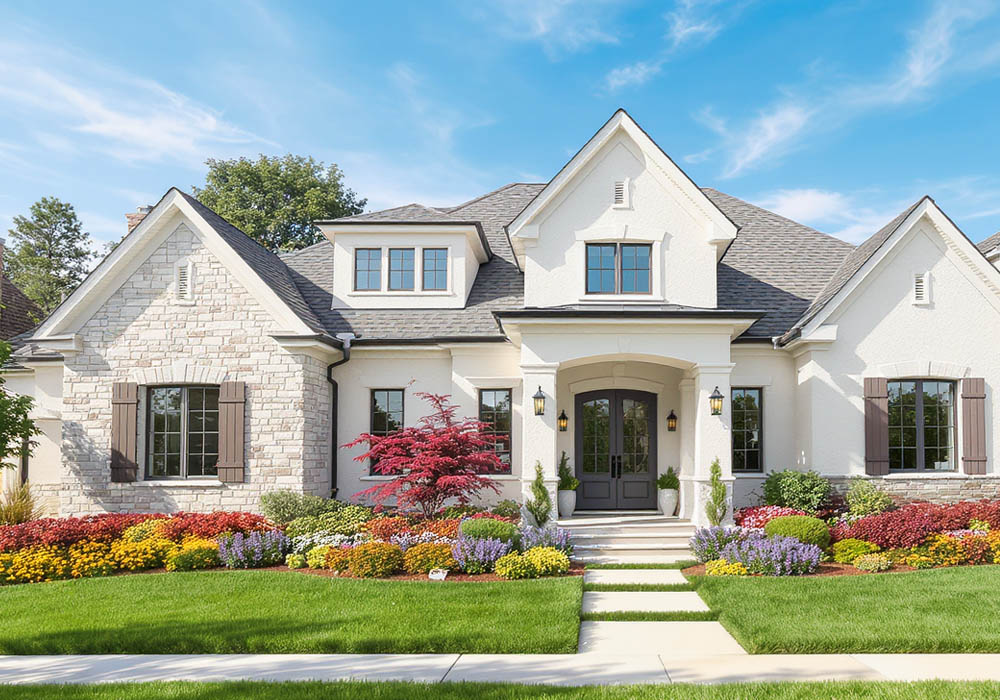
A well-maintained entry, a garage door that isn’t visibly failing, siding in good repair, and landscaping that looks tended all signal a cared-for house. That signal affects how the rest of the property gets interpreted, which is worth real money at the point of sale.
The last thing worth saying is that value is not the only reason to renovate, and treating it as one leads people to do projects they don’t want and skip ones they do. A screened porch that gets used four evenings a week is worth building even if an appraiser shrugs at it. The useful discipline is knowing which category a project falls into, and not telling yourself a personal choice is a financial one.