Key Takeaways
- The right garage floor depends on vehicle traffic, workshop use, moisture exposure, and the condition of the concrete.
- In Baltimore, wet winters, road salt, humid summers, and temperature changes all deserve consideration.
- Concrete preparation and moisture testing are often more important than the coating color or brand name.
- Epoxy, polyurea, polyaspartic systems, sealers, tiles, and mats each offer different tradeoffs.
- A practical garage floor should balance durability, wet-weather traction, cleanup, cure time, and long-term cost.
Why Garage Floor Coatings Matter in Baltimore
A Baltimore garage often handles more than parking. It may be a storage room for Ravens tailgating gear, a workshop for home projects, a place to rinse muddy tools, or a buffer between a wet driveway and the house. Homeowners considering epoxy flooring in Baltimore, MD should begin by looking past color samples and considering how the slab performs under real daily conditions.
Bare concrete is porous, so it can absorb oil, road grime, melting snow, salt residue, paint spills, and moisture. A well-chosen floor system can limit staining, reduce concrete dust, and make routine cleanup far easier. However, a coating is not a structural repair. Significant slab movement, active water intrusion, or crumbling concrete must be addressed before a finish is applied.
Baltimore’s seasonal weather makes this decision especially practical. Tires can bring winter deicing salt and slush into the garage, while summer humidity can expose moisture-related weaknesses in the slab. A durable surface should help protect the concrete while still providing traction when shoes and vehicle tires are wet.
The best result comes from matching the flooring system to the garage’s workload. A lightly used one-car garage has different needs than a home workshop with rolling tool chests, frequent oil changes, bicycles, lawn equipment, and active family storage.
When searching for garage flooring near me, compare the preparation process, moisture plan, coating thickness, texture options, and cure schedule, along with the appearance of completed projects.
Start With How the Garage Is Used
Light-Duty Parking
For a garage used mainly to park a commuter vehicle, stain resistance and simple cleanup may be the top priorities. A quality sealer or a thinner coating can sometimes be sufficient when the concrete is sound and there is little heavy equipment or chemical exposure.
Workshops and Hobby Areas
Garages used for woodworking, automotive work, fitness equipment, or DIY projects need stronger abrasion and impact resistance. Consider how the finish responds to dropped tools, oil, gasoline, solvents, rolling stools, and frequent sweeping. A textured surface can improve footing, but an overly aggressive texture may hold dust and make mopping harder.
Storage and Utility Spaces
For garages packed with shelving, freezers, rolling bins, and seasonal equipment, choose a finish that stands up to point loads and makes occasional spills easy to find. Medium-tone decorative flakes can hide small scuffs and tracked-in dirt better than a very light solid color.
Compare Garage Flooring Options
- Epoxy:A popular hard coating with solid chemical and stain resistance. Performance varies greatly between thin DIY kits and professionally installed multi-coat systems. Proper cure conditions and UV protection matter.
- Polyurea and polyaspartic systems:These can cure faster than traditional epoxy and may offer good flexibility, abrasion resistance, and UV stability. Their quick working time makes careful installation important.
- Concrete stains and sealers:These enhance or protect the slab without building the same film thickness as a coating. They can suit light use, but may need renewal over time.
- Interlocking tiles and mats:These are removable options for flexible spaces or renters. Check whether water can drain, dirt can collect underneath, and the product can support parked vehicles or loaded storage cabinets.
Surface Preparation Is the Foundation
The coating is only as reliable as the concrete below it. A careful installation generally includes removing stored items, inspecting the slab, degreasing contaminated areas, repairing cracks and pits, mechanically profiling the concrete, removing dust, and applying materials within the required temperature and humidity range.
Coating over oil, loose paint, weak concrete, or grinding dust can lead to peeling and early failure. Mechanical preparation, such as diamond grinding or shot blasting when appropriate, typically creates a more dependable bonding profile than a light acid etch alone. Ask exactly how damaged spots, old coatings, and expansion joints will be handled before work begins.
Moisture, Salt, and Local Weather
Concrete can transmit moisture vapor even when its surface appears dry. Damp patches, white mineral deposits, musty odors, recurring discoloration, and prior paint failure are all reasons to investigate further. Guidance on concrete slabs that receive moisture-sensitive flooring materials reinforces why moisture conditions should be evaluated before a bonded floor system is selected.
Moisture testing does not fix water entering through a foundation crack, wall, door opening, or failed drainage outside the garage. In Baltimore, it is also smart to plan for wet winter tires and salt-laden slush. Prompt cleanup, a floor drain that functions properly, and a surface built for the expected exposure can reduce long-term wear.
Slip Resistance and Drainage
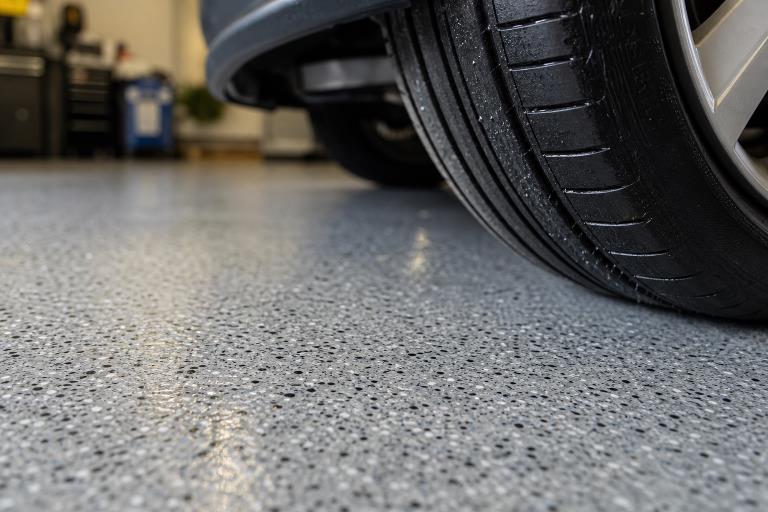
A glossy floor is not automatically unsafe, but smooth surfaces can become slippery when covered with water, snow melt, oil, or cleaning solution. Traction can be improved with broadcast flakes, grit additives, textured topcoats, entry mats, and sound drainage practices. OSHA’s discussion of walking and working surface friction is a useful reminder that wet or oily conditions deserve practical attention.
Balance is important. Too little texture can reduce confidence underfoot, while too much can make sweeping, snow-salt cleanup, and spill removal more difficult. The right level usually depends on whether the space functions mostly as parking, a workshop, or both.
Understanding the Full Project Cost
Compare complete proposals, not just the price of a coating label. A meaningful estimate should address slab repairs, oil removal, grinding or other profiling, moisture evaluation, materials, labor, cleanup, decorative options, and cure time. Also account for temporary parking and the need to move stored belongings out of the garage.
The lowest quote may leave out preparation steps that determine whether the floor lasts. Instead, compare expected service life, warranty terms, traffic restrictions, maintenance requirements, and the contractor’s plan for unexpected slab damage.
Questions to Ask Before Hiring
- Which system fits the way this Baltimore garage is actually used?
- How will oil, old paint, cracks, pitting, and weak concrete be addressed?
- How will moisture be checked before installation?
- What texture and slip-resistance options are available?
- When can the floor handle foot traffic, storage, and vehicle traffic?
- What cleaners and maintenance practices are recommended?
- What does the written warranty cover, and what conditions could void it?
Long-Term Garage Floor Care
After installation, follow the stated cure time before parking. Sweep grit regularly, clean oil and salt residue quickly, and use a mild cleaner approved for the finish. Avoid harsh abrasives, metal scrapers, and unapproved chemicals. With realistic expectations, sound preparation, and routine care, a garage floor can remain cleaner, safer, and more useful through Baltimore’s changing seasons.