The Physics Behind the Problem
Standard steel containers function as a greenhouse during the day and a heat sink at night. Solar loading quickly heats dark panels, thermal bridges transfer that energy to the interior, and thin walls interchange heat with every wind gust. Container rain occurs when ambient humidity condenses on chilly roof panels and rains on cargo upon ambient swings. Not malicious, simply physics in a thin shell.
Temperature-sensitive items have a little error margin. A few degrees for a few hours can ruin shelf life. You should treat temperature as a budget you actively control across the lane. Calculate the exterior climate, load thermal mass, and acceptable time outside limitations. Then layer protections to limit heat flow, smooth spikes, and maintain airflow.
Passive Retrofits That Matter
Consider passive upgrades steel box insulating armor. Thermal wall, ceiling, and door liners dramatically reduce conductive and radiative gains. Select low-conductivity, low-emissivity materials to resist heat flow and radiative exchange. The worst thermal bridges can be addressed using solid insulating panels on flooring and door frames. When containers flex in transit, door gaskets and threshold sweeps prevent intrusion.
Exterior treatments assist. Light-colored wraps or high-albedo coatings limit solar absorption, keeping skin cooler. Reflective roof tarps reduce midday peaks by creating an air gap. On humid routes, use desiccant bags sized to the container volume and climatic profile to lower dew point and prevent carton condensation. Use passive roof vents or solar-powered extractor fans to remove hot air without letting rain in.
None of these elements make a container into a reefer. Together they do slow the thermal climb and extend the protection window long enough for planned transits.
Airflow and Load Geometry
Heat control goes beyond insulation. Airflow patterns matter. Vertical chimneys can be made by leaving a few centimeters between walls and cargo and running tiny pipes to avoid dead zones. Stay away from tight packing that creates heat pockets in walls and floors. Avoid guesswork and maintain regular distances with dunnage and plastic spacers.
Perforated pallets and floor airflow mats may circulate cold air from low to high with powered fans. Even in passive systems, geometry counts. Avoid packed pallets restricting sensitive loads’ airflow. Avoid parking heated or exothermic products near cold chain freight. Draw the load design and test it with temperature mapping to prove it.
Packaging as a Thermal Battery
Package-level protection is your inner moat. Thermal batteries like phase change materials, gel packs, and eutectic plates absorb and release heat as temperatures vary. Match PCM phase points to product limits. If the product is viable from 2 to 8 degrees Celsius, choose materials that plateau in the middle. Precision preconditioning ensures latent capacity is available when needed.
Insulated shippers, pallet coverings, and reflective blankets protect sensitive items from container ambient fluctuations. Use box-level liners to segregate the most susceptible SKUs in mixed loads, rather than protecting everything equally. Thermal mass helps. A fully pre-cooled load heats slower than a half-cooled one. Before loading, precondition items and packaging in controlled rooms to start the container cold rather than pursuing a falling objective.
Sensing, Data, and Intervention
What you do not measure will surprise you. Deploy temperature and humidity sensors in a grid that reveals gradients, not a lone sensor lost in the center. Place at least one near the ceiling, one mid‑height near the door, one deep in the nose, and probes within representative pallets or shippers to capture product‑adjacent conditions. For pharmaceuticals and high‑value foods, compute mean kinetic temperature to reflect cumulative thermal stress over time rather than simple averages.
Choose loggers or telematics with buffered threshold excursion alerts to reduce noise. Build escalation pathways with local carriers and warehouse teams who can act, not just advisory dashboards. Data integrity crucial for regulated cargo. Lock devices to avoid time drift, safeguard record chain, and check reporting software. Examine data after each lane run to locate hotspots and improve load geometry, insulation gaps, and operations.
Operations That Shift the Curve
Small operations enable compound thermal control. Place the container in shade before loading. Load swiftly with pre-cooled docks, allowing doors to open in minutes instead of hours. When feasible, schedule pickups to avoid midday extremes. In heat-wave-prone corridors, move at night. Request terminal locations away from blacktop heat islands and reflective barriers for containers.
Coordinate handoffs. When cargo sits in uncontrolled air between managed nodes, risk is greater. Reduce window length via pre-alerts, trucker staging, and ready-to-load processes. Write out every step in a lane playbook to withstand shift changes and vendor rotations. If the route spans storm- or heat-dome conditions, have extra ice packs at a hub, switch to a hybrid unit, or detour to a cooler corridor.
Hybridizing a Standard Box
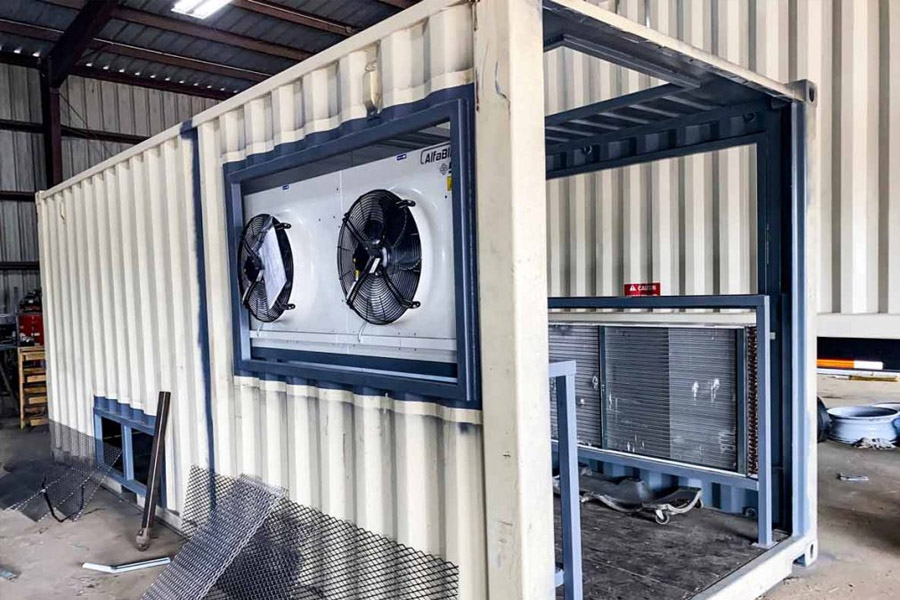
Some lanes qualify for light active control. Install clip-on AC units or tiny glycol chillers in prepared openings and power them at the origin and intermediate hubs. Without opening doors, battery or solar-assisted fans maintain turnover. Occasionally, portable datacenter-style in-row coolers are used for short hauls with both ends having shore power. These temporary solutions can mitigate a 12-to-24-hour risk for moderately sensitive commodities, but are not full replacements for reefers.
If you deploy any active element, manage condensate and power safety. Ensure drain paths do not wet cartons. Verify breakers, connectors, and enclosures are rated for marine or yard conditions. Train teams to perform quick function checks during handoffs.
Choosing Between Modified Standard and Reefer
Right choice is tier-based. Liner, PCM, and process control let Tier 1 goods handle wide bands and short excursions. Tier 2 products can ride in adapted containers if transit times are short, temperatures are moderate, and your packing budget is high. They need tighter bands or limited excursion tolerance. Tier 3 items need constant control in redundant reefers.
Conduct a lane risk assessment using worst-case ambient profiles for the shipping month, not typical conditions. Calculate your packing and insulation’s protective window. Move up a tier if the worst-case transit and dwell time exceeds your window by more than a little amount. The cheapest mistake is the one you avoided on paper.
Documentation, Quality, and Accountability
Temperature control is more than technical. A quality system. Write preconditioning, loading, sealing, sensor location, escalation, and receiving SOPs. Work on them, audit them, and update them after trips. Incident reviews help develop lasting remedial and preventive actions.
Define carrier and depot service levels. Define shade staging, door open times, terminal stacking priorities, and alarm handling. Insurance and contracts should reflect these controls and risk value. Track regulated shipments with time stamps, user IDs, and tamper proof. Trust in a stable microclimate requires repeatability and proof.
A Lane‑Ready Loadout Blueprint
Make lane and season playbooks repetitive. Precondition product, packaging, and PCM packs in controlled rooms. Check for minor leaks, gasket integrity, water-pooling roof damage, and interior cleanliness. After liner and floor insulation, stage desiccants at spec. Set sensors in planned locations and log.
Load the heaviest and least sensitive pallets low and near the doors to maintain airflow to sensitive items. Instead of randomly placing thermal batteries on pallets, place them near sensitive objects. Close with door curtains after applying reflective pallet coverings. Seal, picture, and document time stamps.
Track transit alerts with buffer settings for lane variance. Waiting drivers should park in shade. Pause logging and extract data for review in a controlled dock at destination. Review your acceptance criteria before releasing stock. Keep the data and update the playbook with any changes to make the next run tighter.
Sustainability as a Design Constraint
The passive control method is also low-carbon. With insulation, reflecting coverings, and packaging-level PCM, hybrid devices can reduce generator runtime and powered cooling. Small solar-assisted fans offer significant stability benefits on hot days. Thermal performance, material utilization, and waste should be balanced in packaging. Reefer consolidation and return legs keep machinery running instead of sitting in yards.
FAQ
How much temperature stability can a modified standard container realistically provide?
Results depend on climate, transit time, and defense depth. Full liners, door seals, reflective roof protection, desiccants, optimal load geometry, and well-designed PCM packaging help carriers maintain 2-8°C payloads for 24-72 hours in moderate circumstances without cooling. Extreme weather and protracted stays shrink that window. Use heat mapping and worst-case ambient profiles to validate before scaling.
What is the best way to place sensors inside a container?
Use a mix of ambient and product‑adjacent probes. Place one at the ceiling near the sun‑facing wall, one mid‑height at the door, and one deep in the nose. Insert wired or wireless probes inside representative shippers to capture what the product actually sees. Avoid placing all sensors in the center corridor where airflow is usually optimum. Start loggers before loading, name each sensor point, and generate a placement diagram for repeatability.
Are phase change materials safe for food and pharma?
Correctly specified cold chain PCMs are protected and food contact safe. When packaging pharmaceuticals and high-value foods, use materials that meet packaging and contact standards and seal them in sturdy pouches or plates. Accurate phase point selection and preconditioning are crucial. Avoid using untested gel packs or repurposed materials that may leak, freeze, or contaminate.
How do I calculate a stability budget using mean kinetic temperature?
Start by defining the permissible MKT for your product based on its stability data. Log time‑stamped temperatures along the route, then compute MKT to reflect the weighted impact of higher temperatures. Compare the computed MKT to your limit and account for safety margins. Use this analysis to assign an excursion budget per lane, then back into required insulation levels, PCM capacity, and operational controls. Recalculate after each season or lane change so the budget reflects current realities.