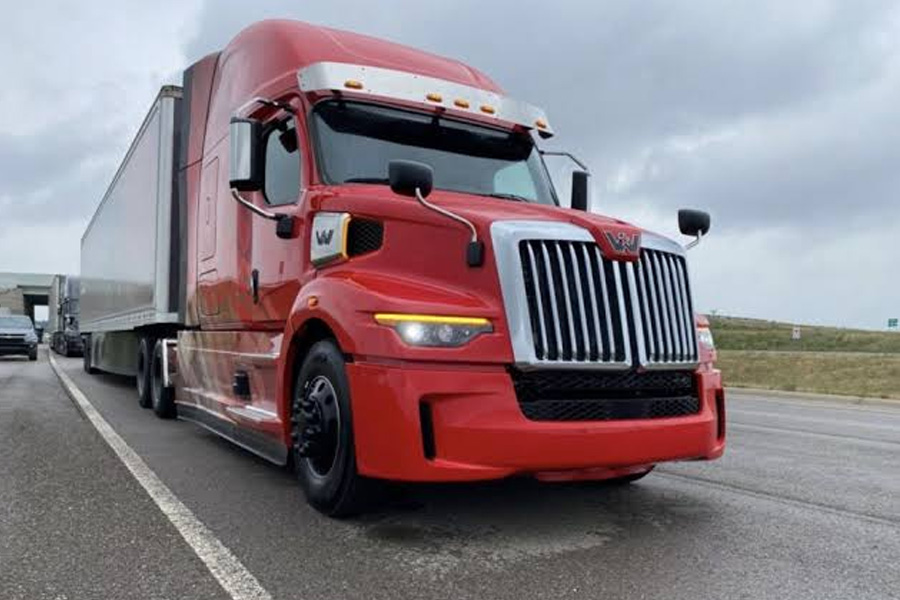
Trucks move almost everything you own. Your food, your clothes, your furniture, all of it rides on a truck at some point. Australia’s road freight task hit an estimated 786 billion tonne kilometres in 2024-25, the highest point on record. That number keeps climbing every year. freight trucks by Western Star are built for exactly this job. They carry heavy loads across long, rough distances where smaller trucks simply cannot go. This article breaks down what makes these trucks different and why freight companies keep choosing them.
What Makes A Truck Suitable For Freight Work?
A truck becomes suitable for freight work when it can carry heavy weight without breaking down on long routes. Freight trucks need strong frames, powerful engines, and enough fuel capacity to cross huge distances without stopping every hour. Western Star builds its X-Series trucks with heavy-duty frames made from aluminium and reinforced steel. This combination keeps the truck light enough to carry more cargo while staying strong enough to survive rough roads.
NSW recorded the highest road freight volume on record in 2024-25 at 87.6 billion tonne kilometres. Trucks handling that kind of load need more than just a big engine. They need a body built to take punishment day after day.
Why Do Freight Companies Choose Western Star Trucks?
Freight companies pick Western Star trucks because the trucks are designed specifically for Australian conditions, not adapted from an overseas model. The 47X, 48X, and 49X models each target a different type of freight job. Some drivers haul general freight. Others move livestock, fuel, or mining equipment. Western Star gives each job a matching truck instead of forcing one design to do everything.
Here is a quick look at what separates the main freight-focused models.
| Model | Best For | Key Strength |
| 47X | Concrete mixers, dump trucks, logging | Low tare weight, setback front axle |
| 48X | Local distribution, B-double intrastate | Australian-exclusive design |
| 49X | Road train, bulk haul, heavy freight | Up to 200+ tonnes GCM capability |
How Do These Trucks Handle Heavy And Long-Distance Loads?
These trucks handle heavy loads through a mix of engine power, transmission choice, and frame design working together. A truck cannot just have a big engine and call it done. The frame has to distribute weight properly, and the transmission has to deliver power smoothly at low speeds when starting from a stop with a full trailer.
Long-distance freight adds a second challenge. Drivers spend ten, twelve, sometimes fourteen hours behind the wheel. Cab comfort stops being a luxury and becomes part of the safety equation. A tired driver in a cramped cab is a real risk on outback roads.
What Safety Features Matter Most In Freight Transport?
Active safety systems matter most because freight trucks share the road with cars, motorcycles, and pedestrians at highway speed. Crash incidents caused 70% of unplanned road closures on Australia’s National Land Transport Network between 2020 and 2024. That statistic alone explains why braking systems and driver-assist technology are not optional extras anymore.
Key safety features worth checking on any freight truck:
- Active brake assist for sudden stops
- Lane departure warning on long straight highways
- Adaptive cruise control to reduce driver fatigue
- LED headlights that cut eye strain on night runs
- Trailer monitoring for multi-trailer combinations
Is Fuel Efficiency A Real Factor In Freight Truck Choice?
Yes, fuel efficiency is a real factor because freight companies run trucks thousands of kilometres a week, and even small efficiency gains add up fast across a fleet. A truck that saves five percent on fuel across a year of highway driving can mean a serious difference in operating cost. This is one reason engine choice matters just as much as body design when picking a freight truck.
Australia’s domestic freight task is projected to grow around 26% between 2019-20 and 2049-50. Fleet operators planning for that growth are already factoring fuel cost into every purchase decision they make today.
What Role Do These Trucks Play In Australia’s Supply Chain?
These trucks form the backbone of Australia’s domestic supply chain because rail and sea freight cannot reach every farm, mine site, or regional town. Road freight fills the gap between major freight hubs and the last mile. Without heavy-duty freight trucks, shelves in regional Australia would empty out fast.
For businesses moving vehicles instead of general cargo, a related option worth knowing is a
for hauling multiple vehicles at once, and drivers managing engine choice often compare Western Star Cummins engine trucks against Detroit-powered options before deciding on a fleet.
FAQs
What is the maximum load a Western Star freight truck can carry?
The 49X model can handle up to 200+ tonnes gross combination mass, making it suitable for road train and bulk haul work.
Which Western Star model suits local delivery routes?
The 48X is built specifically for local distribution and intrastate B-double work in Australia.
Do freight trucks need different tyres for outback routes?
Yes, outback routes often need heat-resistant, high-load tyres rated for extended highway speed and rough surface conditions.
How often should a freight truck engine be serviced?
Service intervals depend on the engine and duty cycle, but most heavy-duty diesel engines need scheduled servicing every 15,000 to 25,000 kilometres.
Are Western Star freight trucks made for Australian roads specifically?
Yes, models like the 47X and 48X are engineered and tested against Australian road conditions, weight laws, and length regulations.