Race fuel passes through several environments before it reaches an engine. It may move from a storage area into a transport vehicle, through transfer equipment at the track, and eventually into the vehicle before competition. Each step creates an opportunity for confusion, contamination, or inconsistent handling if the team does not follow a repeatable process.
Good procedures are not limited to keeping containers closed or choosing an appropriate storage location. They also involve identifying products, preparing equipment, assigning responsibilities, transporting containers correctly, and maintaining clear routines during busy race sessions. Teams using VP Racing Fuel can benefit from treating the entire handling chain as one connected process rather than a collection of unrelated tasks.
Consistency becomes especially useful when several crew members share responsibilities. America’s Energy Inc may be part of the team’s supply arrangements, while the crew controls what happens after the product enters its racing program. Clear procedures allow different people to complete the same tasks without relying on memory or individual habits.
Establish a Handling Routine Before Leaving the Workshop
Race-day organization usually begins well before the transporter reaches the track. Containers, transfer equipment, tools, and other supplies should be reviewed while the team still has access to its normal workshop resources. Discovering missing or questionable equipment after arrival creates unnecessary pressure.
A pre-event routine can include checking container identification, inspecting transfer equipment, and confirming that everything required for planned sessions is ready. The procedure should remain simple enough that crew members can follow it consistently. An overly complicated system is more likely to be ignored during busy preparation periods.
Assigning responsibilities can also prevent duplicated or forgotten work. If one person confirms fuel-related equipment before departure, the team knows who completed the check and can address questions directly.
Keep Product Identification Clear During Every Stage
Containers can become difficult to distinguish when several similar ones travel together. Visual appearance alone is not a dependable identification method, particularly when a team carries multiple products or other fluids. Clear labeling should remain understandable from workshop preparation through the final event session.
Labels need to stay readable during transport and track use. Dirt, moisture, repeated handling, or damaged markings can make an identification system less useful over time. Teams should inspect labels as part of their normal preparation rather than assuming they remain legible indefinitely.
Product identity matters whenever fuel is transferred. Confirming the correct container before beginning a task takes little time and reduces the chance of a mix-up that becomes difficult to reverse later.
Make Crew Responsibilities Easy to Understand
A handling procedure works better when everyone knows who performs each task. Several people independently refueling or moving containers can make inventory and equipment use harder to track. Assigning clear roles creates a more orderly process.
Responsibilities can change between events, but the underlying procedure should remain familiar. A substitute crew member can then follow the established method instead of creating a new routine. Written checklists may help when duties rotate frequently.
Use Dedicated Equipment for Fuel Transfer
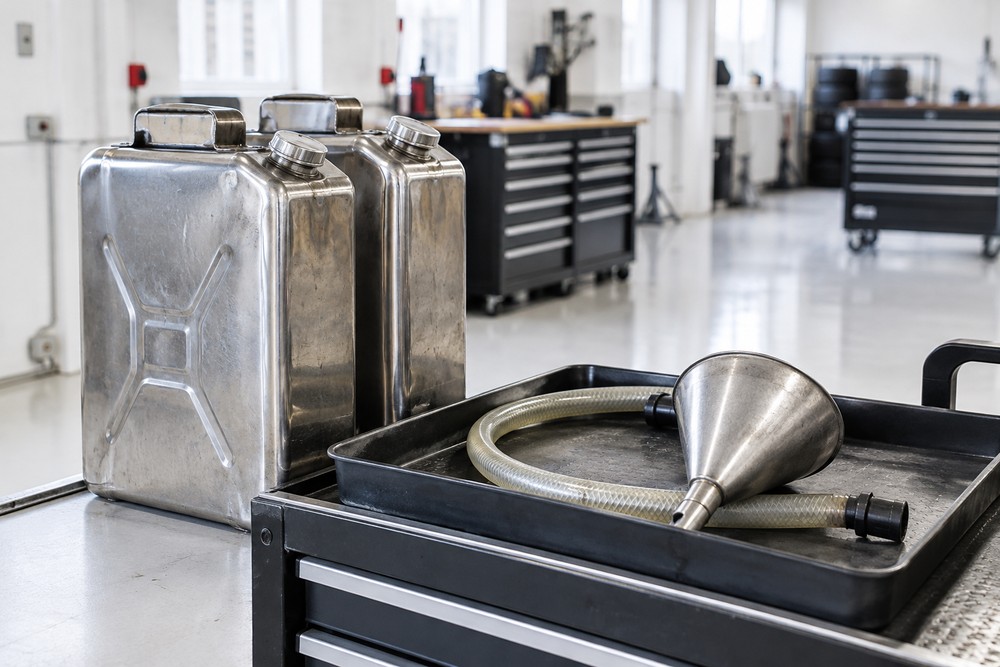
Funnels, hoses, pumps, measuring containers, and related tools can carry residue from substances previously handled with them. Dedicated equipment reduces the possibility that another fluid will accidentally enter the fuel path. It also makes equipment preparation easier because its intended purpose is already known.
Before transferring VP Racing Fuel, crews should inspect the equipment they plan to use. Dust, moisture, damaged fittings, or residue can appear during transport or storage even when tools were clean after the previous event. A brief inspection before use helps catch visible concerns.
Equipment should also be returned to a suitable condition after the task is finished. Leaving transfer tools exposed around a paddock or workshop can undo the care taken during preparation.
Protect Fuel During Transportation to the Event
Transportation introduces conditions that are different from stationary workshop storage. Containers may experience vehicle movement, changing temperatures, and repeated loading or unloading. Teams should follow applicable product, container, transportation, and safety requirements rather than treating fuel like ordinary luggage.
Containers should be secured appropriately for transport and protected from conditions that conflict with relevant guidance. Caps and closures deserve inspection before departure because a problem discovered during transportation can create a serious safety concern. Improvised arrangements should not replace equipment intended for the task.
America’s Energy Inc may supply products before an event, but safe transportation remains a separate responsibility after purchase. Teams should understand the requirements that apply to their vehicles, containers, route, and racing activities.
Set Up a Defined Fuel Area at the Track
A crowded paddock can contain tools, tires, spare components, chargers, equipment, and people moving between vehicles. Fuel handling becomes easier to control when the team establishes a defined area instead of placing containers wherever open space appears.
The location should follow applicable event rules and safety requirements. Keeping the area organized also helps crew members locate the correct equipment without searching through unrelated supplies. Containers and transfer tools can remain easier to monitor when they have designated positions.
Access should be limited to people who need to perform the task. Unnecessary traffic around the area increases opportunities for containers to be moved, equipment to be misplaced, or normal procedures to be interrupted.
Use the Same Transfer Process Between Sessions
Race schedules can create pressure to complete tasks quickly. Practice may be followed closely by qualifying, repairs can consume preparation time, and unexpected schedule changes may shorten the interval before another session. A familiar transfer procedure becomes particularly valuable under these conditions.
Teams should avoid changing their normal process simply because the paddock becomes busy. Product identification, equipment checks, and appropriate handling remain necessary even when time is limited. Skipping familiar steps can introduce uncertainty precisely when the team needs predictable preparation.
When America’s Energy Inc forms part of the supply process, racers can still maintain their own consistent trackside procedures. Supplier involvement does not replace the team’s responsibility for careful handling after the product is received.
Prevent Cross-Contamination Between Vehicles and Products
Teams operating multiple vehicles may share trailers, tools, and working areas. That arrangement can create confusion if transfer equipment moves between different fuel systems without clear controls. Dedicated or properly managed equipment helps preserve separation.
The same caution applies when several fuel products are present. Crews should not assume that similar appearance means products can be mixed or handled interchangeably. Product-specific technical guidance should determine compatibility rather than convenience during a busy event.
If equipment identity or cleanliness is uncertain, the issue should be resolved before transfer begins. Taking additional time to verify the situation is preferable to introducing an unknown variable into the vehicle.
Review Handling Practices After the Event
Post-race work provides an opportunity to identify weaknesses in the procedure. Crew members may notice that labels were difficult to read, transfer equipment was stored inconveniently, or responsibilities became unclear during a rushed session. Recording these observations allows the process to improve before the next event.
The review does not need to become a lengthy meeting. A short discussion can identify what worked and what created unnecessary confusion. Small adjustments often make established routines easier to follow without changing their basic purpose.
Handling VP Racing Fuel consistently across several events also creates familiarity with the procedure. Crew members know where equipment belongs, how containers are identified, and which steps should occur before and after each transfer.
Repeatable Handling Removes an Avoidable Source of Uncertainty
Competition already places crews in changing conditions. Schedules move, mechanical work becomes urgent, and track activity can demand quick decisions. Fuel handling should not add unnecessary uncertainty when straightforward procedures can keep the process organized.
A consistent routine connects workshop preparation, transportation, track setup, transfer equipment, and post-event review. Each stage supports the next, giving crew members a familiar process regardless of how busy the event becomes.
Careful handling does not replace correct product selection, engine preparation, or tuning. It does provide a controlled path from the team’s fuel supply to the vehicle, helping racers maintain clear identification and repeatable practices throughout the racing program.